Category Archives: Flappricana

FLAPPERHOUSE Podcast #1 + an Excerpt from “The Wendigo Goes Home” – Fiction by Sara Dobie Bauer

If you haven’t already heard, the very first FLAPPERHOUSE Podcast has taken to the air! This 30-minute episode features an interview with the incomparable Sara Dobie Bauer, where she reads an excerpt from “The Wendigo Goes Home,” her contribution to our Winter 2016 issue. The podcast is below, and the text of the excerpt is below that, if you’d care to read along…

{ X }

CLEVE PACKER PRIDED HIMSELF ON EATING ONLY PEOPLE WHO WERE ABOUT TO DIE. Over his hundred and fifty years of cannibalism, he’d evolved not only his senses but his morality.

While traveling through northern Ohio, he smelled death on a large young woman with blond hair and expensive shoes. The scent was subtle. She wasn’t the one dying, but someone close to her. Cleve approached and made conversation at the local coffee shop. She was happy to oblige, Cleve looking so tall and handsome in his best brown suit.

Her name was Bree Shepherd, the manager of a high-end clothing store in Cleveland, single but looking. She liked to talk about herself, her family. Her mother was going through some sort of aging crisis, embracing hot yoga and spin at her local gym. Bree said she even suspected her mother of shopping in the juniors section at JC Penney, all in an effort to “stay young forever.” Her dad was a retired lawyer who now spent most of his time reading murder mysteries and pretending he would one day write a novel. There was the elder sister, Bianca, who was married with three children. Bree talked most about her little brother: poor Blake, the “hopeless homosexual”—perpetually single, despite his good looks and pleasant, albeit quiet, demeanor. She said he studied science at the nearby university.

Cleve was careful to say very little about himself, other than that he was new in town. He was always new in town.

After a refill, Bree invited him for a late summer bonfire at her parents’ house where there would be extended family and friends, and “Oh, won’t it be nice for you to meet new people in your new city!”

When they parted, she waved and carried the smell of death down a sidewalk lined with leafy trees at full tilt August green. In her absence, the air smelled of coffee grounds and oil from nearby leaking cars.

The sick person could be anyone, really, but Cleve suspected he would meet that person if he stuck close to cheerful Bree Shepherd. Perhaps at the bonfire, filled, she said, with so many family and friends.

It had been weeks since his last feast; nothing satisfactory, just an old woman in a lonely house that smelled of dishwasher soap and Band-Aids. He preferred younger meat. In the early 1900s, there were all sorts of diseases that sprung up and took people by the dozens. Such a holiday, back then! But such feasts were rare nowadays, with advances in medicine and preventative treatment. Still, there was hope for the bonfire—hope for a good, hot meal.
Continue reading FLAPPERHOUSE Podcast #1 + an Excerpt from “The Wendigo Goes Home” – Fiction by Sara Dobie Bauer

“P.J. Harvey Says She is Going to Take Her Problems to the United Nations” – Poetry by Jennifer MacBain-Stephens

Anxiety and diplomacy  tango in “P.J. Harvey Says She is Going to Take Her Problems to the United Nations,” one of two utterly flappulous poems by Jennifer MacBain-Stephens in our Winter 2016 issue.

{ X }

I WILL MEET YOU THERE P.J.
Who will kill the weeds in my back yard?
Who will stop my son from scratching kids at recess?
Will there be a panel discussion
on just the scratching
or just the weeds?
How many people will be on the panel?
Will I get to vet these people?
Will my mother-in-law be on the panel?
What if all the solutions are bad ones?
Does that make that word, “solution” not a solution?
But a “problem solution?” like a “problem play?”
What if I think the solutions are bad but the panel does not?
What if a lunch break comes too soon?
Like right when they are in the middle of some good solution talking?
What if a break comes too late and people’s blood sugar drops?
Like really drops, hard, so that women in pearls pass out?
Like right when we are reaching some good compromise?
What if the men get angry because they are hungry?
What if I pass out from hunger?
What if there is no one to get home to my children because I’ve passed out?
What if I have been taken to a quiet office space to recover?
What if no solutions are reached because I am not in the room to
announce, “yes, I  agree to that.”
What if the solutions are reached because I am not there;
a proxy appoints herself to be my proxy and
she says, “yes, I think Jennifer will agree to that.”
Or conversely, what if she says, “no, Jennifer will never agree to any of this?”
What if I never agree?
What if I agree?
What if time stands still like in The Twilight Zone?
It’s all pant suits and gavels now.

{ X } Continue reading “P.J. Harvey Says She is Going to Take Her Problems to the United Nations” – Poetry by Jennifer MacBain-Stephens

“Spell for the One Whom You Desire Who Doesn’t Desire You” – Poetry by E.H. Brogan

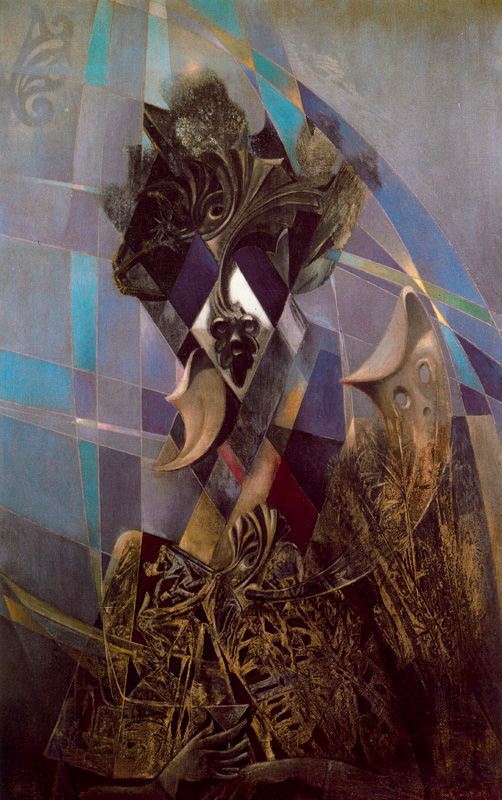
Cocktail Drinker - Max Ernst, 1945
Cocktail Drinker – Max Ernst, 1945

We hope you enjoy “Spell for the One Whom You Desire Who Doesn’t Desire You,” one of four wonderfully witchy poems by E.H. Brogan in our Winter 2016 issue. While we can neither confirm nor deny whether the recipe in this poem makes for an effective love potion, we can attest that it does make for a rather tasty potent potable– and of course, we beseech you to drink responsibly.

(And to hear E.H. read her poem, check out the Soundcloud file embedded below~)

{ X }

THIS IS A DRINK WITH BITTERS.
Not a Negroni, precisely, but how
close to it in form – instead of gin add citrus
vodka. Then a shot of Van Gogh
espresso, you know, caffeine to keep you
way up later than
you wanted. A drop of absinthe to color
dreams, one yellow hair plucked from
a false friend’s scalp.
A teaspoon squeezed
of toads’ warts. Throw a tablespoon
of coarse salt on, what your cat spilled
last Thursday, that afternoon you weren’t
looking. Add all to a shaker, mix
together and pour on ice, this drink
is generous, it will take a pint.
Swallow every drop, and then see
what happens.

{ X } Continue reading “Spell for the One Whom You Desire Who Doesn’t Desire You” – Poetry by E.H. Brogan

“Fire Ants” – Fiction by Perry Lopez

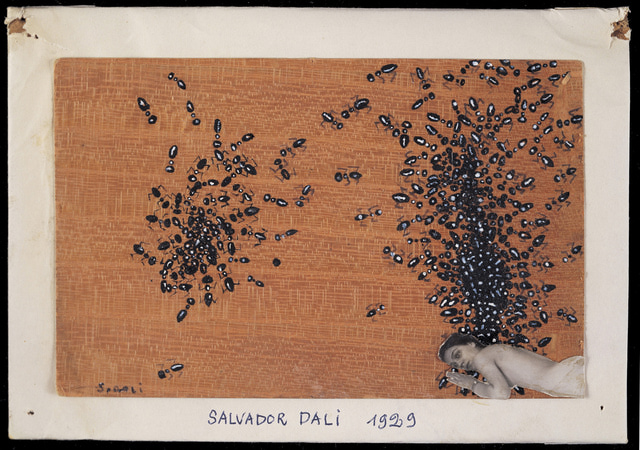
The Ants - Salvador Dali, 1929
The Ants – Salvador Dalí, 1929

Get toasty & tropical with “Fire Ants,” a surreal & revolutionary piece of short fiction by Perry Lopez from our Winter 2016 issue.

{ X }

THE CUBAN’S SKIN IS BLACK WITH SMOKE. He sits beneath the shade of the palm, cross-lashed with sunlight through the fronds, rolling a dead ant between his fingertips. As he toys with it, the soot comes off his pads and encases the ant in a sticky ball that grows and grows until there is no more ant-shape to it. Just a tiny planet of pitch, smoothly gyrating and gathering and dereticulate, obeying the laws of form. He is shirtless and shoeless and thin, his eyes are blood-webbed and watching. Thermo means heat means fire.

He cannot smell himself. Cannot smell the ocean either, though he can hear it. That mellow storm of crash and suck he has heard all his life. He cannot smell the rotting plantains, but tastes them when he breathes. Sweetness and salt in the air that burns in his raw throat, sticks there piquantly burning. His own smell covering everything, but then he cannot smell himself. All he smells is smoke.

“Ah Cristo, my eyes are stinging. I think I will go blind soon.”

Arlo is drunk. He may in fact go blind. They went to the University of Havana together where he studied science and Arlo studied culture. Now he is drunk with a bottle of fine spiced rum in each fist and is crouching over the anthill, squinting and rubbing at his eyelids with the back of his hand, spitting dark gobs full of cinder-grit down on the mound— the mound that sits between the two men and pulses with their frenzy, those thousands, those millions, their knobby red bodies strung together like simple molecules. Swarming along their prickly vortices, building up their warren of dirt on the shore.

He rolls the ball of grime back on his thumb then flicks it into the beach-grass, shooting out so fast and small that his eyes cannot follow as it disappears soundlessly into the airy shush between breakers. He looks back and searches for another.

“But so what if I do, eh? A man should go blind after seeing such a miracle as I have; the rest of the world would only disgust him! Make him wish he was in the dark, alone with just the memory.”

There are hundreds of them at his legs, drawn in by the acrid smell. They tickle-fight atop his toe-crests and caravan down along his shins; at his knees they eddy and trace out in strange ellipses, caught up in the foci of his body’s landscape, skirting his mountains. They are red and his flesh is black and they travel him without rest, cherry bright in the morning sunlight through the fronds, their tiny antennas held out like dowsing rods, silly stupid things, searching him for their need, something to carry back to the mound. They are hundreds but he cannot feel them. They cannot bite him and he cannot feel them. The smoke-crust is far too thick and they will find nothing to eat of his body today.

One ant stands motionless atop his kneecap, waggling its tendrils and watching the others scuttle-dance by. He reaches down and carefully crushes its head between his thumb and middle-finger, then pinches it up and sets to rolling again just like the last.

Across, Arlo spits and drinks and bares his teeth at nothing.

“And can you believe the fool had no guards posted? Only a Captain could be so stupid, so secure. Pah! What do you think it was that finally woke him, uh? The whole damn town knew his house was burning before he did, the pig! How he ran out still naked from sleep and batting embers from his beard to find everyone watching! How he looked back and screamed Oooooooh Mi Madre, Mi Madre, Dios ayuda a mi Madre…”

Between them and the sea is a comb of palms, their scaly shafts serried close like whale teeth, the kind used for straining. And will they hold out the tide? No, no, of course they mustn’t. See the salted, sandy bands about their trunks, a meter high where the surge-tide has risen and will rise and rise and rise again. Carrying it all back out to waste until…

Continue reading “Fire Ants” – Fiction by Perry Lopez

“Lucifer Says” – Poetry by Joanna C. Valente

Untitled - Dora Maar, 1936
Untitled – Dora Maar, 1936

Enter the magically surreal secret room of “Lucifer Says,” one of 5 spellbinding poems by Joanna C. Valente in our Winter 2016 issue. Buy yourself a copy of FLAPPERHOUSE #8 if you’d like to read the rest…

{ X }

AT NIGHT, THERE IS A SECRET ROOM in your aunt’s house with a little door
and inside the little door, a heart beats. there is no body to house the heart
like the house houses a million bodies with guts inside that beat a body
inside an ocean so salty, there is hardly any blood. inside a room without
windows, R tries on black dresses, lets down his hair and puts charcoal
around his eyes until they are as dark as his closet, puts silver on his lids
and bats until a boy emerges from his armoire, his legs molting into feathers
until he flies into the ceiling fan—splits open like a zebra torn apart
by a lion. R stands naked in front of his mirror and the mirror turns into
a faraway forest where a wizard plays ukulele over a dying woman’s body
until the woman lies dead until the full moon turns her into a boy and then
back into a woman until she is neither. R dreams of this woman.

the woman wakes up in a field of trees made by metal and rock. she walks
down a crooked path until she finds a sign that says downtown r train. she
throws her body—so slow and tired it feels like someone else’s body not
even human—onto the train until she falls into R’s bed. R sees her
from the mirror—cradles her until she becomes human again, until she
feels like the earth is forming in her belly, giving birth on his bed and he
holds their baby in his arms, breathing it out, breathing it in. He looks at
the woman and calls her T and breathes into her ear and she breathes into
his until they no longer are, until they both are everywhere else outside
their bodies.

{ X } Continue reading “Lucifer Says” – Poetry by Joanna C. Valente

“Hearsay from the Locusts” – Poetry by Ian Kappos

Insects - Theodor Severin Kittelsen, circa 1900
Insects – Theodor Severin Kittelsen, circa 1900

“Hearsay from the Locusts” is one of 3 poems dripping with dark weirdness that Ian Kappos contributed to our Winter 2016 issue. Buy yourself a copy of FLAPPERHOUSE #8 to read the rest…

{ X }

GIVE ME TO THE INSECTS, let me oil their mandibles.
Sprockets and painless hive death, become
the machine, eat
the lice.
It’s something to feed
the roots you once trod on, gummy-eyed and
heart-wrenched at the
coming dog-year, thinking
“Float me on down your canopy,
strange and mutant sky,”
humming
tone-deaf,
hive death
nectar-drunk, in utero,
finding
no man is an island—archipelago.

{ X } Continue reading “Hearsay from the Locusts” – Poetry by Ian Kappos

“Mothers and Demons and the In-Between” – Fiction by Janelle Garcia

Night at the Fairground - Alexandre Benois, 1911
Night at the Fairground – Alexandre Benois, 1911

Our Winter 2016 issue is plagued by the perils of parenthood, and crawling with creepy monsters– both of which you can find in Janelle Garcia‘s haunting flash fiction “Mothers and Demons and the In-Between.”

{ X }

WE WANTED SO BADLY TO SPEAK WITH THE DEAD, to make contact, even if we didn’t yet know anyone who had died. Our grandmother’s older brother, Ramón, didn’t really count. He only spoke Spanish, after all. But we imagined her death, even if we never said so: our mother.

Our grandmother warned us about the demonios. They’d call to us, whispering our names when we were alone—desperate, pleading whispers. They’d snatch up our souls if we made the mistake of answering them, if we so much as turned our heads towards the source of those whispers. Demonios lurked in the shadows, crouching in the narrow corridor between wakefulness and sleep. Their yellow eyes glowed like beacons, luring us into their embrace, we innocent girls armed only with the name Jehovah.

Say it out loud, she told us.

We pictured demons splintering in the dark or dissolving into puffs of demon dust as we shouted Jehovah, our voices louder than thunder. But she never told us what to do when our tongues, our lips, our throats seized, incapable of even a whisper. What were we to do when our bodies sunk into the sticky tar of that place where our bedroom looked the same, and the clatter of dishes could still be heard from the kitchen, where our bodies remained, wrapped tight in our bedsheets, and yet the air was not the same? Our lungs were always the first to detect we were not of that world, that terrible world of not asleep and not awake.  In that place there was only the torpor of fate, an airless sinking. Our demons waited in silence, and there was nothing we could say.

But daylight was the treacherous one. Morning tempted us to forget our terror. With daylight, shadows were shooed away, unmasked. If a squat demon was a pile of laundry, then a sunlit whisper could be chased down with fingers outstretched.

Continue reading “Mothers and Demons and the In-Between” – Fiction by Janelle Garcia

FLAPPERHOUSE Reading #5 in Pictures

A jillion juicy thank-yous to everyone who helped make Reading #5 such a joy: Bud, Joanna, Jon, Shawn, Franz, J.E., & Ron for reading your flappy lits; Alibi for your scintillating singing & lovely photography; Pacific Standard for your warm hospitality; and all you sweet sexy people who came out on a Winter Wednesday night to watch us. How ’bout we do this again on, say, March 23rd?

photos by Alibi Jones

IMG_0885

Bud Smith reads his flash fiction “Tiger Blood,” originally published at Hobart

IMG_0889

Joanna C. Valente reads “Chapel of Sacred Mirrors,” one of five powerful poems she contributed to FLAPPERHOUSE #8 Continue reading FLAPPERHOUSE Reading #5 in Pictures

And Our Most-Viewed Pieces of 2015 Were…

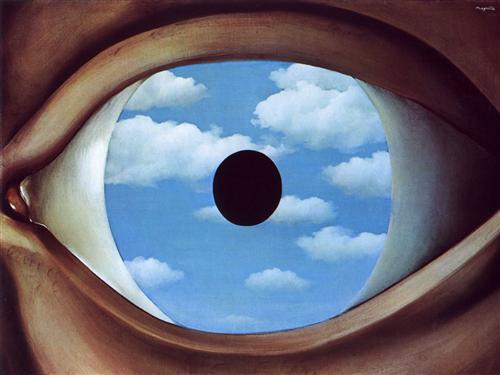
The False Mirror - Rene Magritte, 1928
The False Mirror – Rene Magritte, 1928

Nearly twice as many eyeballs gazed upon our website in 2015 than in 2014, and now we shall countdown the 5 pieces which attracted the most of those eyeballs this past year:

#5. “A Deer With the Head of Emily Dickinson” by Cassandra de Alba, a deliciously eerie poem which will also appear in Cassandra’s forthcoming chapbook of deer-centric poems published by Horse Less Press.

#4. “The Rud Yard” by Vajra Chandrasekera, a hilariously terrifying take on the future of the surveillance state, which we nominated for both a Pushcart Prize & the Best of the Net.

#3. “Gelid” by T. Mazzara, our Fiction Editor’s touching prose poem for a departed friend.

#2. “Earth Comes Down” by Maria Pinto, a bluesy slipstream story with an impressive second-place finish, considering we posted it to our site less than 3 months ago.

and the #1 most-viewed piece on our site for 2015 was “9 lessons in witchcraft” by Danielle Perry (another Best of the Net nominee), which vastly increased our cult following among the occult.

Congratulations to Cassandra, Vajra, Mazzara, Maria, and Danielle, and thanks for all the eyeballs!

The Future of FLAPPERHOUSE…

People of the Future - Konstantin Yuon, 1929
People of the Future – Konstantin Yuon, 1929

We hope you’re all enjoying the new year, friends~

We’ve got a lot brewing in the cauldrons over at Flapperhouse HQ. In 2016 we plan on doing more frequent readings— maybe even in more cities besides New York: LA, perhaps, or Austin, or Boston…

We’ve also got our sights set on producing regular podcasts, where we’d interview writers and hear them read their work. Maybe we’ll also record skits, games, music, and other little chunks of dark weirdness to squiggle into your earholes. Stay Tuned…