We’re gonna flap our downhearted blues away on Wednesday, January 4, 2017 from 7 – 9 PM at Brooklyn’s Pacific Standard as we celebrate the flight of our 12th issue with our 12th reading!
Some of literature’s deadest legends are buzzing about our Winter 2017 issue, FLAPPERHOUSE #12— now available in PRINT ($6US thru Amazon) & PDF ($3US)!
“No live organism can continue for long to exist sanely under conditions of absolute reality– especially our present reality– which is why I’ll be re-reading FLAPPERHOUSE #12 every single day for the foreseeable future!” – Shirley Jackson
“I walk into a room
Just as cool as you please,
And to a man,
The fellows stand or
Fall down on their knees.
Then they swarm around me,
A hive of honey bees,
because I hold a copy of
the phenomenal FLAPPERHOUSE #12!”
– Maya Angelou
“Hungry readers, reach for a book: it is a weapon…and a copy of FLAPPERHOUSE #12 is kind of like a cross between a sniper rifle and a Molotov cocktail!” – Bertolt Brecht
Our Winter 2017 issue doesn’t fly until December 21, but if you’d like an early taste of all the hungry, beastly lit that lies in wait, here’s Deirdre Coyle‘s wonderfully bizarre short story “How to Vomit Living Creatures.”
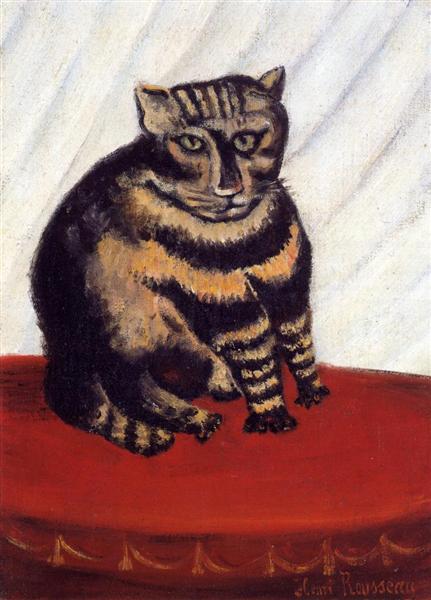
AND THEN SHE VOMITED A CAT. Not so much a hairball as an entire cat. It folded out of her mouth and onto the floor, fur smoothed by mucus.
She was wearing her bumblebee sweater.
“You look like a bumblebee,” said her mother.
“I just threw up a cat,” she replied.
Her mother looked at the clock. “Isn’t it time for your therapy?”
“Well…is the cat dead?” It was not moving.
“Let me check on it. Go see your therapist.”
Veronica was a student of comparative linguistics. She walked two miles to class every morning. Sometimes she ran. Sometimes she ate Luna bars while walking. This was allowed. At lunch, sometimes she ate french fries or chicken fingers. This was not allowed. Sometimes she stuck her fingers down her throat afterwards. Other times she ran an extra five miles on her way home to make up for it. Nothing made up for it.
The therapy sessions had begun after her freshman year of college, during which she had dropped thirty pounds in a few months and maintained a perfect 4.0.
“Do you worry often?” the therapist had asked during their first session. “About grades, maybe? Or boys?”
“I worry about grades,” Veronica replied. “But mostly I just get good grades. That’s what happens. To do otherwise would be stupid.”
“Why do you say that?”
“I’m in college, right? My mom’s paying for it. So I’m not going to waste her tuition money partying, you know?”
Her therapist raised an eyebrow, one finger tapping the arm of her chair. “Why do you say that?”
After two years and as many pounds of weight gain, Veronica’s therapist continued to question obvious statements.
“You can’t just eat a cookie and then throw up a cat,” said her therapist.
“I could. I did.”
“Not physically,” the therapist said, scribbling on her pad. “In order to purge a cat—”
“I wasn’t purging.”
“I only meant expunge. In order to expunge a cat, you must have eaten a cat.”
“I never ate a cat. I only ate a cookie. And if I had eaten two cookies, I probably would have thrown up two cats. Or maybe one, much fatter cat.”
Now Available in PRINT for $6US anddigital (PDF) for $3US PLEASE NOTE: Unfortunately we are currently unable to email PDFs immediately upon order. Delivery of your PDF may take anywhere from several seconds to several hours, but rest assured, we will complete your purchase as soon as humanly possible.
We apologize profusely for any inconvenience or delayed gratification.
THE PEOPLE STOPPED FIGHTING IT A LONG TIME AGO. They used to make a show out of securing their homes. They would barricade the doors. They removed family pictures from the walls and replaced them with photographs of famous landmarks, skylines of cities they’d never seen, and Impressionist paintings. They tucked their children into small holes in the wall behind the bookshelf. They hid them in secret cellars, and under loose floorboards. They harnessed them behind the furnace in makeshift contraptions.
Nothing surprised the Retrievers. It seemed the breadth of innovation when it came to concealing one’s own child had its limits. The Retrievers knew every trick and every secret hiding place, and had heard every lie, sometimes more than once on the same day, sometimes on the same street. The children were either safe or they were not, and every cycle they never left a house without the child they had come for. If the child was chosen, the child would be found and the child would come.
It’s been decades since anyone has resisted the Retrievers, not in any meaningful way at least. Occasionally, there’s a bribe offer, which they always reject, or a demand for proof of authority, to which the Retrievers respond by showing the parent the roster, leaving them to sulk, defeated in their doorframes. Most just comply now. Fate is fate they say. They watch as the van rolls down their street, and as it slows to a stop and the Retrievers exit, they clutch their child instinctively — a final protective measure before their fate is finally revealed to them. Then they whisper to themselves, “Not this house, please, not this house,” because that is all that they can do. Continue reading “Number 59” – Fiction by Rayna White→
PRAYING FOR LIGHT while pooping in the dark outside a car approaches
people often anger in an inverse proportion to their true faith
& faith can’t help but support absolutely everything
just as G-d’s footprint must be too big to see realists don’t think
they are just sub-conscious statisticians trying to be helpful
so what is eternity without thinking beings forever trying to understand
the end of time the bottom of the sea no toilet paper?
From our Fall 2016 issue, Shay K. Azoulay‘s “The Invention of H.P. Lovecraft” is a fictional– yet, perhaps, plausible?!– theory on the origin of the influential horror author.
{ X }
The following is the first and only post, published on 15 December 2014, in a blog named “The Invention of H. P. Lovecraft”. No author has been identified.
MUCH LIKE DARWIN IN HIS DAY, who was prompted to present his theory of natural selection when he discovered the naturalist Alfred Russel Wallace had made similar discoveries, hoping to establish precedence and preempt the young upstart, so am I forced to release my own revolutionary findings prematurely, with absolute conviction but without what many would consider substantial evidence or incontrovertible proof. Due to these constraints of time and resources, my presentation of the discovery will be rudimentary, a symbolic staking of a claim if you will, to which I will later return with expansions, clarifications, revisions, and refinements. This is certainly not how I imagined I would present such an explosive theory, which I have been formulating for several months now, but in our lives things rarely go as we plan or imagine them, and the people we thought we could trust fail us in ways we could not have imagined (but no more on that).
I owe the discovery of H.P. Lovecraft’s true nature to my recent rereading of The Book of Sand (1975) by Jorge Luis Borges, specifically the story “There Are More Things” which is dedicated “to the memory of H.P. Lovecraft”. This seeming parody of Lovecraft’s themes, style, obsessions, and concerns is dismissed by Borges himself in the book’s epilogue:
Fate, which is widely known to be inscrutable, would not leave me in peace until I had perpetrated a posthumous story by Lovecraft, a writer I have always considered an unwitting parodist of Poe. At last I gave in; the lamentable result is titled “There Are More Things”.
I was struck by two things immediately – why is the story dedicated to the memory of Lovecraft rather than to the man himself (Borges dedicated only a few of his stories to people, usually with the generic “For…”), and why does Borges consider the story a posthumous creation by Lovecraft rather than a tribute or homage to him? The answer to both of these questions is as simple as it is astonishing: because H.P. Lovecraft was invented by Borges. Continue reading “The Invention of H.P. Lovecraft” – Fiction by Shay K. Azoulay→
IWANT TO TELL YOU A STORY. Or maybe
a memory. When I was a child I built
forts out of couch cushions and
ratty blankets. I packed food and
flashlights and books and stayed
quiet so no one would find me. I
stowed away stacks of coins, beaded
necklaces, love letters and diary
entries- things I needed to protect,
or to hide.
Overnight the clips would snap.
Blankets would lose their footing
under boxes. Holes in my fortress
would appear, and I’d be revealed.
I sat exposed, in the middle of my
ruins, wondering what I did wrong.
{ X }
I built a fortress in my body out of
words and cement. Incantations
reinforce walls composed of
affirmations. Graffiti scars my
intestines like stretch marks—
remnants of damage left before the
partitions went up.
A city of memories hum in a
molecular cacophony.
The blueprints of my body are filed
away for safe keeping. Memories are
currency, we exchange one for
another.
To get closer or to pull away.
To heal or to harm.
{ X }
“Would you ever consider memory
suppression?”
“Is that possible?”
“Maybe. Through therapy, or trial
drugs, or shock treatment.”
“You’d be willing to damage your
body to clear your mind?”
“I’m just asking would you do it.”
“I don’t think I have any memories
I’d need to suppress.”
“Yeah, me neither.”
{ X }
You kiss my knees to part them and
whisper “what are you hiding?”
You outstretch your hand and enter
without a map.
Once inside, you search through my
blueprints, in nooks and valleys,
down short hallways to scale, for
what is bitter on my tongue.
How long will you stay now that
you’ve opened the vault?
Do you see yourself, anywhere, in
the city of memory?
 We’re gonna flap our downhearted blues away on Wednesday, January 4, 2017 from 7 – 9 PM at Brooklyn’s Pacific Standard as we celebrate the flight of our 12th issue with our 12th reading!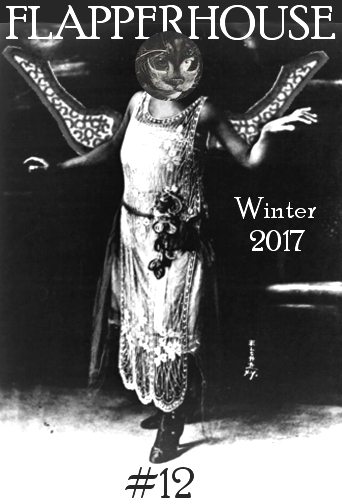



 FLAPPERHOUSE