PLEASE NOTE: FLAPPERHOUSE will be OFF THE GRID from JULY 2 – 5, and we’ll be UNABLE TO DELIVER DIGITAL COPIES of our zine during this time. WE APOLOGIZE for any inconvenience or delayed gratification.
The competition was tougher than ever this season– a literary battle royale. Perhaps it’s fitting, then, that FLAPPERHOUSE #6 is also our fiercest, most violent issue to date, soaked in the blood of Pakistani carjackers, wayward placentas, and Jaime Lannister. But it’s not all gore & guts: There’s also mirror magic, fugitive robots, a history of braille, Emily Dickinson’s dorm room, a boy princess, and so much more.
$3US per DIGITAL (PDF) COPY (click button below for DIGITAL)
PLEASE NOTE: Unfortunately we are currently unable to email PDFs immediately upon order. Delivery of your PDF may take anywhere from several seconds to several hours, but rest assured, we will complete your purchase as soon as humanly possible. We apologize profusely for any inconvenience or delayed gratification.
Thursday, June 25, we return to Brooklyn’s Pacific Standard to celebrate the flight of our Summer 2015 issue with our 3rd reading. It’s gonna flap your face back to the Stone Age, and then to the Jazz Age, before finally dropping you into the Space Age so you can sleep it off at some dingy interplanetary motel.
TO DIE IS TO JUMP. Small pounce, huge leap, big skip or tiny hop, you end up doing it anyhow. (If you want to be all philosophical about it, you could ask whether it’s you that moves or the entire universe that changes lanes—swerving, not a single pop nor screech to warn you—while you remain immobile, believing to have taken flight.)
My first such movement happened at thirteen, in my Grandpa’s library, balancing on two stacked chairs to reach the thick tomes behind which he kept his pistol; I hoped to brandish it before the school jocks whose hands had begun straying toward my developing girl-parts. Just as I started to climb down, the bottom chair cracked, wobbled, gave in, and I tumbled down, revolver in hand, hit the ground with a thud and the distinct click of a pulled trigger. Panting, blinking tears, the clutched gun pointing toward my chest. Unloaded.
Years later I decided that was the precise moment when I began living in Everett-2.
Switching to Everett-3 also happened unknowingly, four years later, when distressed, angry and depressed I ate half the pills from my parents’ medicine cabinet—goddamn Vincent and his goddamn jealousy fit cause I’d dared to like somebody else, calling me a dirty dyke, and whatnot—with cognac to wash it down. I woke up in a hospital to many concerned expressions, in a whole other World.
It was in Everett-7 that I met them—
“Hey, you,” she hollered at me, holding up a cardboard sign at an intersection corner, “how many times have you died already?”
Hurry on. Ignore the freaks. Sip your coffee. But I glanced back; in a fraction of a second my eyes absorbed her whole, and my brain decided to like her. Close-knit wool hat, spotted gloves matching her scarf, blue eyes, pale skin, sophisticated, pretty; she didn’t resemble a crazy street hustler.
“Zero, unfortunately,” I shrugged, taking a sip of the scalding take-away latte to my immediate regret.
She took a step in my direction. Sharpied on the cardboard, the words, Too important to disappear.
“You’ve traveled, girl,” she said after a prolonged look into my eyes, then handed me a business card. Coated paper, slick, only a street address printed on it.
I went to see them that night. Maybe it was my conservative upbringing, my paranoid, prepper brothers, or just too much TV, but I expected robes, candles, pentagrams, goth music. Instead I walked in on a party—crab cakes and white wine, folding chairs and people in T-shirts tucked into jeans talking passionately about politics and science and what have you.
Klara looked nicer without the winter garments, her hair draped over her shoulders. She introduced me to Peter, their leader.
Aren’t we all just turtle hatchlings, trying to survive in this brutal and deceptive world long enough to find the place where we belong– just like the ones in “Plight,” one of four mini lyric essays by j/j hastain in our Spring 2015 issue?
{ X }
THE OBTRUSIVE AND MISDIRECTED LIGHT that causes photopollution is affecting the sea turtle hatchlings on the Florida coast. They are misinterpreting light cues (on which they depend to find their way to the sea in the dark). Attempting to move away from the dark dunes from which they hatch, they follow an inverted force within them, they move with the compass of their small bodies open. How vulnerable! If fluorescent lights interfere too severely, they can confuse them so much so that they never find their watery nest. 6.2 million hatchlings die in Florida every year and many of them die on their way.
When I first read about how photopollution causes decrease in sexual function in humans (due to circadian disruption) I unplugged the only light and moved the whole light outside. I slept for days, dipped my diary pages in red ink to simulate the unseen blood loss of skeletal turtles on the beaches. It’s scary when animals die and you can’t see any of their blood in the process. Right away you are aware that, in addition to things having gone terribly wrong, something is missing. As I ponder, I notice that the wooden fan that I am using to fan myself seems to be leaking. Emissions are a kindness; they wisely help us integrate loss.
On a blood-soaked, driftwood beach I can see that the sea turtle skeletons are partially sunken on the brinks. They look like little bois, purifying forms of perversity. The tide keeps rushing in and out as I belittle the skyglow (with my head and fist raised to the place in the atmosphere where that light gets caught). Running along the shore I am trying desperately to caress all of the decaying bodies, attempting to touch each one. “Your neck bone is so beautiful!” or “I want to lay you gently in a tub full of corn,” sacred phrases particular to each. I want to offer them a light like candlelight reflection, a light that is unconditionally relevant, a light in which they can follow their inclinations all the way to their liquid hearth. I know no other way to offer infinitely relevant light than by a certain quality of touch coming from my own body on this cold beach on the periphery of the city.
It is beginning to rain a good ole’ fashioned Florida rain now. The droplets are penetrating the sand, making drum whacks on the softening shells of the turtles. The swamps will flood tonight; the sea level will rise to cover over their sweet, bloodless forms.
{ X }
j/j hastain is a collaborator, writer and maker of things. j/j performs ceremonial gore. Chasing and courting the animate and potentially enlivening decay that exists between seer and singer, j/j simply hopes to make the god/dess of stone moan and nod deeply through the waxing and waning seasons of the moon.
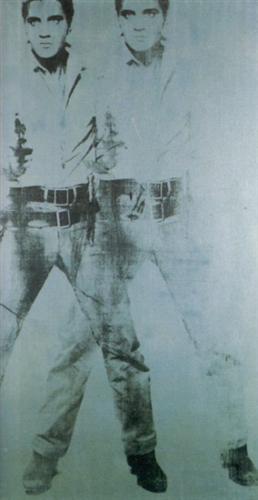
SOMETHINGSHAPEDLIKEACONJOINEDTWINELVIS is floating above my bed. Think of those hips
linked into two sets with two different dance moves.
I’m not going to take sides. I’ll dance with the right side
and the left side, but first I must be transported up
to the ceiling so I’m not on the bottom again.
Our Spring 2015 issue features four bite-sized lyric essays from j/j hastain‘s forthcoming memoir, including today’s featured piece, “Saving Earthworms in My Mountain Cave.”
{ X }
EVERY MORNING AFTER IT RAINED I WOULD OPEN THE RED DOOR, squat (with nearly no clothes on, my body a fleshy thing against the green mountain scape) and pick up each earthworm one at a time. I would move earthworms from the pathway or the street into the lush patches of grass near the river of my property. As I picked up each soft, squirming body and the body positioned itself like the letter upsilon (shaped like a “u”) it reminded me of the lingual bone. It was because of that reminder that I began to hum to them, moving my mouth in different shapes while I was transporting them. I also tried not to make them experience too much shock at transition.
Ribbons are what I follow when I sing: verdant ribbons heading toward gentle brows, browns. For this reason these Lumbricus Terrestris were personal for me: totem animals, spirit animals.
When I was at the local independent movie theater (where, prior to the movie playing they show local short films in place of commercials) I was awed when, for nearly three entire minutes, I watched what seemed to be an enormous hybrid earthworm (part metal, part sepia-flesh) up close as it peristalted not in a straight line, but in a round and curving shape. There was music that accompanied the movement, but it felt, as an image, as a moment, to be the exact thing that I was feeling when I was transporting the worms.
To get to indigenous relief and natural identity, animal press is required. Animal press is what makes that pulp of the path appear.
{ X }
j/j hastain is a collaborator, writer and maker of things. j/j performs ceremonial gore. Chasing and courting the animate and potentially enlivening decay that exists between seer and singer, j/j simply hopes to make the god/dess of stone moan and nod deeply through the waxing and waning seasons of the moon.
Fort Bliss, Texas; Monday, April 20, 2012 – Soldiers of Apache Troop 1st Squadron 1st Cavalry Regiment prepare for air assault training during Network Integration Evaluation 12.2. Photo by Jasper Lo
“During a Sandstorm, in a Heat Wave, at Fort Bliss” is one of two haunting yet beautiful poems from our Spring 2015 issue that are inspired by Jasper Lo‘s military days.
{ X }
THERE ARE TIMES I CANNOT STAND
in my skin; it lies
on me like a visitor. Oh, it happens
without warning, creeping across my shoulders before I wake; behind my eyes when I scrape my tongue.
Sometimes it drips down my back
when I drive home from Bliss. But I feel
it above me at night, when my circling fan thumps.
{ X }
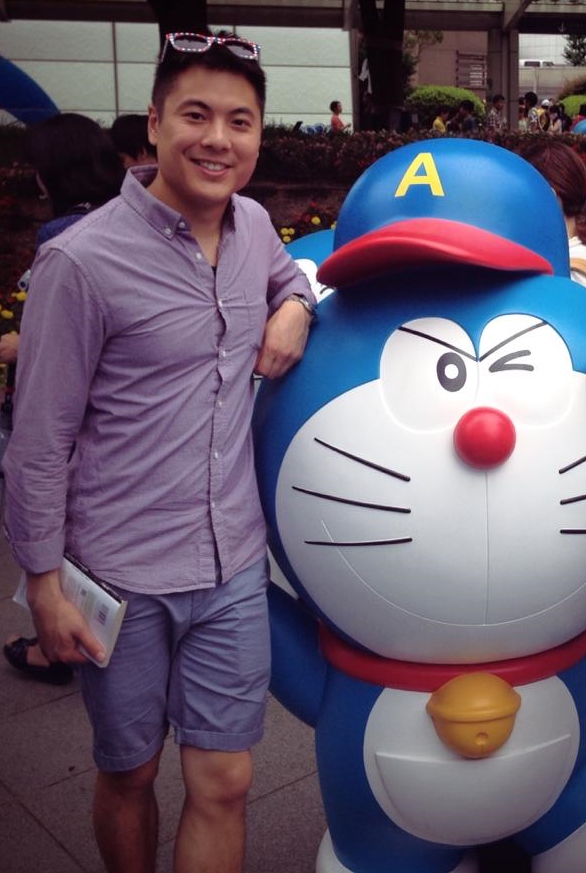
JASPER LO is a Chinese-American twenty-something US Army veteran. He is recovering from the trauma of being raised Chinese in New York and is a graduate of Boston University.
Magic and marriage are major themes in our Spring 2015 issue— especially in Sagnik Datta‘s aptly-titled “A Magician and a Marriage.”
{ X }
AFTER LEARNING MAGIC FROM THE SADHU ON THE BANKS OF THE GANGES, Narayan came back to his village incognito, in a long beard and a long dark robe that reached his knees, a jute bag on his shoulder, and with a stick, almost two feet long with knots in two places. He introduced himself as ‘Naran Jadugar’, the greatest magician that Sindoor has ever seen, and spent the first weeks under the peepal tree in the bank of the Mohini River.
He attracted a good crowd on the first two days with little more than a beggar’s provisions, showing them tricks he had learnt from the sadhu, and a small number of tricks he devised on his own; but the audience soon thinned due to the repetition and monotony of the tricks. Once, a stooge was caught, and it caused Narayan much embarrassment, and there was one day when he had to show his magic in front of only a dog which wagged its tail whenever Naran Jadugar uttered a paranormal word.
Narayan’s father, who five years earlier forced his son out of his house for failing in Mathematics, heard of the magician, but did not feel the urge to go and see for himself. When a friend of his pointed out the similarities in the facial characteristics of Naran Jadugar and Narayan, Narayan’s father spit out a jet of betel-red from his mouth.
“No,” he said after heavy contemplation, “my son did not know magic, and he is not talented enough to learn anything.”
But over the next few days, more and more people came to him and spoke to him of the same thing.
“Hmm, seems like the idiot is back,” he said, spitting out the betel-red and wiping his mouth.
The reunion of father and son brought out tears in the eyes of both. Narayan left his shade, and a pigeon flew out of his back, unhindered and to the claps of the children who watched it for free. He hugged his father, his father hugged him back.
“Come home, son.”
But Narayan didn’t. His lips trembled while saying no.
He was unrelenting and showed the signs of the stubbornness that characterized his father, not even bending under the threat of a slap. Their arguments flowed till sunset, and a crowd gathered around them, periodically varying their opinions as they listened to the speakers.
Defeated, Narayan’s father returned home, reeking of the breaths of failure.
Narayan’s mother, Shashibala, heard it all. She came out of the house at night, proceeded to the peepal tree alone, with her searching owlish glances probing the darkness. She returned with her son within a quarter of an hour.
Narayan stayed in the house at night, but in the balmy mornings he would be back under the peepal tree with his magical belongings, and would sometimes show his tricks to nonexistent spectators and bask in vanity at their claps and hoots. On certain clear days, he would also venture out to the neighbouring village of Nandangram where, just like Sindoor, he attracted good crowds on the first days, but then they thinned, and one person had even thrown a ripened tomato at him once but had thankfully missed.
Yet a certain little girl, aged fourteen, with large wide kohl-lined eyes and a single ponytail hanging from the back of her head, was a regular at the show. Even after she had seen all the tricks and knew what would happen next, she would still sit and watch in admiration and silence, with her glass doll in her lap. Her name was Uma.
Road-killed rabbit meets cassette-tape chewing in “Weight of the World on My Shoulders or Weight of the World in Her Shudder,” one of four mini lyric essays by j/j hastain in our Spring 2015 issue.
{ X }
WHEN WE MET IN THE BACK OF THAT WEIRD CHURCH on a winter morning just after a rainstorm, my friend was obviously troubled: “I knew you would know what to do with it. I have been driving around with it on the floor of the passenger seat of my car for a few days now.” She took me to where its small, ripped body was lying, both still connected to itself and also strewn: very not its hopping, spring-self. I appreciated that she had adorned its dead form with many different types of flowers because usually these types of scenes make me feel like I am chewing on cassette tapes (both the plastic and the dark matter-like strands) and in need of something lush or verdant in order to most accurately honor the contents of the scene. Sweet road-kill rabbits make the cyborg parts of me sweat.
Carrying the slumped rabbit in my hands, we moved to a place near the chairs that had metal wings built into their backs (these chairs were why we had chosen this church as our meeting place in the past). We emphasized the metal wing-chairs as moss-covered, living cyborgs: “Road kill animals need wings that can’t be clipped and metal wings can’t be clipped.”
Gently setting the rabbit beside me for a moment I used the heel of my boot to dig a deep hole in the ground: a new burrow for the dead to rest in. She cried as one might weep at the loss of a child; she winced. As she watched me dig the hole I felt her notice the strands of cassette hanging out of my mouth and over my lips like bloody flesh hangs out of a carnivore’s mouth: only partially consumed with more saved for later.
I was visualizing how, when pressed firmly into them over time, bullets or chains are swallowed into the tree that they had been forcefully shoved into or slung over. Though initially the tree leaks sap in response, wincing a little bit itself, eventually it accepts the added.
Was this the reason to bury the bunny? For the sake of inviting road kill back into the planet after a facet of the planet took it? Would I share this image of trees swallowing bullets with this grieving woman who was shuddering desperately beside me? Or is it possible that there are parts of grief so sweet that they might be blotted out if a lesson is suddenly shoved in?
Note: I will not let any form of possible peristalsis become paralysis under the knowing weight of my steel-toed, metallic-colored boot.
{ X }
j/j hastain is a collaborator, writer and maker of things. j/j performs ceremonial gore. Chasing and courting the animate and potentially enlivening decay that exists between seer and singer, j/j simply hopes to make the god/dess of stone moan and nod deeply through the waxing and waning seasons of the moon.
A MAUVE FILM COVERS EVERYTHING save the sun’s fingers. Only the sound of water in drainpipes and Maggie and Mike laughing at the black air of the television.
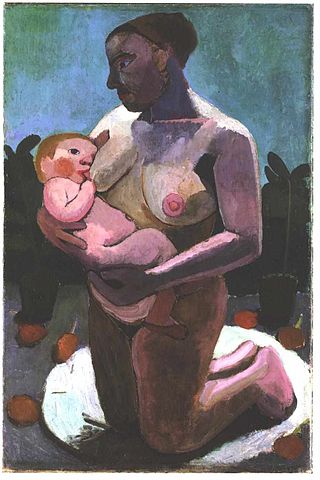
“Good Morning, America” shouts a woman with an exposed breast nursing a child – or is it a pig? The audience applauds. She nurses long after the child has grown and the milk has grown black, crying to the cadence of the laugh-track. Beetles swarm a piece of cotton-candy, a remainder of the child’s youth. They crawl through it like vermin in the brain. Ooos and Aahs echo as a man of melting wax goes shoe shopping. The yellow residue molds into the insoles. He lights his wick and offers this epitaph: “Only those who die, die young.” At last, the bearded lady sings and the show is over. She cackles for six hours of credits, pulling hair strand by strand.
{ X }
KAILEY TEDESCO is currently enrolled in Arcadia University’s MFA in Poetry program. She edits for Lehigh Valley Vanguard and Marathon Literary Magazine, while also teaching eighth grade English. A long-time flapper at heart, Kailey enjoys hanging out in speakeasies, cemeteries, and abandoned amusement parks for all of her poetic inspiration. She is a resident poet of the aforementioned LVV, and her work has been featured in Boston Poetry Magazine and Jersey Devil Press.
 PLEASE NOTE: Unfortunately we are currently unable to email PDFs immediately upon order. Delivery of your PDF may take anywhere from several seconds to several hours, but rest assured, we will complete your purchase as soon as humanly possible. We apologize profusely for any inconvenience or delayed gratification.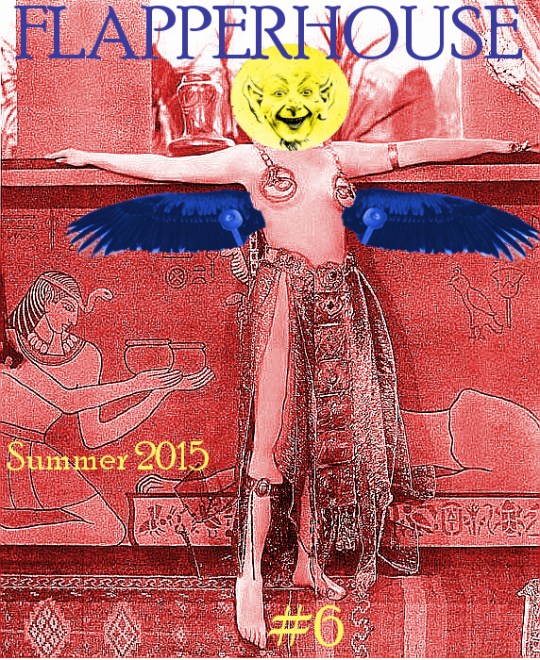

![By NASA/JPL-Caltech/Univ. of Ariz. (NASA - Comets Kick up Dust in Helix Nebula) [Public domain], via Wikimedia Commons](https://flapperhouse.com/wp-content/uploads/2015/05/comets_kick_up_dust_in_helix_nebula_pia09178.jpg)
![A robustus at en.wikipedia [CC BY-SA 3.0 or GFDL], via Wikimedia Commons](https://flapperhouse.com/wp-content/uploads/2015/05/turtle_hatchlings_noonu_atoll_maldives.jpg)






 FLAPPERHOUSE
