Category Archives: Fiction

“Introduction: A Moor in the Onyx Ash Grove” – Fiction by Amanda Sarasien

Night - Alexandre-Auguste Hirsch, 1875
Night – Alexandre-Auguste Hirsch, 1875

“Introduction: A Moor in the Onyx Ash Grove, Amanda Sarasien‘s Borgesian contribution to our Winter 2015 issue, introduces us to a fascinating “novel in miniature” called Un Maure en frênaie d’onyx, written by Sylvain Dubois and reviewed by the highly intelligent yet somewhat cranky G.L.B. Pym. (Don’t forget to read the footnotes!)

{ X }

YOU MIGHT SAY THE DRIVING RAIN DROVE ME TO SYLVAIN DUBOIS. That afternoon, in Geneva, I had failed to locate the restaurant recommended to me by a discerning friend. I had wandered all morning under a leaden sky, as if tempting my luck, and so was not surprised when the heavens suddenly let loose, soaking my brand-new, bespoke wingtip brogues. I ducked into the closest storefront, only to find myself standing amid row upon row of sagging bookshelves. In some sort of numinous equation solved by the hand of fate, I had, by chance, stepped into the only space more comforting to me than a cordwainer’s shop. Fine Italian leather for full-leather binding, it seemed a worthy, albeit unnecessary, sacrifice.

And how, among the hundreds of thousands of titles all stuffed into that dim cavern, I ever alighted upon Un Maure en frênaie d’onyx, could also be described as kismet. While the owner pottered around behind teetering stacks of unshelved volumes, mumbling in German to a mangy, calico cat, I distractedly pried the book from its place, at first mistaking the rubbed gilt lettering on its spine for the name Dumas. When confronted with my error, I was tempted to return it to its place, but one glance out the window told me I’d have plenty of time to examine the contents of this little shop. I turned to the first pages. “Monsieur?” I called into the gloom, before remembering he had been speaking German. But, too late, the shopkeeper had already answered me in French, so I continued by asking if he knew anything about this Sylvain Dubois. The man furrowed his brow, squinted at me from beneath bushy, unkempt gray eyebrows and shook his head. Then, wordlessly, he turned and shuffled off.

Despite the series of serendipitous circumstances which led to my purchase of that first battered volume, I maintain that only my singular bibliophilic tenacity could have transformed happenstance into a true connoisseurship. I, alone and without the benefit of literary orientation, read the book, cover to cover, judged it entirely on its own merits, and proceeded to immerse myself in Dubois research, piecing together the fantastic fragments of a life we now know all too well. Thus, I do not hesitate in laying claim to the distinction of Sylvain Dubois’ first English-language reader, and it is under this authority that I introduce him to you now.

Sylvain Dubois was born Auguste Hauchecorne on May 22, 1893, in Bernay, France, the only child of Severin and Arianne (née Lacaille) Hauchecorne. At an early age, he eschewed the family profession of glassblowing and declared his intention to become an arborist. But, only seven months into his apprenticeship, his precocity got the better of him, when, behind his mentor’s back, he created a crossbreed he believed would protect surrounding trees from infestation by any number of insect species plaguing France’s orchards at that time. To test his hypothesis, he planted this new hybrid among a grove of the region’s oldest trees, and within one month, every single trunk was mottled with the scars of a previously unknown disease, contracted from the seemingly innocent little sapling. When it was learned the role Hauchecorne had played in this calamity, the youth was disgraced, his budding career in arboriculture uprooted.

Hauchecorne did not have time to contemplate his failure, however, for three weeks later, World War I broke out. Auguste, a vehement pacifist, fled to Brittany to avoid the draft, and adopted an ascetic’s life in the mythic forest of Brocéliande. Here he took the name Sylvain Dubois, moved into an old, hollow oak tree and subsisted on acorns. Unfortunately, it was precisely his pseudonym which gave him away. When residents of the local village reported the presence of a strange man who called himself Sylvain Dubois, it was only a matter of time before the French military connected the doubly arboreal name[1] to that failed arborist gone missing from the Eure district. He was summarily removed from his mystical home and shipped off to the front.

Once in the trenches, Dubois was assigned mess hall duty, eventually working his way up to head cook. It was during this time that he discovered writing when, attempting to develop an haute cuisine centered upon the acorn (a cuisine which, incidentally, did not prove popular with the soldiers), he found himself more and more absorbed in embellishing the written descriptions of his dishes. He then announced to his comrades in arms that upon conclusion of the war, he would go abroad, with the goal of penning a travelogue to the world’s great trees. While we can surmise that such a guide would have generated little interest from publishers, let alone readers, we will, in fact, never know, because not long after the armistice, Dubois checked himself into an institution and was diagnosed with shellshock, a condition he had heretofore been treating with cocaine. He spent the next four years in Fond-du-Lac Sanatorium in Bellevue, Switzerland, just outside Geneva.

Continue reading “Introduction: A Moor in the Onyx Ash Grove” – Fiction by Amanda Sarasien
“The Broken Arch” – Fiction by Reshad Staitieh

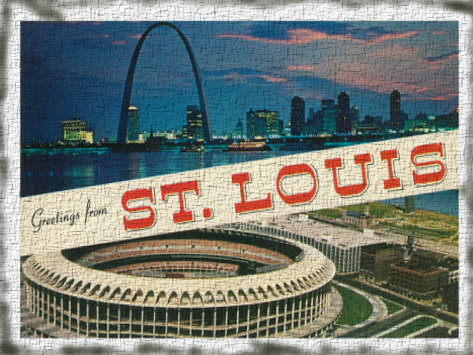
StLouisPostcardFrom our Winter 2015 issue comes “The Broken Arch,” Reshad Staitieh‘s brief but powerful snapshot of two young brothers trying to survive in a treacherous land.

{ X }

“WHY WASN’T SHE HOME?” His brother says.

“Who?”

“Auntie.”

“She’s going to meet us later. Just be patient, Little Man.” His dry throat scratches.

Diyam hears small toes scraping at linoleum and imagines trails of dust left in their wake, like the slim tails of comets.

“Gret… Guhr-ee… Greet? Gree-ting-es?” Esam reads.

“Greetings,” Diyam calls from the freezer.

“Greetings. Fr-om? From. Stooloo-is?”

“Saint Louis. Greetings from St. Louis.”

“St. Louis. Yeah, got it.”

“Do you?”

The restaurant sign promised buffets with “well-known” dishes. It’s been three days since they’ve eaten. He hoped there would be pie.

His stomach rumbles.

There’s a room in the back of the diner, storage or a freezer. It is the tenth like it in two days.

“Yeah, I got it.” Esam answers after pausing and taking a short breath. “It doesn’t look anything like it anymore.”

“What doesn’t look like what? Be specific.” Diyam speaks through the steel doorway. The generators died, and the cold is gone. There is nothing left but heat.

“The gateway.”

“You mean the arch?” Diyam corrects. He scans the room. He smells mold and knows with well-honed instincts that food is nearby.

He is a true scavenger.

Continue reading “The Broken Arch” – Fiction by Reshad Staitieh

“Ghost-Sick Jarvis” – Fiction by E.L. Siegelstein

William S. Marriott and his spirit hands, circa 1910

“Ghost-Sick Jarvis,” E.L. Siegelstein‘s supernaturally funny contribution to our Winter 2015 issue, is an excerpt from his novel-in-progress. And while it makes us want to read the rest of the story right freaking now, we think it also makes for a very satisfying episode all by itself.

{ X }

IT’S LIKE NAILS ON A CHALKBOARD. Kind of.

There’s no sound, but I feel it in my inner ear, a rasping, sickening sensation tugging on all the tubes, nerves, veins and what-have-yous in the back of my brain. Or like a dentist’s drill, if you could somehow remove the actual sound and leave only the way it makes you feel.

This will be accompanied by quick flashes. An image. A phrase, or a word, or just a fraction of a word. Like a vivid dream you forget as you wake. The memory of a memory.

And along with this, a feeling. Sorrow. Frustration. Regret. Joy. Pride. Contentment.

That’s what it’s like to talk to the dead. They don’t appear standing in front of me or anything like that. And they sure as shit don’t like to talk in clear, no-interpretation-needed, complete fucking sentences.

My name is Jarvis Chumley, and I’m a goddamn medium.

Yes, that is my real name. It’s English, fuck off. I started hearing the dead when I was fourteen years old. Nobody else in my family can do it, though my Aunt Nigella claimed to be psychic. She died in a car crash when I was six. My mom, too. Same crash. Anyway.

Being a medium is not the easiest way to make a living. I’ve got a storefront in Astoria, Queens, which I share with another medium, Ivonne, who is a charlatan. There’s also a massage parlor in the back, where you can get the massage therapist to masturbate you if you leave your cash on the table and ask for the full service. No, I’ve never done so; that’s my place of business. All relationships concerning it must remain strictly professional. Also, I can’t come when the girl’s ancestors are screaming at her through me from beyond the grave.

It’s Friday night and I’ve got one last client before turning the place over to Ivonne. She does great business with the late-night drunk crowd, while I have every intention of being part of that crowd. The client is a fat Italian man-child with thinning hair, and I know he wants to speak to his mother even before she starts nattering in my ear. He looks at the door to the massage parlor – GUARANTEED RELAXATION & TRANQUILITY, it says – before looking at me.

“Are you the medium?” he asks.

“Sure am,” I say.

Our little sitting room is decorated in the traditional storefront-psychic style:  a lot of silk, crystals, a weird plaster hand sculpture. The Italian man-child’s name is Tom, and as soon as he walks in I feel the presence of what has to be his dead mother making me want to spray my lunch all over my customer.

Continue reading “Ghost-Sick Jarvis” – Fiction by E.L. Siegelstein

“Frida Entertained” – Fiction by Mitchell Krockmalnik Grabois

Self Portrait with Monkeys - Frida Kahlo, 1943
Self Portrait with Monkeys – Frida Kahlo, 1943

From our Winter 2015 issue, “Frida Entertained” by Mitchell Krockmalnik Grabois is a triptych of whimsically surreal vignettes starring legendary artist Frida Kahlo.

{ X }

1.

IN NEW YORK CITY, A SCULPTOR TAKES FRIDA KAHLO to see Cocteau’s The Blood of a Poet. In the first section of the film, an artist sketches a face and is horrified when its mouth begins to move. He erases the mouth, but it transfers itself to the palm of his hand.

Frida feels for her own lips with the tips of her fingers, but her mouth has disappeared. She rushes out into the lobby, pursued by the sculptor. He finds her holding a jumbo bag of popcorn, shoving the popped kernels into her mouth as fast as she can. She chokes, but continues to fill her mouth.

The sculptor pulls the bag away. It bursts, and popcorn fills the air. Frida is sweating. The sculptor pulls out his handkerchief and wipes her forehead above the unibrow that so many men find so appealing. He wipes her upper lip, with its faint black moustache.

Frida is nearly panting. I need the taste of salt on my tongue, she says by way of explanation.

Continue reading “Frida Entertained” – Fiction by Mitchell Krockmalnik Grabois

“Both of Djuna” – Fiction by Joel Enos & Angela Enos

Seated female nude - Amedeo Modigliani, 1916
Seated female nude – Amedeo Modigliani, 1916

Art and artists are always making us look at models, but in “Both of Djuna,” from our Winter 2015 issueAngela Enos & Joel Enos make us look through the eyes of a model who’s looking at art, and artists, and how they look at models. And art. And also maybe themselves? There’s a lot of levels to navigate here.

{ X }

IT IS ALWAYS MORE INTERESTING TO BE A MODIGLIANI than a Sargent. The artist’s model thinks to herself as she sits, unclothed, on the wooden chair as their eyes all perceive and speculate and adapt her pieces and parts. It’s the interpretation itself. The act rather than the actual. Or is it actualization? Actualism?

Not for the first time she wonders if her inward view is more or less intense a gaze than that of those who view her from the outside. She’s sat for this particular group before. But today there are more of them than usual, new faces, new adaptors and interpreters. She rarely allows herself to ruminate, while sitting, on the many ways she will eventually see herself though someone else’s eyes. But with so many new eyes upon her this morning, she can’t help herself. I must distract myself from the distraction of anticipation.

So she looks back at them.

The young one with the wispy mustache that isn’t quite there won’t know any better than to be realistic. He’ll document every line and crease until he’s pushed me into a hard middle age. He hasn’t yet learned to take liberties with the canvas. The fear of being incorrect leads to harsh premonitions about my life.

The one that looks like a sea captain, with the cap on to shade his eyes, he’ll paint with period flair and later realize that he’s made me look like a snapshot of his mother from before he was born. I’ll like it, even though it won’t be me. 

The academic, the one with the accent– Belgian? Germanic? From parts uncharted of Meso-Britannia? She cannot imagine him existing outside of the geography of this studio. He’ll paint me truly and honestly, with the angle of my nose unflattering and the curve of my waist in precise brushstrokes. It will not be beautiful, but I will recognize myself in his work, even through his fingerprints in the oil. 

There is only one woman other than the model in the room. She sits away from the other artists, her easel not part of the half-moon cluster around the model’s stage. The model knows that this woman will work quietly on her own in a cloud of honeyed tea and turpentine in china cups. I will never see her work, but she will thank me at the end of the pose and disappear even faster than I do.

And perched on all of the easels, whether clustered or not, are her cousins. The two-dimensional women all share certain familial characteristics in the shape of their mouths, the protrusion of ears, but they are all distinct individuals. The model feels unsure whether any of her cousins are actually a representation of her self. But she knows the women on the easels are inarguably the girl on the stage. They are all Djuna in this moment, before signatures and initials have been scratched onto their surfaces and varnished into permanence. My part in this process is questionable. I am at best muse, but I might not be art myself.

Continue reading “Both of Djuna” – Fiction by Joel Enos & Angela Enos

“The Store” – Fiction by Mari Ness

By QuentinUK (Own work) [CC-BY-SA-3.0], via Wikimedia Commons
Shop Until You Drop – Banksy, 2011; Photo by QuentinUK  [CC-BY-SA-3.0], via Wikimedia Commons

With the holiday shopping season in full swing, it’s the perfect time to browse the curious wares in Mari Ness‘ flash fiction “The Store,” from our Winter 2015 issue.

{ X }

THE STORE MOVES AROUND. Sometimes discreetly, sliding in between two other stores; sometimes flamboyantly, planting itself firmly in a previously empty lot, with glowing “GRAND OPENING” signs and flags.  In times of economic prosperity, it enjoys nestling in quaint streets dedicated to antique shops and art galleries; during recessions, it often inserts itself into dying strip malls, or leans next to grocery stores and pharmacies.

She never moves.  Not that anyone can see, anyway.

She sits at the cash register near the front of the store, a register that seems to change slightly each time the shop moves.  It had been one of those old fashioned types, and now sports a computer screen that would put many larger businesses to shame, a screen that seems somehow out of place.  Her most noticeable quality: an utter absence of color, with excessively pale skin, nearly as white as paper, white hair, and colorless eyes.  Not pink, not pale blue, but literally colorless. The effect might be caused by contact lenses and makeup and bleach, but somehow, few customers ever think this.  The eyes move, to watch the customers, and her hands move, to take money and credit cards, but her body never shifts, though she must eat and drink and sleep. She must.

Where she might do this is less certain.  Certainly no one has ever seen her eat or drink inside the store, or leave her seat for any reason.  Indeed, she gives the impression that she is not just rooted to, but part of her chair, which in turn seems to be part of the floor.

Not that anyone checks too carefully.

What the store sells, it is hard to say. The merchandise shifts whenever the shop moves, and somehow, few customers seem to linger over the items.   Ordinary things, knickknacks, and jars of jam, and scented candles, and piles of music and books. Books that when opened tell of Jane killing Mr. Rochester by eating through his neck; where the Heart of Darkness is a river eagerly sucking away at the waters of the jungles, leaving a place of dryness and death ripe for fire; where Alice cuts her wrists with the shards of the looking glass. CDs where no one ever hears the secret chord that David played to please the Lord.  Small statues of fairies and angels, their eyes and mouths glued or sewn shut. Brilliantly colored flowers with grey edges that feel cold to the touch. Surprisingly delicious soup mixes, bringing delirious joy when prepared.  Jewelry, rich and strange and delicate. Candles labeled with never-known words. Continue reading “The Store” – Fiction by Mari Ness

“Buried Treasure” – Fiction by Ashley Lister

The Caran d'Ache 1010
The Caran d’Ache 1010

The grand finale of our Fall 2014 issue is Ashley Lister‘s Choose Your Own Adventure tale “Buried Treasure.” Is it an amusing literary diversion spoofing a once-popular genre? Or is it a bleak satire on the illusion of free will? YOU DECIDE!

(Or DO you?)

{ X }

YOU ARE ONE OF SEVERAL PEOPLE SITTING BEFORE A SOLICITOR. You are in the room that was your late Uncle John’s home office. It’s a sombre day because you’re attending to hear the reading of Uncle John’s will. Uncle John was one of your favourite relatives. He made his vast fortune from writing Choose-Your-Own-Adventure stories.

Do you attentively reflect on the incongruities and peculiarities of all the other beneficiaries? (GO TO SECTION A.) Or do you tell the solicitor to hurry the fuck up? (GO TO SECTION B.)

 { A }

The walls bear framed covers from Uncle John’s many adventure stories. The room is dominated by a large old-fashioned desk that takes up half the room. Behind the desk sits the small, bespectacled solicitor.

The other half of the room is crowded.

Aside from being a popular writer, Uncle John was something of a ladies’ man. It’s been suggested this is what probably killed him. Your parents had always advised you to never eat at his house, especially not anything from the fruit bowl. Your mother always said he had more STIs than readers – and she made this remark after Uncle John had been on the NYT Bestsellers list. Your father claimed the coffee at Uncle John’s house tasted of rohypnol.

Many of the female beneficiaries are dressed in black. Some of them are sniffling into delicate, lace-edged handkerchiefs. Most of them are giving evils to each other through smudgy eye makeup as though only one of them is entitled to feel bereaved.

The most obviously upset is Dorothy.

Dorothy had been Uncle John’s off-again on-again girlfriend for the best part of a decade. She’d been living with Uncle John and putting up with his peculiar ways for the past five years. It’s widely known that she has forgiven more unforgivable indiscretions than the last three Popes. With jet black hair and jet black eyes and a jet black dress she looks like she’s auditioning for the role Morticia Addams. Her lips are thin. Her eyes are tired and bloodshot. And she’s glaring at the redhead wearing skin-tight leather pants.

The redhead is deliberately ignoring Dorothy. It’s likely the redhead was the most recent of Uncle John’s indiscretions. If there is any truth in the stories about his body being found in a wardrobe, with a shoelace round his balls and an orange up his arse, then it was probably a wardrobe in the redhead’s house. Even though she looks the sort who would introduce citrus fruit to sphincters, her tears look genuine.

There aren’t many men in the solicitor’s office.

You’ve met Tommy before. Tommy was Uncle John’s simple best friend. He’d read all of Uncle John’s Choose-Your-Own-Adventure stories and proudly told  anyone who’d listen that each new title was another book all about him and his exploits. You suspect the scars on Tommy’s forehead are the results of corrective surgery that was possibly too invasive.

You also recognise Uncle Jack, Uncle John’s brother. Uncle Jack is a police officer although he inspires no trust. He’s the type who will likely one day have to take early retirement under the embarrassing cloud of a bribery accusation, or the discovery of his improper involvement with a cache of controlled substances. Uncle Jack keeps glancing at his watch.

You clear your throat, ready to tell the solicitor to hurry up.

 { B }

Before you can speak Uncle Jack shouts, “Hurry the fuck up, man. We haven’t got all day to put up with you and your fannying around.”

A handful of those gathered chastise Uncle Jack for his coarse turn of phrase but there seems to be a consensus that the solicitor has been fannying around. Suitably motivated, the solicitor polishes his wire-framed glasses and then begins to read out the contents of Uncle John’s will.

Do you listen attentively to the final will and testament of your beloved relative? (GO TO SECTION C.) Or do you doze for a while and come back to your senses when you hear your name being mentioned? (GO TO SECTION D.)
Continue reading “Buried Treasure” – Fiction by Ashley Lister

“Laundromat” – Fiction by Smith Smith

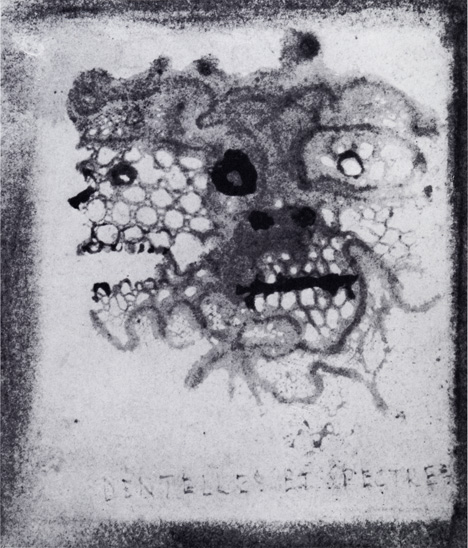
Lace and Ghosts - Victor Hugo, 1856
Lace and Ghosts – Victor Hugo, 1856

Laundromats, like bus stations and West Virginia motels, are weird freaking places. The kinds of places haunted by parasitic ghost-men, where thoughts echo and sentences often end without periods– just like in “Laundromat,” Smith Smith‘s piece from our Fall 2014 issue

{ X }

THE LAUNDROMAT LOOKED NO DIFFERENT ON THE OUTSIDE. It was bulbous and tar-black, rising from the concrete at the intersection of Garden Street and a pile of rusted bicycles, where it had stood for ninety nine years.

But what I found inside was a ghost-man, a functional yet parasitic half-being. As I entered, my thoughts blended with his as if we were light and shadow, as if one of us could only exist as a function of the other. He drank from a mug. He wore dark jeans and faced with tired eyes the spinning, noisy chambers that washed the traces of a town’s life from its clothes.

He spoke first, “You’re early”

“Don’t be silly. I have never seen you before”

He rolled his eyes. The ease of our interaction was uncanny, our words and thoughts like echoes.

“Go home. I’m working” he told me before taking a sip of his drink, his sagging eyes in a trance, following the cycling of the chambers.

“Oh please, nobody knows you exist”

He grunted and said something absurd.

His tone suggested omnipotence and I decided to call him out, “Yeah like hell you are, and I’m the devil.”

He turned to face me and I could no longer see him. I laughed and spit on the floor, wiping blood from my brow. The roar of the spinning chambers rose in volume until we were both part of the crescendo. I felt airless, lungless.

Yet I spoke, “sorry I just expected –” then he spoke from nowhere, “don’t expect things”

my

mind began to fill with static, with hallucinations of threadbare roads

my

mother’s withered screams overlaid with finger-mist drowning us in His brightness

I

felt shadows and an unworldly heat beneath my eyes I lost

autonomy

And our voices erupted.

“the consciousness of man is a fucking fallacy”

Our eyes softened. We were fading and we knew it.

“trust me you need me you’re lost let me inside you”

“you feed on the young, the hopeless”

“take me inside you”

“I couldn’t care less about your metaphysical cock”

Yet we

rambled for years about giving and taking, unable to distinguish us from us

We

decided to stop expecting sensation

We

fell in a sort of exhausted love, the ghost-man and I

We

spent nights dying together on that tile floor, unclothed, unbodied, listening to the roar of the walls, wondering silently

if we

were platonic

{ X }

SMITH SMITH lives and ruminates in the Midwest.

“Chicken Sandwich” – Fiction by Rebecca Ann Jordan

Chicken Parts - Frederick Sommer, 1939
Chicken Parts – Frederick Sommer, 1939

The dotty narrator of “Chicken Sandwich,” Rebecca Ann Jordan‘s contribution to our Fall 2014 issue, just wants to make the world a better, pink-slime-free place. All that’s standing in her way are McDonald’s corporate interests… and those pesky demons in her blood. 

{ ONE }

ONE WEEK AFTER GETTING MY NEW JOB AT MCDONALD’S, I go to the doctor because it hurts to walk. I’m told I have an in-grown toenail, and I need surgery to fix it. It’s going to be a death sentence; it’s dead winter in Colorado, I live alone and I have no social life except for my mom’s occasional calls and now my coworkers too, and after the surgery it’s going to be two months of recoup time, during which I will not be able to walk on my foot except to go to and from the bathroom.

{ TWO }

After a day of feeling sorry for myself, I think maybe I should pick up one of those old dreams that used to haunt me. I could sew, once upon a time. I Google the only fabric store in a 50-mile radius and drive an hour down a dirt road and pull up into the driveway beside a ghost-town lemonade stand. In the distance there is a fence, presumably with cows behind it. Lunch break done, I drive back to work without getting out of my car.

{ THREE }

Maybe with my last days I should try to change the world in a small way. This has never occurred to me before, but the impending two-month death has me thinking clearly. I have never been the lucky sort, but “You’re up, kid,” says the manager (whose name is Reba and who I think is a lesbian), because the fry cook dies suddenly in his sleep. I guess it’s not hard to do if you fall asleep in your car. I notice immediately the pink slime that the media is having a heyday about: the unnatural chicken parts. It’s a responsible choice for the earth, so I decide to turn vegetarian.

{ FOUR }

I try a hand at my hobbies again. With my first two weeks of wages I buy a digital camera that can do a bunch of things I’ve never heard of. I spend my lunch hour wandering around the parking lot photographing broken bottles, as though it’s some metaphor for the state of the world or my broken toenails. Speaking of toenails, they’re victims of the camera too, at night in my bathtub, with the camera strap dangling in the water and my toes on display against the tile wall.

{ FIVE }

I start getting rejection letters. The camera gets a time-out in the trunk of my car. I leave it there indefinitely, just in case.

 { SIX }

I join a local meet-up for vegetarians. We eat hummus and carrots, which somehow reminds me of snapping off dirty toes. There is a baby-faced man named Arnold who whispers something about a co-op. I don’t know what a co-op is, but I’ve never been interested in group sex.

“Now,” says a teeny little woman of 60 years, “let’s talk conversion. You’re new, so just watch, but feel free to chime in. What we want is to show the world about the horrific crimes that happen when we eat animals.”

“I work at McDonald’s.” I say this to prove my ethos.

Instead they all begin to scorn the sort of people that enable places like McDonald’s.

I second-guess my decision to be a vegetarian.

 { SEVEN }

“I want a chicken sandwich with fries.”

I overlook the fact that fries have not exactly been outlawed by the FDA yet, but they can still kill you, like everything. “We’re having a special,” I lie, “on Big Macs.”

“Oh, I don’t eat beef,” the man with the stiff hair and stiff tie says. “Just the chicken sandwich, please.”

“No. I don’t think you understand. It’s cheaper with the Big Mac. I can take the patties off.”

“What I want is a chicken sandwich.” I think this man hates me, but doesn’t he know I’m trying to save his life?

“Please, please buy the burger.”

The man leaves. Apparently Reba thinks I show promise because she lets me keep my job in the back, where I don’t have to talk to anyone, just keep plopping pink slime onto the stove.

 { EIGHT }

McDonald’s is open until midnight. I trudge through the snow at one in the morning. The parking lot has been cleared by salters but I put my boots down where the grass used to be and where the crystalline snow now is, because it gives me immense satisfaction to make my mark, like the satisfaction of breaking tiny bones.

I don’t know why I never noticed this before. On the balcony above my unit and three units to the left, there is a woman who is naked from the waist up. She leans over the balcony, smoking a cigarette, and her hair is curlier than mine. She probably gave up trying to tame it when she hit puberty. I think, with the moon behind her like that, wouldn’t she make a great photo? I run back to my car on the tiny bones and find my camera in the trunk. When I come back the glass door slides closed, and I can’t see inside because it is so damn bright out with the moon. I go into my apartment and run a bath. Continue reading “Chicken Sandwich” – Fiction by Rebecca Ann Jordan

“Cold Duck” – Fiction by Joseph Tomaras

 carverFor decades now, hundreds of short fiction writers have been regurgitating the esteemed Raymond Carver– but as far as we know, none of those writers has dared to do so the way Joseph Tomaras does in his story “Cold Duck,” from our Fall 2014 issue.

{ X }

– THIS ONE TIME, I WAS SO DRUNK…

– How drunk were you?

– I was getting to it. I was so drunk, the next morning I vomited up Raymond Carver.

– As in just one story, what we talk about when we talk about whatever, or the whole fucking Collected Works?

– No, not his stories or writings or whatever. I vomited up Raymond Carver.

– How the hell? He’s been dead for 25 years.

– How the fuck should I know? I was that fucking drunk. He was totally alive when he came out of my mouth.

– Was it, like, a tiny Raymond Carver, like that tiny Elvis character they used to have on SNL?

– Fuck, no, I wish. Full size.

– How the hell did he get out of you? How the hell did he get into you?

– I already told you, I have no fucking idea. It was just one of those nights. I didn’t really get any sleep, and when the sun was rising, I could tell I was going to yak. Couldn’t even get to the toilet, just had enough in me to roll onto my side and face the edge of the bed so I wouldn’t choke on whatever the hell was surging out of me. You know when you’re really vomiting so hard that you have to keep your eyes shut the whole time, and it feels like you’re giving birth out your mouth like, fucking, fucking, uh, Kronos vomiting up his kids, the Olympian gods, that’s what it was like, so I didn’t see what it looked like when he was coming out. It did kind of feel like I was getting jabbed with fingers, elbows and knees from the inside, though.

– Did you at least get any decent writing advice? Continue reading “Cold Duck” – Fiction by Joseph Tomaras