Category Archives: Fiction

“a Stone and a Cloud” – Fiction by Brendan Byrne

The Familiar World - Rene Magritte, 1958
The Familiar World – Rene Magritte, 1958

The grand finale of our Winter 2016 issue is Brendan Byrne‘s “a Stone and a Cloud,” an unforgettable short story of modern alienation & techno-anxiety. But not only is this story your last look at FLAPPERHOUSE #8– it’s also your first look at the forthcoming anthology by the esteemed Dark Mountain Project, in which “a Stone & a Cloud” will be reprinted later this Spring.

{ X }

THE FIRST TIME I MET CLARE SHE TOLD ME SHE DIDN’T WANT TO BE HUMAN ANYMORE. She didn’t tell me verbally or via backchat, but from the way she tilted her head when I introduced myself, her lips pressing together, her eyes vacating, as if she was trying to imagine herself inside me, somewhere past the skin, the skull, and the meat. And then there is the fact that Artur introduced us.


An Open Field. You stand in it, and the background blurs. A thick sheen of rain obscures the horizon, or maybe your eyesight fails to serve the level of detail around you. Like a ’70s film on an HD screen, you can see more than you’re capable of being comfortable with. You sit; the grass underneath you supports you unquestioningly. Your hands hover in front of you: they want to do nothing, cracked and aching as they are. You lay back; you are supported perfectly, the mound of your lower back fitting with the slope of the land. You ever so faintly arch. Are you on an incline? It is such a gradual gradient that you would never notice. The sky above you is woven with soft gray clouds and their manatee offspring. They truck slowly across. There is no threat, though you know it must rain often enough; the land is too green. The field reminds you of somewhere you have never been but have read about online, someplace authentic, someplace where you can be yourself, a place free of politics and anxiety. You twitch, sleeping with your eyes open, but you don’t need to dream: the clouds pass above.


“You don’t look like a videogame designer.”

“What does one look like?”

This conversation, she’d say later, had been repeated endlessly. The guy shrugged, his ice cubes trying to crawl out of his cocktail. He wasn’t embarrassed, but he didn’t have an answer. I could have answered: not so blank, not so restful.

Instead I asked her which games she’d designed. When she told me, I was surprised to find that I’d played one, and told her so. “It has decent market penetration among your population.” She said it cold and slow enough that she could have been reading it off a spreadsheet. She didn’t give me any body language.

Not knowing what else to say, I introduced myself. The guy with the ice cubes looked at me indolent and aggressive as a medium-sized cat, and she said to me, “Artur was telling me I should talk to you.”

“About what?”

She didn’t respond immediately; she was still looking at my face. The guy with the ice cubes began saying something, so I nodded once, raised my glass of cheap white wine and walked away. I drifted to the edge of the roof; the scrum of people got thicker. They surrounded the bar, though nobody was getting drinks, just admiring the rough, dark wood, the brass scalloping, rough and warped; it had just been salvaged from the captain’s stateroom on a recently decommissioned destroyer and bolted into the roof. Someone in engineering tried to explain the process to me but eventually gave up, lacking reassurance. I wondered if any of Artur’s people self-styled as a woodsmith; Artur certainly didn’t. They were probably going to hire some artisanal Brooklyn guy with a superior website and beard to come in and spend several weeks imaginatively restoring it.

I walked to the opposite side of the roof. There was no one there, just the skyline. I could be impressed by it, if I let myself. I turned and looked back to where Clare was standing, next to a kind of plant I’d never seen before. Artur was there, wide and short and game in his perversion of business casual. They both looked at me. He grinned and waved me over. I mimed a grin, drained my glass and left the party.


She stood almost six foot. Her hair was short cut, yellow as a digital rendering of straw. Her avi was a collapse of autumnal humus, undergrowth that looked like it had been churned in some herbivore’s stomach sacs and exuded. She wore no jewelry. Her social was protected; I couldn’t see anything. I didn’t send a follower request. She’d been wearing a tortoise-shell shirt, shellacked like the animal’s skin. Her fingers were thin.


NYU MFA ’10, she’d done a game as her thesis. Assemblyline Worker #5697 @ Apple Plant #72, Guangdong Province! was released right before Steam launched its OS X platform, leaving it just underexposed enough to become culty. “There was a vogue toward boring the player,” she said in an interview two years later.  “This was, I think, partially lifted from the Contemporary Contemplative Cinema movement, which was at high tide then. Indie gamers wanted to suffer for their play. I was happy to help them. And the Foxconn suicides were in the news. Apple backlash was kicking up. Jobs wasn’t dead yet. It seemed obvious. I could do it, so I did it, and then it was just this thing, outside of me. I let it stay there.”

Continue reading “a Stone and a Cloud” – Fiction by Brendan Byrne

“Meets All Conditions” – Fiction by Kalpana Negi

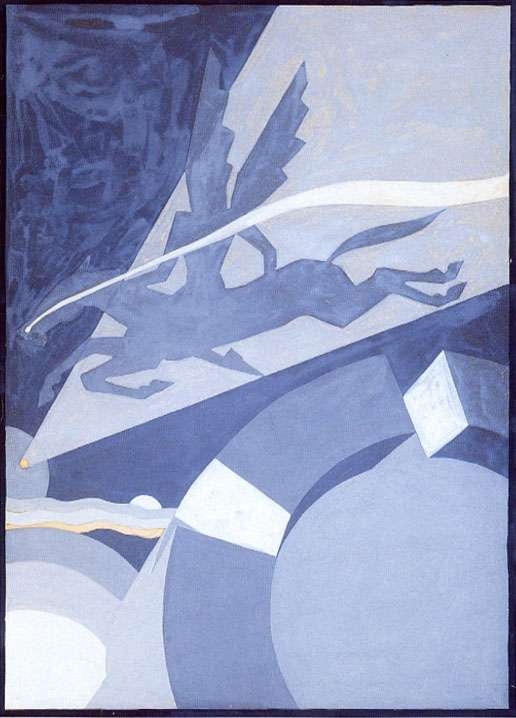
The Voice - Barnett Newman, 1950
The Voice – Barnett Newman, 1950

A woman’s obsessive search for purity drives  “Meets All Conditions,”   Kalpana Negi‘s intriguingly surreal short fiction from our Winter 2016 issue.

{ X }

THE ORDER OF THE THINGS WAS TO MAINTAIN UTMOST PURITY. The obsession so pathological, neurotic, crazy and fanatic and infused with a hyperbole stretched so far that it laughed at its own ridiculousness. Purity: A non-existing black hole, milk curdled with sourness and floating in whey—undefined, disbanded, scattered. A bad joke constructed to collapse on a passer-by. That’s why when she was told she needed a “pure” box, Gita simply threw a fit. She slapped that woman Mala on the face, pulled her from the cushy chair and dragged her out of the house.

“I swear I can help you!” But Mala was standing on the porch by now. As a woman, that word exploded a bomb within Gita, its hidden connotations angered her. But it had to be found, the pure box, it was important for her survival now. The dew drops of reasoning cooled her head and she thought about it calmly.

“Do you mean anything that can be touched, felt or seen?” But it was not the box she was talking about.

“That’s right.” Mala was back again on Gita’s invitation.

Because the bigger problem than finding a pure box for it was to know whether what she wanted to sell was eligible at all. A person’s voice could certainly not be touched, felt or seen. Not in orthodox ways at least.

“Of course it can be!” Mala pressed Gita’s hand, as if trying to squeeze a nod out of her. “Watch this.” She made a small ringlet with her lips and emitted a sound. What started as a hiss and developed into a whistle became a roar that could not be likened to any sound that existed on the planet. Like a flute that starts off easy and loses its temper. That sound broke a few glasses, invited bursts of loud and nasty comments from the neighbors and proved its point. “You see what I mean?”

But Gita was unconvinced. A wave sneaks into your brain through a tiny, inverted, snugly fitted loudspeaker in the ear canal and unsettles sleeping toddler-like tiny hair. Result? Voices you hear. How can a thing like that be touched, felt or seen? Gita continued to argue within herself and out. “But you know, I would say, even sorrow, happiness and anger are more tangible than voice. What did you sell?” Gita picked up a biscuit and bit on it with her slightly protruded teeth, wanting to really hear than be heard.

“Hatred.”

“Very wise.”

“Well, it was in high demand back then. Now everyone has it and no one wants it. They even have software.”

“Does hatred need a ‘pure’ box too?”

“No.” Of course not. Hatred can’t be infected with love. Hatred, like poison, turns everything into itself.

Continue reading “Meets All Conditions” – Fiction by Kalpana Negi

“The Nest of His Love” – Fiction by Jon Savage

Kennedy Motorcade - Audrey Flack, 1964
Kennedy Motorcade – Audrey Flack, 1964

A boy navigates early-60’s America raised by his damaged veteran father in “The Nest of His Love,” Jon Savage‘s exquisitely brutal contribution to our Winter 2016 issue.

{ X }

A SERIES OF HABITS

’62 was the year My Old Man retired from the Army, and without the daily routine of the service, he took up a series of habits—wrapping his lips around a bottle of hard liquor like he puckered-up for a kiss; cleaning his pistol during the night’s late hours in the strobing light of our color TV while telling a story about the wars that still raged in his mind; and last of all—smoking through packs of Embassy’s, complaining about their new filtered cigarettes, about how he had to try too hard and always got too little.

A Mode of Crisis

Near the end of ’62, My Old Man talked about the Russians a lot. He went on about Soviet Scud-A missiles and the spread of Red across hemispheres. He drank beer and screamed at the nightly newscasts. Lost control and waved his pistol around while shouting, You think Stalin is dead, you mother fuckers between puffs of his Embassy’s.

Then, in October, it happened. The face of John Fitzgerald Kennedy flashed across our television screen. He talked like a steady drum. He said the Soviets were moving missiles.

My Old Man never stopped to say I told you so. He took a series of precautions that bled into the rules of our home, all in the case of disaster. My Mother was required to keep a certain ration of canned goods in the cabinets. We kept our shoes lined up near the front door. He backed the Buick into the driveway any time he returned from the hardware store to pick up more matches and candles.

This went on for almost two weeks—our family halfway out the door with cans of peas and navy beans in the crooks of our arms. My Old Man would run into the house with a whistle clinched between his teeth, blowing his alarm for an evacuation. He screamed like a gym coach. He yelled for us to move our asses as we hustled out the door cradling blankets and jugs of water.

And when the three of us were packed away in the Buick, My Old Man would put the keys in the ignition, check his watch, and say, That was slow. Lucky for us it wasn’t real.

A War Story

He said he’d seen four big, borsch-eating Ivans rip a Jerry limb-from-limb after the Kraut sonofabitch was found snoring-drunk in a liberated Belgium brothel. They tried to weasel some information out of the poor bastard, but the Kraut was drunker than a skunk, and the Ivans didn’t speak a lick of Deutsch. They put the Jerry’s own P38 to his head and shouted Roosky like it would make a difference.

They kept straight faces as they stripped him naked and dragged him through the street. They announced him to the freed citizens and the soldiers, paraded him around for the Belgians and the Tommies and the Americans and the other Ivans to spit on and kick. They threw him in the farm mud. Pushed his face in it. They rolled him around in it til he was coated with pig shit. They beat him for hours, til they got tired of playing around. Then they took hold of the Jerry’s arms and legs.

Continue reading “The Nest of His Love” – Fiction by Jon Savage

“How Emma Jean Crossed the River” – Fiction by Shawn Frazier

Go Down Death - Aaron Douglas, 1927
Go Down Death – Aaron Douglas, 1927

A woman on the run from the Klan ends up on an otherworldly journey in “How Emma Jean Crossed the River,” Shawn Frazier‘s powerfully gothic short story from our Winter 2016 issue.

{ X }

“I am confident that there truly is such a thing as living again, that the living spring from the dead, and that the souls of the dead are in existence.” —Socrates

FLASHLIGHTS SPREAD OVER THE WATER LIKE BRIGHT EYES. I ducked. Branches scratched at my legs and arms. The white devils still chased after my Jacob. I tumbled over fallen logs and fell down into the river. The current dragged me under. Quick. I saw so many poor souls stuck between rocks. If black folks knew what was buried in Darlington’s River, they stop holdin baptisms.

We was on our way home once we heard the hounds. We’s stompin through the wood, back from warnin folks that the Klan was comin.

“Emma Jean, go hide by the oak tree where we first kissed. I promise to be there.” Jacob told me. The fool—he called them Klan boys crackers. But I was proud—it was the first time I seen him hold his head up to white men. It was always Yes sir, no sir, and thank you sir before. Where would you like me to nail this sign? NO COLOREDS WANTED, sir.

Under the water. I seen one skeleton dressed in a suit and a woman in a nightgown holding a baby. A man in overalls had some flesh still on his face. He turned his head at me, seemed he grabbed the hem of my skirt. I pulled and pulled, for I don’t know. Til finally my skirt tore and I floated away and up to the surface where orange and brown leaves floated. I reached land and crawled to a patch’a oak tree. My face and my hair and clothes was wet and filthy with mud.

In the sky, the moon looked like a silver coin. And there was stars. I rested on land and stared at the twinklin. I smelt gardenias. Like a good bottle of perfume I once broke whilst cleanin a house. I wanted to be rid of that odor, but it grabbed a hold of me. A rattlesnake slithered in the gardenias and dashed off through the grass when it seen me.

I put my hand around a flower stem, but the petals fell. Each time I touch one, it died. The white petals crinkled and the perfume smell disappeared. I placed my hand on an oak tree, the leaves fell. Leaves turned yellow, brown and orange. The branches of the oak become toothpicks, stripped of their leaves.

An as I sat there, soakin wet, the moonlight shone out on a ship floating toward where I rested. Big black letters was scrawled on the ship’s surface: R.I. and a third word was all but washed away. There was a loud noise from the boat and the white sheets billowed out from the masts like clothes drying in the sun. A faceless boat covered by fog. Someone held a lantern. That ship dropped its anchor and the water splashed. And they pushed a bit of wood out onto the shore. A young colored boy came down the plank.  He read my name off a clipboard.

“Emma Jean, I apologize for coming so late. A storm came.” He made marks on his clipboard with a feather pen.

Bats hung beneath the ship’s railing. I stepped out from behind the oak.

“I am the ship’s captain, Henry.” Henry smiled—his teeth was cracked and yellow. He said, “Don’t be scared, Emma Jean.”

He wore a cotton blue navy uniform and had medals on his great coat. I never seen nobody, especially no colored, dressed so well unless it was for a funeral or he was headed to trial or it was a Sunday. A red carnation hung out his penny-shaped pocket. His swoll belly stuck out, strainin his coat buttons.

I whispered because I thought the Klan was still in the woods. “Did you see a man? He got on a pair of overalls. This tall,” I held up my hand, “and wears a hat. His name is Jacob.”

“Emma Jean, we are ready to go.”

“How you know who I am? What do you want? I am a married woman and my husband is out here with a rifle.” I lie about being married. I stepped away not sure what he wanted. A wind shook the leaves what was left on the oak.

And Henry said, “Poor thing, you look tired. Come with me. I will take you to where he went.”

I thought that why did Jacob leave me? He went where it was safe. Sure he would. If he was someplace safe, I would be there too with him. Continue reading “How Emma Jean Crossed the River” – Fiction by Shawn Frazier

“Damaged Goods” – Fiction by Ron Kolm

Clutter in Basement - Tomwsulcer, 2011
Clutter in Basement – Tomwsulcer, 2011

A city apartment dweller is beset by clutter and kooky neighbors in “Damaged Goods,” Ron Kolm‘s comically claustrophobic short story from our Winter 2016 issue.

{ X }

“SONOFABITCH! GET THE FUCK OUT OF MY CAB!” drifts through the open third floor window, waking me up. Damn, it’s probably my downstairs neighbor, Mitzi, returning home after another night out. She consumes amazing amounts of alcohol to blot out the pain she’s in. She suffers from osteoporosis; her muscles and ligaments atrophying as well. The only way she’s able to ambulate at all is by using numerous braces and splints: small ones on her arms, large ones on her legs, a corset-thing for her spine. Plus she’s got a complete set of dentures, which she pops in and out (to get the occasional laugh) and one glass eye. To complete the picture, she must weigh close to 300 pounds. Her brace-like contraptions are essentially tiny dams holding a tremendous lake in place. She’s usually still sober enough at closing time to make it into a cab where she immediately unstraps and unhooks them, probably heaving a huge sigh of relief as she does so. The moment they’re all undone her shapeless body flows like unchecked lava into every crevice of the back seat and she passes out. I totally sympathize with the frantic cabbie, whose angry voice I can still hear, and wonder how he explained this situation to his dispatcher.

“Pockita-pockita, Brooklyn Bridge, squatch-squatch, wrap-it-up!”

Great. Eduardo, who lives in the first floor front apartment, must be awake too. Eduardo is a small dark man from Panama. He has salt and pepper hair–mostly salt. Smoke and fire are his elements. He disconnected the old gas stove in his kitchen, removed the jets and burners, and filled the resulting cavity with charcoal which smolders day and night, creating a dense black cloud. We called the fire department more than once after he moved in, but they said there’s nothing they can do, so we’ve learned to live with it.

If his element is smoke, his expertise is cunnilingus. He has set, he assures me, an official record of two hours and forty minutes while doing it. His entire stock of broken English expressions revolves around that particular part of the female anatomy and his special relationship with it. “Windshield wiper,” he’ll say, elbowing me, or “Brooklyn Bridge.” Sometimes it’s “going to the basement” but most of the time he calls it “swimming.”

I know I’m not going to get any sleep unless I help the cabbie get Mitzi out of his car and into her apartment. I pull on my pants and slippers and head for the street. As I pass by his door, Eduardo throws it open, smoke billowing around him like a stage effect, shouting “I’m gonna break my nose! Wrap-it-up!” and leers in my general direction. His glasses are fogged–spirals of smoke rise from his sweater. He places his forefingers and thumbs together, so that they seem to form a crude vagina, and sticks his enormous meaty tongue through the result, wagging it up and down.

“Chewcha!” he cackles.

“Eduardo, you are a sexist pig,” I say, trying to wave him back into his apartment.

“Chung-doom-bloom,” he sniggers, retreating.

Somehow the cabbie, who’s a big guy, and I manage to drag Mitzi out of the car and into the building where we deposit her in front of her apartment door. The driver goes back out and brings in an armload of splints and her purse, which he drops next to her inert form. He then gratefully exits, having collected his fare in advance. Now there’s only the little problem of rousing Mitzi and making sure she gets safely inside her flat. Not a moot point as Eduardo materializes in the hallway in a puff of smoke like a sooty genie. He proceeds to dance around Mitzi’s supine body, pointing out the, by now all too obvious, fact that her legs are spread wide open and she seems to be lacking any undergarments, which drives him into an absolute frenzy.

“Toonyfish! Chewcha! I’m gonna go to de basement and break my record! Two-to-one!”

“Damn it!” I hiss, grabbing him by the shirt and shaking him to break the spell. “Please get back in your apartment, Eduardo—this isn’t helping things!”

I push him away from Mitzi and clumsily try to rearrange the voluminous folds of her skirt in such a way as to cover her exposed parts.

“Mitzi, please wake up. Mitzi, I need your help. Mitzi, where are your keys? Mitzi, this is a nightmare!”

Continue reading “Damaged Goods” – Fiction by Ron Kolm

FLAPPERHOUSE Podcast #1 + an Excerpt from “The Wendigo Goes Home” – Fiction by Sara Dobie Bauer

If you haven’t already heard, the very first FLAPPERHOUSE Podcast has taken to the air! This 30-minute episode features an interview with the incomparable Sara Dobie Bauer, where she reads an excerpt from “The Wendigo Goes Home,” her contribution to our Winter 2016 issue. The podcast is below, and the text of the excerpt is below that, if you’d care to read along…

{ X }

CLEVE PACKER PRIDED HIMSELF ON EATING ONLY PEOPLE WHO WERE ABOUT TO DIE. Over his hundred and fifty years of cannibalism, he’d evolved not only his senses but his morality.

While traveling through northern Ohio, he smelled death on a large young woman with blond hair and expensive shoes. The scent was subtle. She wasn’t the one dying, but someone close to her. Cleve approached and made conversation at the local coffee shop. She was happy to oblige, Cleve looking so tall and handsome in his best brown suit.

Her name was Bree Shepherd, the manager of a high-end clothing store in Cleveland, single but looking. She liked to talk about herself, her family. Her mother was going through some sort of aging crisis, embracing hot yoga and spin at her local gym. Bree said she even suspected her mother of shopping in the juniors section at JC Penney, all in an effort to “stay young forever.” Her dad was a retired lawyer who now spent most of his time reading murder mysteries and pretending he would one day write a novel. There was the elder sister, Bianca, who was married with three children. Bree talked most about her little brother: poor Blake, the “hopeless homosexual”—perpetually single, despite his good looks and pleasant, albeit quiet, demeanor. She said he studied science at the nearby university.

Cleve was careful to say very little about himself, other than that he was new in town. He was always new in town.

After a refill, Bree invited him for a late summer bonfire at her parents’ house where there would be extended family and friends, and “Oh, won’t it be nice for you to meet new people in your new city!”

When they parted, she waved and carried the smell of death down a sidewalk lined with leafy trees at full tilt August green. In her absence, the air smelled of coffee grounds and oil from nearby leaking cars.

The sick person could be anyone, really, but Cleve suspected he would meet that person if he stuck close to cheerful Bree Shepherd. Perhaps at the bonfire, filled, she said, with so many family and friends.

It had been weeks since his last feast; nothing satisfactory, just an old woman in a lonely house that smelled of dishwasher soap and Band-Aids. He preferred younger meat. In the early 1900s, there were all sorts of diseases that sprung up and took people by the dozens. Such a holiday, back then! But such feasts were rare nowadays, with advances in medicine and preventative treatment. Still, there was hope for the bonfire—hope for a good, hot meal.

Continue reading FLAPPERHOUSE Podcast #1 + an Excerpt from “The Wendigo Goes Home” – Fiction by Sara Dobie Bauer

“Fire Ants” – Fiction by Perry Lopez

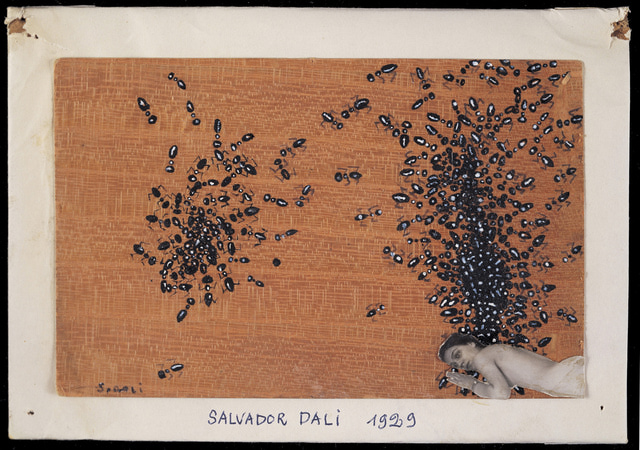
The Ants - Salvador Dali, 1929
The Ants – Salvador Dalí, 1929

Get toasty & tropical with “Fire Ants,” a surreal & revolutionary piece of short fiction by Perry Lopez from our Winter 2016 issue.

{ X }

THE CUBAN’S SKIN IS BLACK WITH SMOKE. He sits beneath the shade of the palm, cross-lashed with sunlight through the fronds, rolling a dead ant between his fingertips. As he toys with it, the soot comes off his pads and encases the ant in a sticky ball that grows and grows until there is no more ant-shape to it. Just a tiny planet of pitch, smoothly gyrating and gathering and dereticulate, obeying the laws of form. He is shirtless and shoeless and thin, his eyes are blood-webbed and watching. Thermo means heat means fire.

He cannot smell himself. Cannot smell the ocean either, though he can hear it. That mellow storm of crash and suck he has heard all his life. He cannot smell the rotting plantains, but tastes them when he breathes. Sweetness and salt in the air that burns in his raw throat, sticks there piquantly burning. His own smell covering everything, but then he cannot smell himself. All he smells is smoke.

“Ah Cristo, my eyes are stinging. I think I will go blind soon.”

Arlo is drunk. He may in fact go blind. They went to the University of Havana together where he studied science and Arlo studied culture. Now he is drunk with a bottle of fine spiced rum in each fist and is crouching over the anthill, squinting and rubbing at his eyelids with the back of his hand, spitting dark gobs full of cinder-grit down on the mound— the mound that sits between the two men and pulses with their frenzy, those thousands, those millions, their knobby red bodies strung together like simple molecules. Swarming along their prickly vortices, building up their warren of dirt on the shore.

He rolls the ball of grime back on his thumb then flicks it into the beach-grass, shooting out so fast and small that his eyes cannot follow as it disappears soundlessly into the airy shush between breakers. He looks back and searches for another.

“But so what if I do, eh? A man should go blind after seeing such a miracle as I have; the rest of the world would only disgust him! Make him wish he was in the dark, alone with just the memory.”

There are hundreds of them at his legs, drawn in by the acrid smell. They tickle-fight atop his toe-crests and caravan down along his shins; at his knees they eddy and trace out in strange ellipses, caught up in the foci of his body’s landscape, skirting his mountains. They are red and his flesh is black and they travel him without rest, cherry bright in the morning sunlight through the fronds, their tiny antennas held out like dowsing rods, silly stupid things, searching him for their need, something to carry back to the mound. They are hundreds but he cannot feel them. They cannot bite him and he cannot feel them. The smoke-crust is far too thick and they will find nothing to eat of his body today.

One ant stands motionless atop his kneecap, waggling its tendrils and watching the others scuttle-dance by. He reaches down and carefully crushes its head between his thumb and middle-finger, then pinches it up and sets to rolling again just like the last.

Across, Arlo spits and drinks and bares his teeth at nothing.

“And can you believe the fool had no guards posted? Only a Captain could be so stupid, so secure. Pah! What do you think it was that finally woke him, uh? The whole damn town knew his house was burning before he did, the pig! How he ran out still naked from sleep and batting embers from his beard to find everyone watching! How he looked back and screamed Oooooooh Mi Madre, Mi Madre, Dios ayuda a mi Madre…”

Between them and the sea is a comb of palms, their scaly shafts serried close like whale teeth, the kind used for straining. And will they hold out the tide? No, no, of course they mustn’t. See the salted, sandy bands about their trunks, a meter high where the surge-tide has risen and will rise and rise and rise again. Carrying it all back out to waste until…

Continue reading “Fire Ants” – Fiction by Perry Lopez

“Mothers and Demons and the In-Between” – Fiction by Janelle Garcia

Night at the Fairground - Alexandre Benois, 1911
Night at the Fairground – Alexandre Benois, 1911

Our Winter 2016 issue is plagued by the perils of parenthood, and crawling with creepy monsters– both of which you can find in Janelle Garcia‘s haunting flash fiction “Mothers and Demons and the In-Between.”

{ X }

WE WANTED SO BADLY TO SPEAK WITH THE DEAD, to make contact, even if we didn’t yet know anyone who had died. Our grandmother’s older brother, Ramón, didn’t really count. He only spoke Spanish, after all. But we imagined her death, even if we never said so: our mother.

Our grandmother warned us about the demonios. They’d call to us, whispering our names when we were alone—desperate, pleading whispers. They’d snatch up our souls if we made the mistake of answering them, if we so much as turned our heads towards the source of those whispers. Demonios lurked in the shadows, crouching in the narrow corridor between wakefulness and sleep. Their yellow eyes glowed like beacons, luring us into their embrace, we innocent girls armed only with the name Jehovah.

Say it out loud, she told us.

We pictured demons splintering in the dark or dissolving into puffs of demon dust as we shouted Jehovah, our voices louder than thunder. But she never told us what to do when our tongues, our lips, our throats seized, incapable of even a whisper. What were we to do when our bodies sunk into the sticky tar of that place where our bedroom looked the same, and the clatter of dishes could still be heard from the kitchen, where our bodies remained, wrapped tight in our bedsheets, and yet the air was not the same? Our lungs were always the first to detect we were not of that world, that terrible world of not asleep and not awake.  In that place there was only the torpor of fate, an airless sinking. Our demons waited in silence, and there was nothing we could say.

But daylight was the treacherous one. Morning tempted us to forget our terror. With daylight, shadows were shooed away, unmasked. If a squat demon was a pile of laundry, then a sunlit whisper could be chased down with fingers outstretched.

Continue reading “Mothers and Demons and the In-Between” – Fiction by Janelle Garcia

And Our Most-Viewed Pieces of 2015 Were…

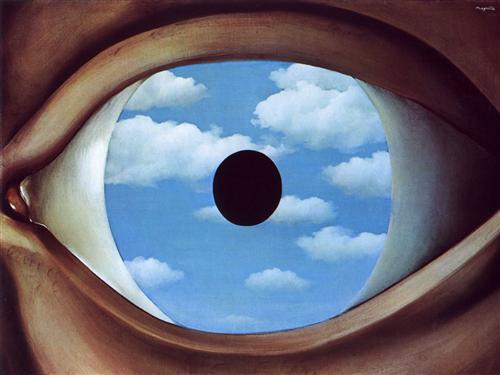
The False Mirror - Rene Magritte, 1928
The False Mirror – Rene Magritte, 1928

Nearly twice as many eyeballs gazed upon our website in 2015 than in 2014, and now we shall countdown the 5 pieces which attracted the most of those eyeballs this past year:

#5. “A Deer With the Head of Emily Dickinson” by Cassandra de Alba, a deliciously eerie poem which will also appear in Cassandra’s forthcoming chapbook of deer-centric poems published by Horse Less Press.

#4. “The Rud Yard” by Vajra Chandrasekera, a hilariously terrifying take on the future of the surveillance state, which we nominated for both a Pushcart Prize & the Best of the Net.

#3. “Gelid” by T. Mazzara, our Fiction Editor’s touching prose poem for a departed friend.

#2. “Earth Comes Down” by Maria Pinto, a bluesy slipstream story with an impressive second-place finish, considering we posted it to our site less than 3 months ago.

and the #1 most-viewed piece on our site for 2015 was “9 lessons in witchcraft” by Danielle Perry (another Best of the Net nominee), which vastly increased our cult following among the occult.

Congratulations to Cassandra, Vajra, Mazzara, Maria, and Danielle, and thanks for all the eyeballs!

“The Golden Hour” – Fiction by K.A. Liedel

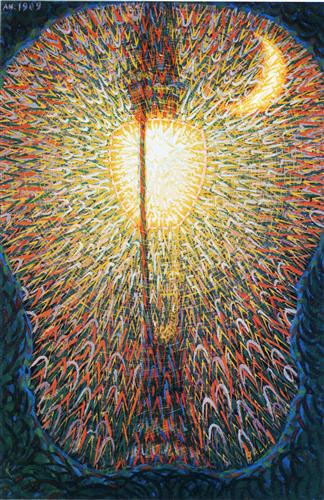
Street Light - Giacomo Bella, 1909
Street Light – Giacomo Balla, 1909

Time comes to an end, yet the world goes on in K.A. Liedel’s wonderfully strange & poetic short story “The Golden Hour,” the grand finale of our Fall 2015 issue.

{ X }

I ALREADY HAVE THE PINK FLAMINGOS and the gnomes, of course, plus the red-hatted jockey holding the lamp. Even the nana bent over her invisible garden with the fluffy white bloomers, the balsa one that practically glows under its shellack of dollar-store paint.

But there’s so much more out there yet. The figurines and birdhouses and whirligigs you can’t find anywhere else, born from the guts of their corner colonial, from its basement maybe. Outside its rippling flags are in every goddamn color from the Pantone wheel and the ornaments crowd around the lawn in a diorama of misshapen plasticine. You know the place, you know its pure topographical schlock. Those are the ones. My own personal MacGuffins.

Call it whatever but don’t call it looting. I’m liberating them is what I’m doing.  I’ve a damned finer destiny planned for them than their owners could ever dream. They’re gonna outlast the world that birthed them, as a vista of ugly rainbow polyptychs that’ll accompany my life into its eternal pause. My tacky, technicolor ushabtiu.

But let’s pause for a moment. Thinking back, all of this, this madness, started with a mere phrase. Temporal decay. There were others, too, just as vaguely terrifying. Prisoners of deterioration was a particularly graphic, albeit inelegant, one. Like a rejected Lovecraft title. And can’t forget UFOTU – that’s Ultimate Fate Of The Universe. Where would doomsday science be without its acronyms and scare quotes? They led off every newscast for a month, peppered between sports and stocks and weather, until the idea that time was dying became the first thing that slithered over the anchors’ lips and then soon the only thing that got out. It had erased the existence of all other events, slowly and silently, just as it was doing to life itself. Couldn’t be measured, couldn’t be seen. The skeptics barked about those last parts but we all knew it. The consensus was never spoken of much but it was inside us, that old, proverbial sinking feeling that can’t be quantified in a scholarly journal. Billions of people living their life under a crushing anxiety that soon grew into a vague sense of total, utter doom.

It wasn’t quite real for me, though, until I saw the president himself, shoulders up so far as to be around his ears. He was staring back at us through the TV in that same damn pose all his predecessors had assumed when some tragedy or crisis made society freeze in its place for a day or two to fret and mourn and look to the heavens, waiting for our frazzled nerves to be soothed by some suit who won just the right amount of swing states. On every single channel, even the local car lot show, even the golf coverage, even the Korean soap operas. That’s when I knew, there wasn’t gonna be a fix. No vaccine, no laser, no team of astronauts led by Bruce Willis, no nothing.

I’m not sure what everyone else felt at that moment, maybe they were reassured on some level,  maybe bought wholesale into the pledges and promises. But me? I was just scared. He uttered that phrase –  there it was again, temporal decay – three or four times in the first minute of his speech, and suddenly, I felt it. Fear. A real fear. Like your heart strangling your stomach. It was really happening. Time was dying, slowly but surely, crawling through the desert on its sand-scraped knees, a wanderer blindly rejecting its doom even as it fossilizes. That’s how I imagined it all going down. And we, us poor humans, would be stuck on its dry old bones like parched bugs, like the peeled-off sarcophagi of dumb, noisy cicadas, undying and immovable but still alive somehow, helpless in our stasis. Continue reading “The Golden Hour” – Fiction by K.A. Liedel