The Venus of Willendorf’s body is not something to be used to make a point in “Amiss and Amok,” one of four lyric essays by j/j hastain in our Winter 2015 issue.
{ X }
THE VENUS OF WILLENDORF IS PLAGUED with a peculiar but befitting dysphoria. Afraid of her aesthetic shifts ever being misread by others, ever being used as cultural stigma in support of any form of reductiveness, she is impassioned to emphasize: “Nothing in these shifts, nothing in this weight change, this weight loss, is indicative of anything lost.”
She is not trying to lose weight. She has just been more into root vegetables lately. Her weight loss is not meant to be a message or a future measure regarding the female form for generations to come. Her body is not something to be used to make a point. Her hands grab her own belly fat with a ferociousness that is familiar with itself. She is a living state; she is the summation of her skills at work to elaborate bulk.
She pulls her belly fat toward you and states: “I am still here for you in the ways I have always been. The path clots, congeals in certain areas before shrinking and settling back into itself again.” Fluctuations of the body are its valor. The drama in which to attend and attune is the enlivening and making-more-subtle of the body before it becomes entirely stone.
MY MOTHER GREW UP ON THE MYTH OF FARMS. “We’re from good, peasant stock,” my grandmother told her when she was young. The legend of the strong salt-of-the-earth, a fabrication of too many times reading the Bible. Even so, she was raised in a suburb, surrounded by the soft baaing of cars and the gentle crowing of car horns. Her family killed and ate the fresh meat of the long city blocks, grew up with the metallic sheen of industry dripping down from their dreadlocked hair, the hippy unwashed stink of progress and renewal.
That left my brother and me stranded between words and reality. When my mom got married, she had earth-stars in her eyes. She turned her sights to the mountains, to the rabid screech of raccoons fighting over garbage. She packed up the family and we drove out along a narrow dirt road that wound around redwood tree trunks so large that it took half a day to come out the other side.
I didn’t care about distance, especially when the bluebirds sang maniacally in the trees. The only birds I knew were pigeons, safely coated with gasoline dust, hopping around on twisted club feet. These shrieking birds flashing about with their iridescent flags of wings were too much of an alien takeover of the planet of my life, insidious as little green men with ray guns. I foretold Hitchcock and shut myself up in the princess’s tower.
My brother knocked on the door, took me by the hand and led me outside. He picked up a caterpillar and gave it to me–it turned into a monarch butterfly and sipped gently at my skin with its proboscis. “You see, Angie,” he said.
“Introduction: A Moor in the Onyx Ash Grove,“Amanda Sarasien‘s Borgesian contribution to our Winter 2015 issue, introduces us to a fascinating “novel in miniature” called Un Maure en frênaie d’onyx, written by Sylvain Dubois and reviewed by the highly intelligent yet somewhat cranky G.L.B. Pym. (Don’t forget to read the footnotes!)
{ X }
YOU MIGHT SAY THE DRIVING RAIN DROVE ME TO SYLVAIN DUBOIS. That afternoon, in Geneva, I had failed to locate the restaurant recommended to me by a discerning friend. I had wandered all morning under a leaden sky, as if tempting my luck, and so was not surprised when the heavens suddenly let loose, soaking my brand-new, bespoke wingtip brogues. I ducked into the closest storefront, only to find myself standing amid row upon row of sagging bookshelves. In some sort of numinous equation solved by the hand of fate, I had, by chance, stepped into the only space more comforting to me than a cordwainer’s shop. Fine Italian leather for full-leather binding, it seemed a worthy, albeit unnecessary, sacrifice.
And how, among the hundreds of thousands of titles all stuffed into that dim cavern, I ever alighted upon Un Maure en frênaie d’onyx, could also be described as kismet. While the owner pottered around behind teetering stacks of unshelved volumes, mumbling in German to a mangy, calico cat, I distractedly pried the book from its place, at first mistaking the rubbed gilt lettering on its spine for the name Dumas. When confronted with my error, I was tempted to return it to its place, but one glance out the window told me I’d have plenty of time to examine the contents of this little shop. I turned to the first pages. “Monsieur?” I called into the gloom, before remembering he had been speaking German. But, too late, the shopkeeper had already answered me in French, so I continued by asking if he knew anything about this Sylvain Dubois. The man furrowed his brow, squinted at me from beneath bushy, unkempt gray eyebrows and shook his head. Then, wordlessly, he turned and shuffled off.
Despite the series of serendipitous circumstances which led to my purchase of that first battered volume, I maintain that only my singular bibliophilic tenacity could have transformed happenstance into a true connoisseurship. I, alone and without the benefit of literary orientation, read the book, cover to cover, judged it entirely on its own merits, and proceeded to immerse myself in Dubois research, piecing together the fantastic fragments of a life we now know all too well. Thus, I do not hesitate in laying claim to the distinction of Sylvain Dubois’ first English-language reader, and it is under this authority that I introduce him to you now.
Sylvain Dubois was born Auguste Hauchecorne on May 22, 1893, in Bernay, France, the only child of Severin and Arianne (née Lacaille) Hauchecorne. At an early age, he eschewed the family profession of glassblowing and declared his intention to become an arborist. But, only seven months into his apprenticeship, his precocity got the better of him, when, behind his mentor’s back, he created a crossbreed he believed would protect surrounding trees from infestation by any number of insect species plaguing France’s orchards at that time. To test his hypothesis, he planted this new hybrid among a grove of the region’s oldest trees, and within one month, every single trunk was mottled with the scars of a previously unknown disease, contracted from the seemingly innocent little sapling. When it was learned the role Hauchecorne had played in this calamity, the youth was disgraced, his budding career in arboriculture uprooted.
Hauchecorne did not have time to contemplate his failure, however, for three weeks later, World War I broke out. Auguste, a vehement pacifist, fled to Brittany to avoid the draft, and adopted an ascetic’s life in the mythic forest of Brocéliande. Here he took the name Sylvain Dubois, moved into an old, hollow oak tree and subsisted on acorns. Unfortunately, it was precisely his pseudonym which gave him away. When residents of the local village reported the presence of a strange man who called himself Sylvain Dubois, it was only a matter of time before the French military connected the doubly arboreal name[1] to that failed arborist gone missing from the Eure district. He was summarily removed from his mystical home and shipped off to the front.
Once in the trenches, Dubois was assigned mess hall duty, eventually working his way up to head cook. It was during this time that he discovered writing when, attempting to develop an haute cuisine centered upon the acorn (a cuisine which, incidentally, did not prove popular with the soldiers), he found himself more and more absorbed in embellishing the written descriptions of his dishes. He then announced to his comrades in arms that upon conclusion of the war, he would go abroad, with the goal of penning a travelogue to the world’s great trees. While we can surmise that such a guide would have generated little interest from publishers, let alone readers, we will, in fact, never know, because not long after the armistice, Dubois checked himself into an institution and was diagnosed with shellshock, a condition he had heretofore been treating with cocaine. He spent the next four years in Fond-du-Lac Sanatorium in Bellevue, Switzerland, just outside Geneva.
Cassandra de Alba‘s “A deer with the head of Emily Dickinson”— one of three deliciously eerie poems she contributed to our Winter 2015 issue— is about a deer with the head of Emily Dickinson.
{ X }
A DEER WITH THE HEAD OF EMILY DICKINSON has been spotted all over town:
hugging the edge of the forest,
standing fog-shrouded in post-midnight
parking lots, up to its knees
in the river’s slow swirl.
The thing about the deer
with the head of Emily Dickinson
is that no one has ever seen her move –
she is never seen coming or going,
never leaping across the road
like the hundred of deer-headed deer
who haunt our forests –
the deer with the head of Emily Dickinson
is always standing there, stone-still
in the middle distance,
for as long as you care to look.
Pterodactyls were not marsupials, as scientist Edward Newman once theorized. But we like imagining them as prehistoric mall-rats whenever we read “Anthropogenic,” one of four poems by M.A. Schaffner from our Winter 2015 issue.
{ X }
THERE WAS A TIME WHEN PTERODACTYLS FLEW around the atrium through the fountain
that spurted up three storeys in the mall.
This shows it was never about just shopping
but the seafood crisis and thermal drafts
emanating from the first floor food court.
No, I can’t imagine what it felt then,
torn from oceanic vistas and plains
as vast as half the planet, as the roads
that tie one outlet plaza to the next
in a necklace of the world’s great wonders
then hung around its winged serpent’s neck.
Our own necks swell each day. Our collars shrink
to match the slow contraction of the time
allowed for empty spaces on the maps.
{ X }
M.A. SCHAFFNER has had poems published inShenandoah, Prairie Schooner, Agni, Poetry Ireland,Poetry Wales, and elsewhere. Other writings include the poetry collection The Good Opinion of Squirrels, and the novel War Boys. Schaffner spends most days in Arlington, Virginia or the 19th century.
From our Winter 2015 issue comes “The Broken Arch,” Reshad Staitieh‘s brief but powerful snapshot of two young brothers trying to survive in a treacherous land.
{ X }
“WHY WASN’T SHE HOME?” His brother says.
“Who?”
“Auntie.”
“She’s going to meet us later. Just be patient, Little Man.” His dry throat scratches.
Diyam hears small toes scraping at linoleum and imagines trails of dust left in their wake, like the slim tails of comets.
“Gret… Guhr-ee… Greet? Gree-ting-es?” Esam reads.
“Greetings,” Diyam calls from the freezer.
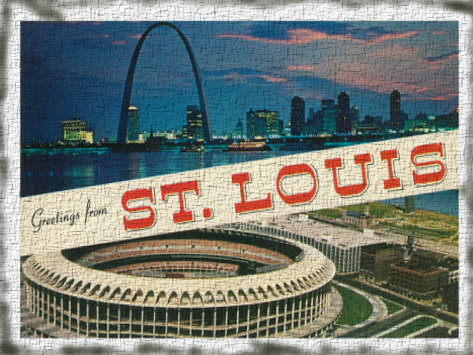
“Greetings. Fr-om? From. Stooloo-is?”
“Saint Louis. Greetings from St. Louis.”
“St. Louis. Yeah, got it.”
“Do you?”
The restaurant sign promised buffets with “well-known” dishes. It’s been three days since they’ve eaten. He hoped there would be pie.
His stomach rumbles.
There’s a room in the back of the diner, storage or a freezer. It is the tenth like it in two days.
“Yeah, I got it.” Esam answers after pausing and taking a short breath. “It doesn’t look anything like it anymore.”
“What doesn’t look like what? Be specific.” Diyam speaks through the steel doorway. The generators died, and the cold is gone. There is nothing left but heat.
“The gateway.”
“You mean the arch?” Diyam corrects. He scans the room. He smells mold and knows with well-honed instincts that food is nearby.
William S. Marriott and his spirit hands, circa 1910
“Ghost-Sick Jarvis,”E.L. Siegelstein‘s supernaturally funny contribution to our Winter 2015 issue, is an excerpt from his novel-in-progress. And while it makes us want to read the rest of the story right freaking now, we think it also makes for a very satisfying episode all by itself.
{ X }
IT’S LIKE NAILS ON A CHALKBOARD. Kind of.
There’s no sound, but I feel it in my inner ear, a rasping, sickening sensation tugging on all the tubes, nerves, veins and what-have-yous in the back of my brain. Or like a dentist’s drill, if you could somehow remove the actual sound and leave only the way it makes you feel.
This will be accompanied by quick flashes. An image. A phrase, or a word, or just a fraction of a word. Like a vivid dream you forget as you wake. The memory of a memory.
And along with this, a feeling. Sorrow. Frustration. Regret. Joy. Pride. Contentment.
That’s what it’s like to talk to the dead. They don’t appear standing in front of me or anything like that. And they sure as shit don’t like to talk in clear, no-interpretation-needed, complete fucking sentences.
My name is Jarvis Chumley, and I’m a goddamn medium.
Yes, that is my real name. It’s English, fuck off. I started hearing the dead when I was fourteen years old. Nobody else in my family can do it, though my Aunt Nigella claimed to be psychic. She died in a car crash when I was six. My mom, too. Same crash. Anyway.
Being a medium is not the easiest way to make a living. I’ve got a storefront in Astoria, Queens, which I share with another medium, Ivonne, who is a charlatan. There’s also a massage parlor in the back, where you can get the massage therapist to masturbate you if you leave your cash on the table and ask for the full service. No, I’ve never done so; that’s my place of business. All relationships concerning it must remain strictly professional. Also, I can’t come when the girl’s ancestors are screaming at her through me from beyond the grave.
It’s Friday night and I’ve got one last client before turning the place over to Ivonne. She does great business with the late-night drunk crowd, while I have every intention of being part of that crowd. The client is a fat Italian man-child with thinning hair, and I know he wants to speak to his mother even before she starts nattering in my ear. He looks at the door to the massage parlor – GUARANTEED RELAXATION & TRANQUILITY, it says – before looking at me.
“Are you the medium?” he asks.
“Sure am,” I say.
Our little sitting room is decorated in the traditional storefront-psychic style: a lot of silk, crystals, a weird plaster hand sculpture. The Italian man-child’s name is Tom, and as soon as he walks in I feel the presence of what has to be his dead mother making me want to spray my lunch all over my customer.
Capture of the Maid at Compiegne – James William Edmund Doyle, 1864
The 2nd of Jennifer MacBain-Stephens‘ 5 poems on Joan of Arc featured in our Winter 2015 issue is “Siege of Compiegne,” a lyrical look at the Maid of Orelans’ dramatic and scandalous capture.
{ X }
EVEN ROCKS BETRAY YOU. Chucked from above, split over silver fish helmets scampering up the wall. Not burned, stuck in the walls, keystones have nothing else to look at. So they smirk at dead bodies. When the talisman reads Joan’s transcribers’ notes it is already too late. The last group to leave the bar, the battlefield leftovers, eyes speak Guillaume de Flavy: traitor. His party trick of locking the gates behind everyone flayed facial skin. Joan’s last act in the Hundred Years’ War was meeting dirt with her face. Butcher men, sour men, like to pull things off of other things. Once, a blood orange spectrum of battering rams against torsos and teeth assaulted dusk’s skyline. Now the pillaging of tendons ends. Joan found a higher, abnormal light, put it in her pocket. No diseased white matter. She knows her molecules will burst at a million degrees. She waits, tied up. Meanwhile, enemy thighs squat, break bread over beef stock. Crush the crusts into the juice. God is too small.
{ X }
JENNIFER MacBAIN-STEPHENSis the author of three chapbooks: Every Her Dies (ELJ Publications), Clotheshorse (Finishing Line Press, 2014) and Backyard Poems (forthcoming, 2015). Her work has been nominated for Best of the Net, and has appeared in public place in Iowa City. Recent work can bee seen / is forthcoming at Dressing Room Poetry Journal, The Blue Hour, The Golden Walkman,Split Rock Review, Toad Suck Review, Red Savina Review, The Poetry Storehouse, and Hobart. For a complete list of publications and other odds and ends, visit JenniferMacBainStephens.wordpress.com
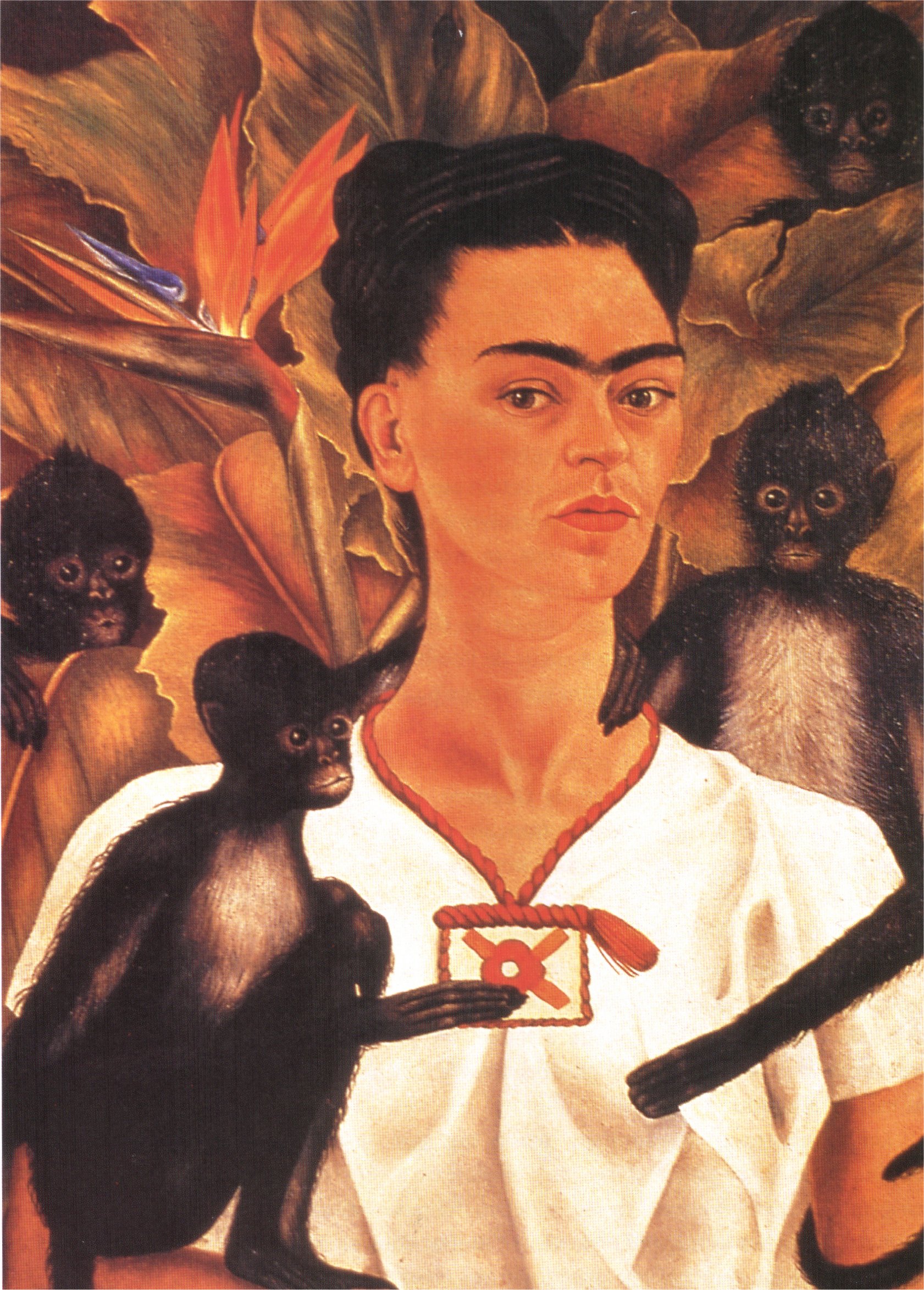
IN NEW YORK CITY, A SCULPTOR TAKES FRIDA KAHLO to see Cocteau’s The Blood of a Poet. In the first section of the film, an artist sketches a face and is horrified when its mouth begins to move. He erases the mouth, but it transfers itself to the palm of his hand.
Frida feels for her own lips with the tips of her fingers, but her mouth has disappeared. She rushes out into the lobby, pursued by the sculptor. He finds her holding a jumbo bag of popcorn, shoving the popped kernels into her mouth as fast as she can. She chokes, but continues to fill her mouth.
The sculptor pulls the bag away. It bursts, and popcorn fills the air. Frida is sweating. The sculptor pulls out his handkerchief and wipes her forehead above the unibrow that so many men find so appealing. He wipes her upper lip, with its faint black moustache.
Frida is nearly panting. I need the taste of salt on my tongue, she says by way of explanation.
Art and artists are always making us look at models, but in “Both of Djuna,” from our Winter 2015 issue, Angela Enos & Joel Enos make us look through the eyes of a model who’s looking at art, and artists, and how they look at models. And art. And also maybe themselves? There’s a lot of levels to navigate here.
{ X }
IT IS ALWAYS MORE INTERESTING TO BE A MODIGLIANI than a Sargent. The artist’s model thinks to herself as she sits, unclothed, on the wooden chair as their eyes all perceive and speculate and adapt her pieces and parts. It’s the interpretation itself. The act rather than the actual. Or is it actualization? Actualism?
Not for the first time she wonders if her inward view is more or less intense a gaze than that of those who view her from the outside. She’s sat for this particular group before. But today there are more of them than usual, new faces, new adaptors and interpreters. She rarely allows herself to ruminate, while sitting, on the many ways she will eventually see herself though someone else’s eyes. But with so many new eyes upon her this morning, she can’t help herself. I must distract myself from the distraction of anticipation.
So she looks back at them.
The young one with the wispy mustache that isn’t quite there won’t know any better than to be realistic. He’ll document every line and crease until he’s pushed me into a hard middle age. He hasn’t yet learned to take liberties with the canvas. The fear of being incorrect leads to harsh premonitions about my life.
The one that looks like a sea captain, with the cap on to shade his eyes, he’ll paint with period flair and later realize that he’s made me look like a snapshot of his mother from before he was born. I’ll like it, even though it won’t be me.
The academic, the one with the accent– Belgian? Germanic? From parts uncharted of Meso-Britannia? She cannot imagine him existing outside of the geography of this studio. He’ll paint me truly and honestly, with the angle of my nose unflattering and the curve of my waist in precise brushstrokes. It will not be beautiful, but I will recognize myself in his work, even through his fingerprints in the oil.
There is only one woman other than the model in the room. She sits away from the other artists, her easel not part of the half-moon cluster around the model’s stage. The model knows that this woman will work quietly on her own in a cloud of honeyed tea and turpentine in china cups. I will never see her work, but she will thank me at the end of the pose and disappear even faster than I do.
And perched on all of the easels, whether clustered or not, are her cousins. The two-dimensional women all share certain familial characteristics in the shape of their mouths, the protrusion of ears, but they are all distinct individuals. The model feels unsure whether any of her cousins are actually a representation of her self. But she knows the women on the easels are inarguably the girl on the stage. They are all Djuna in this moment, before signatures and initials have been scratched onto their surfaces and varnished into permanence. My part in this process is questionable. I am at best muse, but I might not be art myself.
![By User:MatthiasKabel (Own work) [GFDL, CC-BY-SA-3.0 or CC BY 2.5], via Wikimedia Commons](https://flapperhouse.com/wp-content/uploads/2015/02/venus_of_willendorf_frontview_retouched_2.jpg)







 FLAPPERHOUSE
