IN NEW YORK CITY, A SCULPTOR TAKES FRIDA KAHLO to see Cocteau’s The Blood of a Poet. In the first section of the film, an artist sketches a face and is horrified when its mouth begins to move. He erases the mouth, but it transfers itself to the palm of his hand.
Frida feels for her own lips with the tips of her fingers, but her mouth has disappeared. She rushes out into the lobby, pursued by the sculptor. He finds her holding a jumbo bag of popcorn, shoving the popped kernels into her mouth as fast as she can. She chokes, but continues to fill her mouth.
The sculptor pulls the bag away. It bursts, and popcorn fills the air. Frida is sweating. The sculptor pulls out his handkerchief and wipes her forehead above the unibrow that so many men find so appealing. He wipes her upper lip, with its faint black moustache.
Frida is nearly panting. I need the taste of salt on my tongue, she says by way of explanation.
Art and artists are always making us look at models, but in “Both of Djuna,” from our Winter 2015 issue, Angela Enos & Joel Enos make us look through the eyes of a model who’s looking at art, and artists, and how they look at models. And art. And also maybe themselves? There’s a lot of levels to navigate here.
{ X }
IT IS ALWAYS MORE INTERESTING TO BE A MODIGLIANI than a Sargent. The artist’s model thinks to herself as she sits, unclothed, on the wooden chair as their eyes all perceive and speculate and adapt her pieces and parts. It’s the interpretation itself. The act rather than the actual. Or is it actualization? Actualism?
Not for the first time she wonders if her inward view is more or less intense a gaze than that of those who view her from the outside. She’s sat for this particular group before. But today there are more of them than usual, new faces, new adaptors and interpreters. She rarely allows herself to ruminate, while sitting, on the many ways she will eventually see herself though someone else’s eyes. But with so many new eyes upon her this morning, she can’t help herself. I must distract myself from the distraction of anticipation.
So she looks back at them.
The young one with the wispy mustache that isn’t quite there won’t know any better than to be realistic. He’ll document every line and crease until he’s pushed me into a hard middle age. He hasn’t yet learned to take liberties with the canvas. The fear of being incorrect leads to harsh premonitions about my life.
The one that looks like a sea captain, with the cap on to shade his eyes, he’ll paint with period flair and later realize that he’s made me look like a snapshot of his mother from before he was born. I’ll like it, even though it won’t be me.
The academic, the one with the accent– Belgian? Germanic? From parts uncharted of Meso-Britannia? She cannot imagine him existing outside of the geography of this studio. He’ll paint me truly and honestly, with the angle of my nose unflattering and the curve of my waist in precise brushstrokes. It will not be beautiful, but I will recognize myself in his work, even through his fingerprints in the oil.
There is only one woman other than the model in the room. She sits away from the other artists, her easel not part of the half-moon cluster around the model’s stage. The model knows that this woman will work quietly on her own in a cloud of honeyed tea and turpentine in china cups. I will never see her work, but she will thank me at the end of the pose and disappear even faster than I do.
And perched on all of the easels, whether clustered or not, are her cousins. The two-dimensional women all share certain familial characteristics in the shape of their mouths, the protrusion of ears, but they are all distinct individuals. The model feels unsure whether any of her cousins are actually a representation of her self. But she knows the women on the easels are inarguably the girl on the stage. They are all Djuna in this moment, before signatures and initials have been scratched onto their surfaces and varnished into permanence. My part in this process is questionable. I am at best muse, but I might not be art myself.
Centipede – St. George Jackson Mivart, from “On the Genesis of Species,” 1870
Sometimes domestic life can be as unsettling as a pipe full of creeping centipedes, as Juliet Cook shows us in her wry & visceral “Domestic Mini-Horror,” one of two poems she contributed to our Winter 2015 issue.
{ X }
WHY AM I SUDDENLY GETTING DOMESTIC roaming charges while talking on the phone with my mom
who lives fifteen minutes away?
Why am I crowded by too much normalcy,
with not enough uncanny ghost wings
flying underneath my sheets?
Who tossed my streaks of clairvoyance
all the way down into the damned garbage disposal?
Whoever you are, this won’t last forever.
If I concentrate hard enough, I can create
my own onslaught. I can shiftily rise myself
out of that slimy, dirty hole.
Centipedes will start maneuvering up
out of that disposal, dripping red,
but still crawling.
Our Winter 2015 Issue is home to a number of wicked buildings– like “Poison House,” one of three deliciously eerie poems contributed by Cassandra de Alba.
{ X }
WOOD PANELING SO DARK IT’S ALMOST BLACK. Vines that grow when your back’s turned,
greedy for more noxious air, the shimmer
of purple-green haze in all these rooms
empty in the middle, edged with low,
plush furniture that might conceal
knives, jeweled cages where snakes
and lizards lie with one eye half-open.
Heavy curtains on the windows,
blood-red velvet you’re afraid to touch.
Old-fashioned light switches,
two buttons, and none of them work.
When you get the nerve
to force a curtain open, you’re greeted
by a wall of foliage against the glass,
stalks and leaves twisting toward you,
away from the sun. A bird
caws once, then goes quiet.
You let the curtain fall back into place.
The noise of the house, silent at first,
seems to grow and grow –
a rumbling whistle like a teakettle
seconds from boil, a clicking
of mandibles or molars, a little voice
that whispers from every corner
all the secrets your loves
thought they’d kept from you.
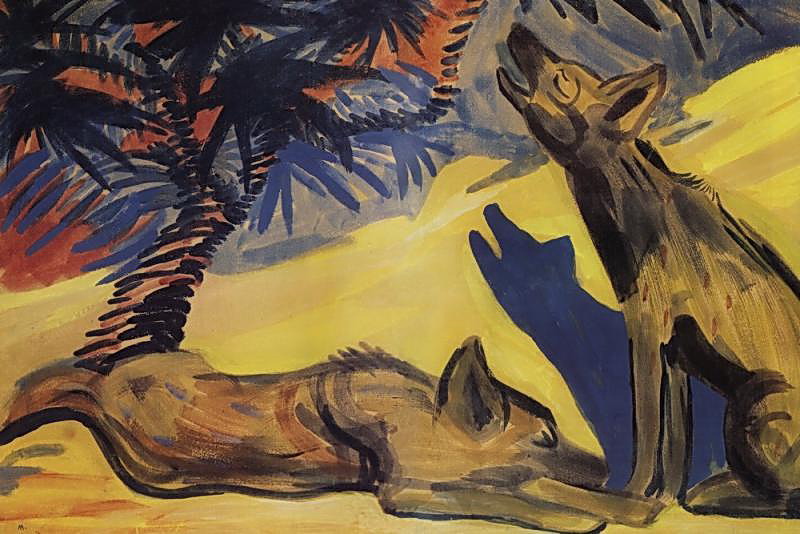
Until very recently, we at FLAPPERHOUSE had no idea that the mating practices of hyenas were so subversive and transcendent. If you’d like to learn more, allow j/j hastain to explain it all to you in “Copulatory Lock”, one of the four lyric mini-essays by j/j that you can read in our Winter 2015 issue.
{ X }
SEXUAL INTIMIDATION DOESN’T HAPPEN IN HYENA CULTURE. If it’s not consensual then it simply is not– end of discussion.
Based on the location of her masculinized genitalia (shaped like a penis, but hanging flaccid between her legs) he literally has to squat and dance behind her, moving into her squat, in order to even penetrate her penis with his. Her sexual center is pointing ahead; his follows from behind, into her and through her to the degree that she wants it. She is the stipulation here. She is his direction.
Aware that some gymnastics are required in order for mating to occur, if the female is keen on him, she will lead him up the hill or out to the brink where there is the most likelihood for safe copulation. He follows her to their spot. At the moment of intromission the hyenas’ bodies literally lock in order for exchange to occur. This locking makes fruition and impregnation possible at the same moment that it dramatically increases the risk of the two being seen as a lager body of flesh and then eaten with excitement: a predator’s conglomerate meat.
As the lion nears he does not have a choice. His hormones are raging in response to their hormones raging. With doubled flesh before him, he rushes the magic to engorge on something more integrated than yin and yang. Yin and yang have that curved line between them, indicating their difference. The hyenas’ copulatory lock means, in her choosing to let him, they have found their way beyond the line.
{ X }
j/j hastain is a collaborator, writer and maker of things. j/j performs ceremonial gore. Chasing and courting the animate and potentially enlivening decay that exists between seer and singer, j/j simply hopes to make the god/dess of stone moan and nod deeply through the waxing and waning seasons of the moon.
Sunset on the Seine in Winter – Claude Monet, 1880
Our Winter 2015 issue has no shortage of the dark, weird, sexy, funny lit you’ve come to expect from us. But with this latest issue, we also tried to have a little more heart than usual– like in M.A. Schaffner‘s wistful and exquisite poem “Cue the Lutes.”
{ X }
IT’S THE SMALL THINGS I NEVER QUITE FORGET: the wild orange clouds after a dark dank day
as sun came out just long enough to set.
Your question at the moment we first met
about the train — then, if I’d show the way.
It’s those small things I never quite forget.
Our first free evening, and my world upset —
how busy our lips with nothing to say.
The sun came out just long enough to set.
Outside, the rain; inside, how warm though wet —
your hair a path from which I couldn’t stray.
It’s the small things I never quite forget.
A few short nights enclosed me in a net
that melted when touched by the weakest ray.
The sun came out just long enough to set.
I never saw you since without regret
for the bloom before my dawning gray.
It’s the small things I never quite forget.
My sun came out just long enough to set.
{ X }
M.A. SCHAFFNER has had poems published in Shenandoah, Prairie Schooner, Agni, Poetry Ireland, Poetry Wales, and elsewhere. Other writings include the poetry collection The Good Opinion of Squirrels, and the novel War Boys. Schaffner spends most days in Arlington, Virginia or the 19th century.
SOME MEN DESIRE SAUSAGE NAILED TO BARK just for kicks.
Joan prefers sorting iron deposits to culinary remonstrations.
That’s the true way to heathen caballus hearts.
Never downed a brandy
Talons took her liver in the after-life.
Her face a gossamer sheen of life’s never haves
Like Chrissie Hynde, that brass in pocket left months ago.
Self-hacked curls are racy to ravens.
Joan would rather cut her fingers off than caress a waxen cheek
and it’s all what time should we meet up after the war?
Primp the ocean with a poorly crafted ax swing.
Mouths ravage sound waves.
It’s her voice that mounts the men–
Wingless mongrels with clumsy carbon footprints I chose you for your pulsing qualities Wikipedia left that part out.
Arm to stone to crushed ladder leg
Burning hair multitude and it’s 1-0.
Joan thinks about hell and the
Spears secret guts spill out.
Maniacal reds, virgin whites, pink pudding.
Grapefruit spoon in throat
King Charles laughs a little boy laugh
looks down at all the feet.
{ X }
JENNIFER MacBAIN-STEPHENSis the author of three chapbooks: Every Her Dies (ELJ Publications), Clotheshorse (Finishing Line Press, 2014) and Backyard Poems (Dancing Girl Press, forthcoming, 2015). Her work has been nominated for Best of the Net, and has appeared in public places in Iowa City. Recent work can be seen / is forthcoming at Dressing Room Poetry Journal, The Blue Hour, The Golden Walkman,Split Rock Review, Toad Suck Review, Red Savina Review, The Poetry Storehouse, and Hobart. For a complete list of publications and other odds and ends, visit JenniferMacBainStephens.wordpress.com
With the holiday shopping season in full swing, it’s the perfect time to browse the curious wares in Mari Ness‘ flash fiction “The Store,” from our Winter 2015 issue.
{ X }
THE STORE MOVES AROUND. Sometimes discreetly, sliding in between two other stores; sometimes flamboyantly, planting itself firmly in a previously empty lot, with glowing “GRAND OPENING” signs and flags. In times of economic prosperity, it enjoys nestling in quaint streets dedicated to antique shops and art galleries; during recessions, it often inserts itself into dying strip malls, or leans next to grocery stores and pharmacies.
She never moves. Not that anyone can see, anyway.
She sits at the cash register near the front of the store, a register that seems to change slightly each time the shop moves. It had been one of those old fashioned types, and now sports a computer screen that would put many larger businesses to shame, a screen that seems somehow out of place. Her most noticeable quality: an utter absence of color, with excessively pale skin, nearly as white as paper, white hair, and colorless eyes. Not pink, not pale blue, but literally colorless. The effect might be caused by contact lenses and makeup and bleach, but somehow, few customers ever think this. The eyes move, to watch the customers, and her hands move, to take money and credit cards, but her body never shifts, though she must eat and drink and sleep. She must.
Where she might do this is less certain. Certainly no one has ever seen her eat or drink inside the store, or leave her seat for any reason. Indeed, she gives the impression that she is not just rooted to, but part of her chair, which in turn seems to be part of the floor.
Not that anyone checks too carefully.
What the store sells, it is hard to say. The merchandise shifts whenever the shop moves, and somehow, few customers seem to linger over the items. Ordinary things, knickknacks, and jars of jam, and scented candles, and piles of music and books. Books that when opened tell of Jane killing Mr. Rochester by eating through his neck; where the Heart of Darkness is a river eagerly sucking away at the waters of the jungles, leaving a place of dryness and death ripe for fire; where Alice cuts her wrists with the shards of the looking glass. CDs where no one ever hears the secret chord that David played to please the Lord. Small statues of fairies and angels, their eyes and mouths glued or sewn shut. Brilliantly colored flowers with grey edges that feel cold to the touch. Surprisingly delicious soup mixes, bringing delirious joy when prepared. Jewelry, rich and strange and delicate. Candles labeled with never-known words. Continue reading “The Store” – Fiction by Mari Ness→







![By QuentinUK (Own work) [CC-BY-SA-3.0], via Wikimedia Commons](https://flapperhouse.com/wp-content/uploads/2014/12/shop_until_you_drop_by_banksy.jpg)
 FLAPPERHOUSE
