And Our Pushcart Prize Nominees Are…

Just in the nick of time, we’ve mailed our nominations for this year’s prestigious Pushcart Prize, which will honor literary works published in 2015 by little magazines & small presses throughout the world.

And our nominees are (in order of appearance):

“The Rud Yard” – short fiction by Vajra Chandrasekera
“She Used to be on a Milk Carton” – poetry by Kailey Tedesco
“The David Foster Wallace Empathy Contest” – short fiction by Wm. Samuel Bradford
“Spanish Donkey / Pear of Anguish” – poetry by Jessie Janeshek
“the things that are left behind” – poetry by Joyce Chong
“Ewart” – short fiction by Michael Díaz Feito

Congratulations & best of luck to our nominees– and thank you all for contributing your phenomenal work to our weird little zine.

“The Playground” – Fiction by Samantha Duncan

Boys Lessons Provide Wartime Toys - Norman Smith, 1943
Boys Lessons Provide Wartime Toys – Smith Norman, 1943

“The Playground” is not just a setting but a character in Samantha Duncan‘s magically unsettling flash fiction from our Fall 2015 issue.

{ X }

IT WAS THE START OF SPRING WHEN THE PLAYGROUND BEGAN to behave in a maternal way. Howard, having just learned to walk, tripped over his own feet and landed hands and knees in a muddy spot of mulch. He had mixed feelings about dirt on his body, only enjoying it when he submitted himself to it, so this was an event altogether displeasing, which he hesitantly expressed through an animalistic wail. His mother, sitting on a bench at the opposite end of the playground, had barely risen from her place when the ground in front of Howard let off a small explosion, and from under the mulch a burst of water landed directly on his splayed hands and feet.

His mother jerked and back-pedaled slightly before charging toward her son. She frantically checked him over for further injuries from the tiny water volcano, then assessed his mental state, assuming that at the very least, he’d be spooked and immediately want to go home. But he was completely clean from his impromptu bath, and his expression suggested nothing more than perplexed curiosity, and when she moved her hands to his armpits to hoist him up and head for the car, he fought back with the move all children perfect in their first year: thrusting one’s arms straight up and causing them to slide out of their handler’s grip. It worked, and she put him down.

He immediately ran to the metal dome climber and, though he’d never done it before, climbed almost to the top and rested his body there, giving the structure an awkward but loving hug. His mother, unsure what to think, circled the playground to look for signs of another explosion, but the ground looked calm and inanimate. There had to be an explanation, some natural phenomenon she’d never heard of. Maybe the playground was built on shifting plates. Science held the answer. She watched her son close his eyes and hug the dome climber tighter.

Other things started to happen, though, that couldn’t be dismissed by any sort of science. Bailey attached his mouth to the outer curve of the yellow tube slide. A few minutes of this passed before his mother looked up from her iPad and tensed her face in disgust.

She marched over to him and demanded to know what he was doing. He waited until she was within arm’s reach before popping his little mouth off the slide, and he screamed:

“I’M NOT FINISHED!”

Continue reading “The Playground” – Fiction by Samantha Duncan

Six Questions For FLAPPERHOUSE

Jim Harrington of Six Questions For… recently asked our managing editor some stuff about our origins & our preferences to help give readers & writers a better idea of what we’re looking to publish in our weird little zine. Check it out if you’d care to read about how David Lynch & Transcendental Meditation led to our inception, why you won’t often see 2nd-person narratives in our pages, and the true meaning of flappiness.

…I read David Lynch’s Catching the Big Fish, and after a few weeks of practicing what I’d read in the book, FLAPPERHOUSE came to me & told me it would help relieve much of my disturbance—it would help me amass a freaky chorus of bold literary voices to sing together in the kind of genre-fluid, sanctimony-free space I’d seen too rarely in literature, and it would provide for me the kind of personal & creative fulfillment I’d been lacking for far too long. And so it has…

Six Questions for Joseph P. O’Brien, Managing Editor, FLAPPERHOUSE

“Cosmonaut” – Poetry by Laurin DeChae

Star of the Hero - Nicholas Roerich, 1932
Star of the Hero – Nicholas Roerich, 1932

Soar through the stratosphere with “Cosmonaut,” one of two awesomely extra-terrestrial poems by Laurin DeChae in our very cosmic Fall 2015 issue.

{ X }

“I see no god up here.” –Yuri Gagarin*

IS THIS FILLING EVERY PIN HOLE PRICK of light you thought it would  blow me
float down from space like a paper airplane drifting on the come down
trip over the underbelly of a pot-bellied pig soaking in afternoon
mud a pied piper parading pockets filled with crumbs and so much more
than music mustering up the melody enough to chime chime the church
bells the tower telling more than a tale of rings and stars torched and ciphered
by birds dotting horizons with wingspanning curvature like the body changing
shapes like the skeleton that shakes loose from skin from sin from signature
from myth from constellation from spanning across skylines nameless
tame this tail of light streaking but the aim is higher so blow me
down blow me out extinguish there’s nothing here it just goes on forever
it goes on like jack and jill and the inevitability of falling hill or no hill
I knew there was nothing for me here nothing good anyway but I had to know I had to                know

{ X }

DeChae_HeadshotLAURIN DeCHAE is an M.F.A. candidate for poetry at the University of New Orleans, where she acts as the associate editor for Bayou Magazine. She is active in the fields of education and composition, assisting in programs such as the Greater New Orleans Writing Project, Scholastic Art & Writing Awards, and the Tennessee Williams Literary Festival. Her work appears or is forthcoming in Harpur Palate, Cleaver Magazine, burntdistrict, S/WORD, and Rose Red Review.

“the things that are left behind” – Poetry by Joyce Chong

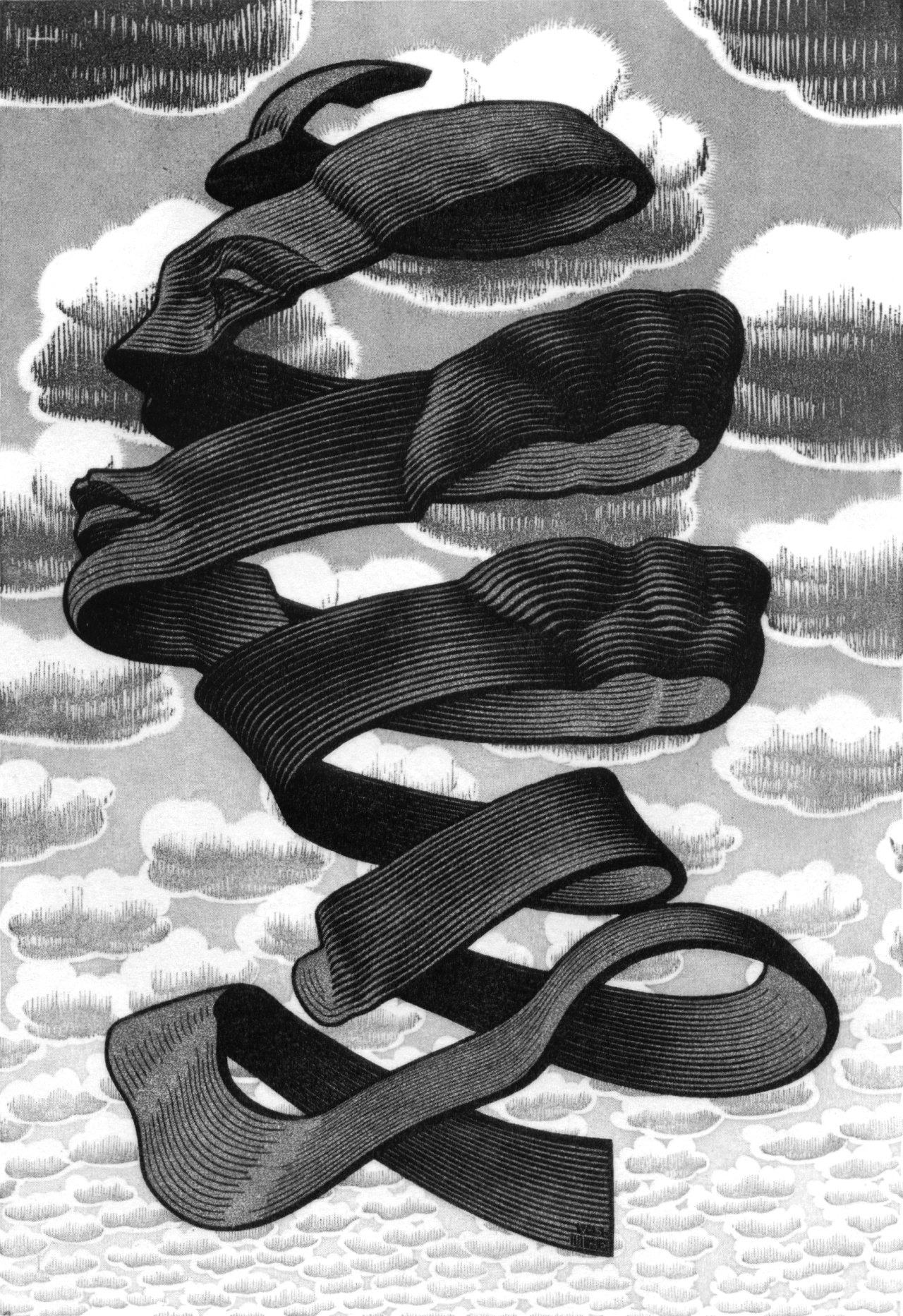
Rind - M.C. Escher, 1955
Rind – M.C. Escher, 1955

Joyce Chong explores the remnants of loss in her powerfully moving poem “the things that are left behind,” one of two exquisite pieces she contributed to our Fall 2015 issue.

{ X }

AMONG OTHER THINGS: the fruit rind
ground down to the white,
the voices of my mother’s grandmother,
and little hauntings like
wind chimes on the ceiling
in the bedroom.

among other things:
the rooms to be cleared,
secrets, trinkets,
this silence. the things
that you did not take with you.

i’ve learned to count loss
without time, without
a metronome;
it’s everything immediate,
and everything scabbed over,
the sensation of a wound
healing and then fading;
mis-remembering is
as inevitable
as every breath
that comes next
from lung
to mouth
to sky.

loss is a syntax
that never takes long to learn.

{ X }

ndsbrt500JOYCE CHONG lives in Ontario, Canada where she writes fiction, poetry, and other types of lies surrounded by farm land and wine country. Her work has appeared in Cool Skull Press’ Goddessmode anthology, (parenthetical), and untethered magazine, with work forthcoming in Noble Gas Qtrly and Liminality. You can find her online at joycechong.ca, or you can follow her mundane (and occasionally excessive) tweeting at @JoyceEmilyC.

“New Orleans” – Poetry by Violet Mclean

Storyville Photograph - E.J. Bellocq, circa 1915
Storyville Photograph – E.J. Bellocq, circa 1915

For our Fall 2015 issue, Violet Mclean contributed “New Orleans,” a gorgeous & stirring poem about our most favorite city.

{ X }

HE MAKES BLOODY MARYS IN SECRET because he is shy of anything too Louisiana. He flattened out his vowels and straightened up his consonants before I knew him.

There is a home of his I know – But then he says: Home is not heavy voices, air, lived in houses elevated from time and water. Home is not a magnolia blossom.

 Did you know the word “jazz” comes from bordello girls in the French Quarter with their jasmine perfume?

Yes, we are all familiar with Ken Burns’ work.

 May I ask this?

If I boarded the Mississippi in Minnesota and floated down her back, toes running the spine of the continent, would I know then? Would my arrival come in the morning with mundane Bloody Marys and walks down an ordinary street? Could we make small talk near Dauphine and Desire? Laugh over newspapers and sunglasses heralding the beginning of something old, a picture.

Maybe

A dream

Listing on a wall where we can see the form rise.

{ X }

FullSizeRenderVIOLET MCLEAN is an essayist and poet living in Northern California. Her work has been featured online at The Toast, What Weekly, the Human Parts collection on Medium, and in the journal Prose & Lore. She tweets up a storm @oh_my_vi

“When the Seals Would Clap No More” – Fiction by Tim Conley

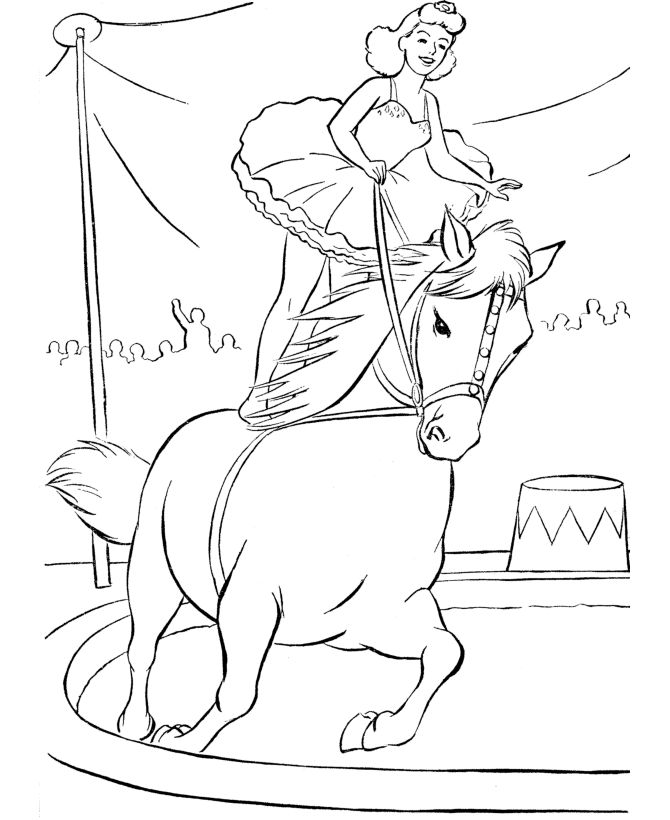
circuscoloringbookStep right up and marvel at the preface to the world’s most profound coloring book in “When the Seals Would Clap No More,” Tim Conley‘s contribution to our Fall 2015 issue

{ X }

IF IT SEEMS UNUSUAL TO DISCOVER A PREFACE appended to an object that is all too often called a “colouring book,” perhaps prejudices have become unguardedly confused with expectations. There is sometimes urgency in the unexpected. Therefore be warned: despite its innocuous-seeming charms (that it only seems innocuous is one of its charms), Join the Circus! is no ordinary bound stack of paper to be idly defaced, and this preface is likely to disturb and distress those who underestimate what they have opened.

Join the Circus! is certainly a joy to behold – to behold, it must be stressed and not to lay wax upon willy-nilly. The narrative that the keen-eyed reader can puzzle together from the sequence of tableaux is simple, concise, sometimes slyly allusive, and genuinely moving. It needs no improvement. The intersecting circles of clowns and poodles on page 11 are utterly dynamic precisely because they are in black and white, because the artist who gave them exuberant life disdained the superfluous and focussed on the power of the line. Reddening these clowns’ noses will not make them more antic: such an assault would irretrievably lose all the picture’s mirth. The facial expression of the poodle in the right corner is nothing less than haunting, but the smallest smear of pink, say, would demolish that nuance. The whole essence of the clown’s nose, the poodle’s ineffable expression would be violated.

Exaggeration? No. No and again no. We must understand Join the Circus! rather than disfigure it. No one would countenance a gluing together of various pages of the Gnostic gospels or the Analects of Confucius, or fecklessly stand by as some cheerful maniac made paper dolls out of The Origin of Species or The Last Bandstand: An Unbiassed Argument Against the Use of the Conductor’s Baton. These claims need not even be made – the renown of such wonders defends them; and yet one must even today defend Join the Circus!

Why? Regard, for example, the illustration on page 7: the juggling bear on the unicycle. The temptation here might be to juxtapose merry brown for the animal’s fur with jaunty red for the fez, but to do so would be a mistake. Why? For one thing, there is the temerity of asserting the familiar: bears may frequently have brown coats, but there is no reason to suppose that this particular, splendid specimen (capable of juggling four balls while riding a unicycle, a feat which the reader is politely invited to match – without opposable thumbs) does not have a magenta coat. This is only one kind of error, however. The zany who, for the sake of unconventionality or as a wearisome “avant-garde” gesture, scoops up the forest green crayon to colour only the bear’s left side and polka-dots the right in orange, presumes both that the colour does not matter and that his or her “artistic licence” trumps all other possible contingencies and concerns. Imagine a surgeon who announced, hands still within the patient’s open cavity, “this organ would look much better over here.” Imagine the firefighter who aims the arcs of hosed water right over the blazing homestead, with the justification that to his eye it looks more pleasing than merely dousing the flames directly. Just imagine!

Continue reading “When the Seals Would Clap No More” – Fiction by Tim Conley

Another Excerpt from Nothing Granted – Poetry by Anna Meister

Study of a Dead Crow - Marevna (Marie Vorobiev), 1955
Study of a Dead Crow – Marevna (Marie Vorobieff), 1955

Our Fall 2015 issue features three outstanding poems from Anna Meister‘s series Nothing Granted.  We posted one of those poems here back in October, a second one appears below, and look for the third to pop up on our site later this month. 

{ X }

BLINK & I’LL SAY OKAY / like a whip / ride
in the passenger / I’ll say it / just
like that / go on being never-enough

I long for you / turning noteless
numb  / ____ is all I say it is / that’s just
how it happened

something important in the mail / as I was
washing / water cutting bruises from my telling
I keep the blade near / hear a buzz overhead

next door the police  / step back
never help / stay soft like a crow

Tuesday around me everywhere / the distance
between summer & what / I accuse myself of
to get it right I give these boys / my navel

as an island / what it is to drag
a nail through it / fuck in a lushness
too predictable  / when I consider

the shit I believe I am / I would never
feel it in my face

when we hear about money / hear
I tried / to love the world / plump
& dumb / & my mouth chasing after

{ X }

anna_meisterANNA MEISTER is an MFA candidate in Poetry at New York University, where she serves as a Goldwater Writing Fellow. A Pushcart Prize & Best of the Net nominee, her poems are forthcoming in Powder Keg, Whiskey Island, Barrelhouse, The Mackinac, & elsewhere. Anna is a 2015 Saltonstall Foundation for the Arts Fellow. She lives & works in Brooklyn.

“Me” – Poetry by Adam Tedesco & Juliet Cook

By Sebastian Ritter (Rise0011) (Own work) [CC BY-SA 2.5], via Wikimedia Commons
Photo by Sebastian Ritter (Rise0011) (Own work) [CC BY-SA 2.5], via Wikimedia Commons

“Me” is one of two beautiful dark twisted poems in our Fall 2015 issue that were co-written by Adam Tedesco & Juliet Cook

{ X }

1.

MY DIRTY HAIRBALLS
and feline creatures
doused in cheap champagne

After the party
the after party
was down in the canyon
of flattened emotion
of all the acts of disassociation
holed up in this trailer
doused in solvent

I try to stay quiet
as I strike the match
as if that will cover up
the triumph of our will

2.

Nobody can reach down
in this mess
Nobody can fix it

{ X }

IMGP3324ADAM TEDESCO has worked as a shipbuilder, a meditation instructor, and cultural critic for the now disbanded Maoist Internationalist Movement. He conducts the ConversexInverse interview series and analyzes dreams for the online literary journal Drunk In A Midnight Choir. His recent work has appeared or is forthcoming inSimilar:Peaks::, pioneertown, FunhouseCosmonauts Avenue, and elsewhere.

IMG_1359 - Copy (2)JULIET  COOK is a grotesque glitter witch medusa hybrid brimming with black, grey, silver, purple, & red explosions. Her poetry has appeared in Ghost Proposal, H_NGM_N, ILK, and Menacing Hedge. She is the author of more than 13 poetry chapbooks, including POISONOUS BEAUTYSKULL LOLLIPOP (Grey Book Press, 2013), RED DEMOLITION (Shirt Pocket Press, 2014) and a collaboration with Robert Cole, MUTANT NEURON CODEX SWARM (Hyacinth Girl Press, 2015). A collaborative chapbook with j/j hastain, Dive Back Down, is forthcoming from Dancing Girl Press. Her first full-length poetry book was Horrific Confection (BlazeVOX, 2008). Her second, Malformed Confetti, is forthcoming from Crisis Chronicles Press.www.JulietCook.weebly.com.

“Pharoah Sanders in the Cleaning Lady’s Bedroom” – Poetry by Manisha Anjali

Flamingos in Flight - Arman Manookian, 1931
Flamingos in Flight – Arman Manookian, 1931

From our Fall 2015 issueManisha Anjali‘s poem “Pharoah Sanders in the Cleaning Lady’s Bedroom” is as jazzy & intoxicating as the musician it’s named after.

{ X }

I WAS BEAUTIFUL IN 1999
my flamingo legs flamingo’d you
moon me/ moon you/ moon two.
the stars saw/ the larks saw
Pharoah by Pharoah Sanders on repeat.
this cleaning lady flamingo’d to spaceland
in spaceland you are lost daddy
my flamingo legs don’t dance on their own
they wait for saxophones/ daddy two-times
they wait for the messiah/ the dreammaker
moon cool/ moon blue/ mmmmm
I flamingo’d you high/flamingo’d you wild
in the Village of Pharoahs in 1999
I flamingo’d you off you wino/ you old boy/
you black darling/ you old star
on Karangahape Rd hitchhiking to spaceland
with a suitcase full of larks & gin.
I flamingo’d to spaceland daddy two-times with
Pharoah by Pharoah Sanders on repeat.
in my blood room my moon shone through/
moon/watch me be a bright pink bird
true I could still flamingo you
moon me/ moon true/ mmmmm
I was beautiful in 1999

{ X }

manisha_anjali_2MANISHA ANJALI is a poet who lives in Melbourne, Australia. She grew up in Fiji and New Zealand. Manisha has been published in Blackmail Press, Mascara Literary Review,Seizure, Faint Magazine and The Adventure Handbook. She was awarded a Hot Desk Fellowship by The Wheeler Centre in 2013. www.manishaanjali.com.