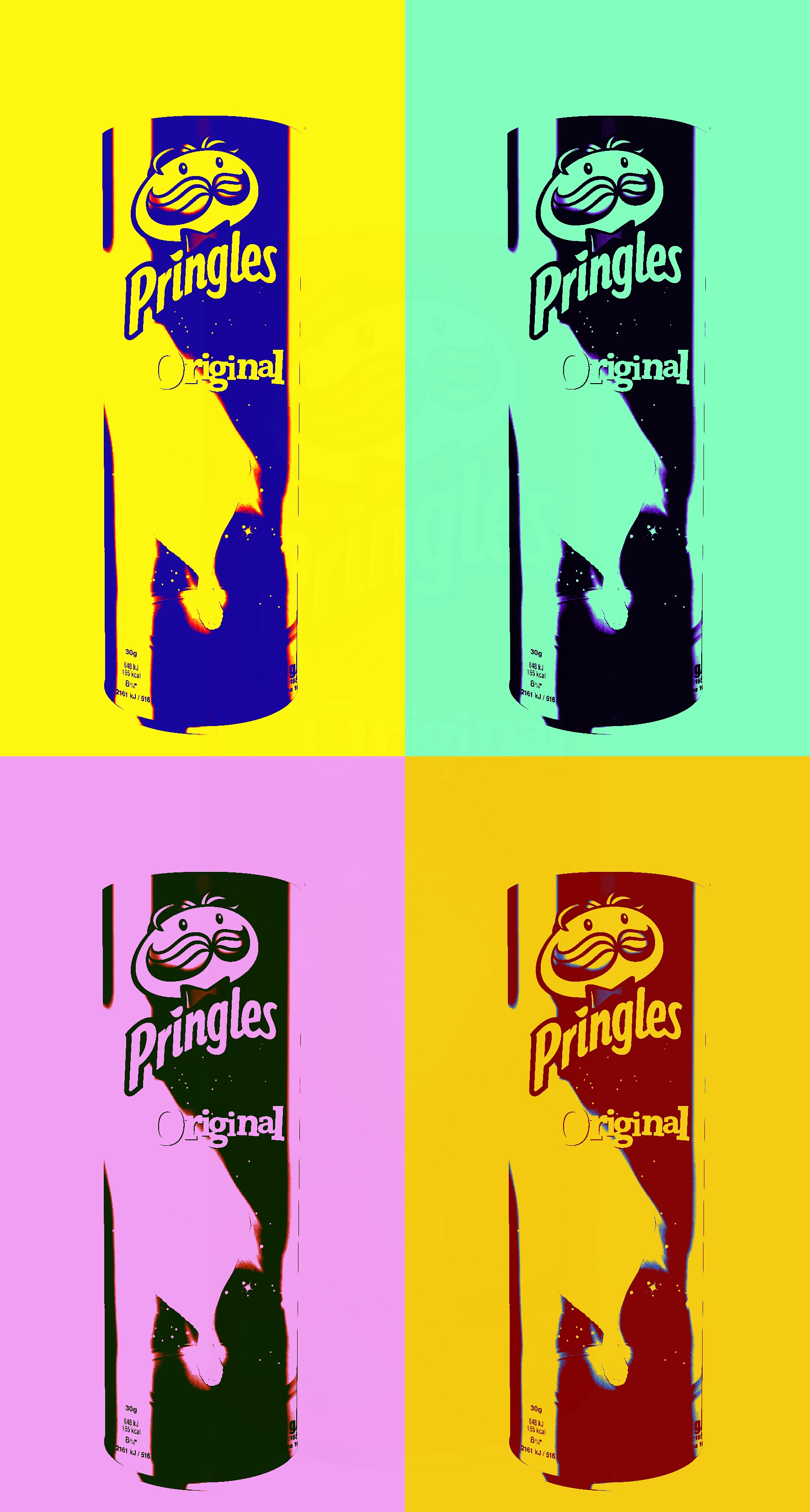
The iconic pop artist experiences a poetic rebirth in “Hope Springs Eternal, or: The Reincarnation of Andy Warhol’s Soul,”Ron Kolm‘s delightfully surreal contribution to our Summer 2017 issue.
{ X }
THERE’S A SLIGHT DISTURBANCE
Among the potato chips
In a pink Tupperware bowl
Sitting on a wooden picnic table
At a Baptist prayer meeting
In Fort Wayne, Indiana.
Now this particular disturbance
Is not man made, nor is it
An act of Nature; it is, in fact,
The awakening of Andy Warhol’s
Reincarnated soul.
What the Hell, Andy thinks,
A potato chip? I silk-screened
Monroe for this?
The guys at the Factory
Assured me I’d come back
As the hippest thing possible
But a potato chip?!
Now, it’s nitpicking
In the extreme
But we should note
That Andy Warhol
Returned as a Pringle,
Not as a real potato chip, a detail
That would have delighted him
In his previous incarnation.
The afternoon wears on,
And one by one his companions
Disappear; Lou, Holly, Baby Jane,
Gerard, Viva, and, yes, even
little Edie — until Andy
Is the only chip remaining.
Please let me come back
As a roll of aluminum foil
Next time, he prays,
As the shadow of a large,
Calloused Baptist hand
Blots out the sky above.
I’M NOT GOING TO TELL YOU doped and thick
not going to kill you old shouldered
red incense red saints
but Paris was one of my places
where they kept saying seaweed and ketamine and what is the name of your station?
Delusion is one kind of service
and beauty is truth in drink and black roots.
Harlouche stories are blue
Theda Bara reading your Tarot through three generations
transmuting frustration-green snakeskin
around her an aura of snow.
Step down/open up an era of bad on both sides
New York City an ice blue Saturday night.
Move through the store w/ your blue eyes on top
tableted paper or pills. Figure out Marilyn
in front of the falls or the fog.
The world was so friendly the bridal veil slick
her walk opening up
but what is your signal?
We weren’t the brownettes throwing shoes or preserving
the notion of marriage
flickering cocaine and vanitas into each other
how Baby moved in her sailor blouse
transmuting Vs toward rot at the altar
wouldn’t drown out in her white fur at night
and so what if it was puppetry
kabuki and pretty when they kept saying we can’t believe Harlow’s no more and what are we doing it for?
Note: A few phrases in this poem are taken from page 317 in the sixth edition of the Radio License Q & A Manual by Milton Kaufman (New York: John F. Rider Publishing, 1957).
{ X }
JESSIE JANESHEK‘s second full-length book of poems is The Shaky Phase(Stalking Horse Press). Her chapbooks areSpanish Donkey/Pear of Anguish(Grey Book Press, 2016),Rah-Rah Nostalgia, (dancing girl press, 2016), Hardscape(Reality Beach, forthcoming), andSupernoir (Grey Book Press, forthcoming).Invisible Mink(Iris Press, 2010) is her first full-length collection. She holds a Ph.D. from the University of Tennessee-Knoxville and an M.F.A. from Emerson College. You can read more of her poetry atjessiejaneshek.net.
After their parents’ deaths, three sisters reunite & resurrect some unsettling secrets in “Birdland,” Julia Dixon Evans‘ unforgettable short story from our Summer 2017 issue.
{ X }
MY SISTERS ARE DUE ANY MINUTE. A rush of birdwing-flap overhead, the shadow of their cloud. Migrating sandpipers maybe, or golden plovers; I am a bit rusty these days. It’s cold out, the sun still up but June always seems like the wintriest month we have here: moody and overcast, unpredictable, twenty degrees cooler at night than at noon. Bits of crabgrass fall from between my fingertips and thumb. I rub them together like a chef dusting rubbed salt over a pan and that metaphor probably means I’m the salt, ground up and rubbed to within an inch of my life so that whatever’s in the pan has a better time of it.
I wait for more birds. I wait for my sisters. This is all I have.
When we first took over the mortgage on this house it seemed like the best idea. Our parents, dead younger than anyone expected, left us an unfinished mortgage, anemic life insurance policies, and a disastrous filing cabinet full of 5% useful documents about their finances and 95% shit that should have been shredded ten years ago. The worst part about their death was being annoyed by them because of this. I just wished they’d give me some time to miss them. It sometimes feels like they died forever ago, not four months ago. It sometimes even feels like it’s still happening.
Sarah is the oldest, the wildest. She’s thin and tall, disarmingly brilliant, and she’s mean. Louise is the youngest, the kindest, the timid one. She’s built like me, which is to say: not thin, not tall, not disarmingly brilliant, not mean. I usually can’t stand Louise.
Next to my sandals in the grass there’s a can of strawberry soda. I stopped drinking soda ten years ago (for Lent, for superiority, for the squishiness around my stomach) but it’s all my parents left in this house. Soda and five or six bottles of expensive whiskey with only an inch left each. I lift the can up, a straw in the metal hole, and drink until the straw rattles with empty. I turn my back to the late sun in the hope that it’ll warm me more. Last night when it was also cold, I sucked Rafael’s dick in my car and he loved me and grabbed at my stomach and said what does it feel like to have someone this into you? and today he said I think I hate myself when I’m with you.
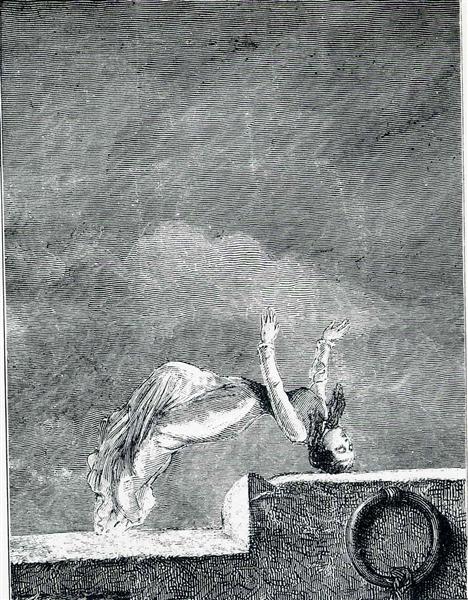
SHE IS FALLING DOWN from a height of 30,000 feet to the thoughtless land where she has served as a careless agent. Someone whom she has never known betrayed her and bombed the airplane. Watching her colleagues being carbonized in every second, she wonders whether the thread of her white silk dress is longer or shorter than 30,000 feet. The hem of the dress was cut by a broken glass when she was thrown out of the window. The glittering thread is being unweaved in every second. At a height of 20,000 feet, her butt has already been exposed. At 5,000 feet, she starts shaking with cold. In her eyes, thousands of old spires grow bigger and bigger. Her grief and shame reach a height of 30,000 feet along the white silk thread.
An hour later, she is still falling down while the coroner pours her brain tissue into a small cup.
INTO THE LACERATION human body suspended divine cathartic thing
An anus mount. Figure formed penetrating to assume role of Alpha.
All that there is, denouement. Capricious as phallus-erected-god(dess).
Within resurrection this being governs a king made submissive queen
Neither sensory nor circumcision feeling person pure in luminescence.
Lamprey kiss, long limbed leg on leg, fortuitous embrace. My brossa
I am bro. Butch temptress on air, Omega having spun her life cycle.
Bars uphold weight, flesh and bone. Pillar points where the head
Meets the feet. Erroneous adventures, our false selves decapitated
Either or dethroning, crown relinquished, disrobed. Nude culture,
Tempestuous taste. In the droned season, ghosts give off sensations.
What we become, maturation from thought-positivity, embryo, cell.
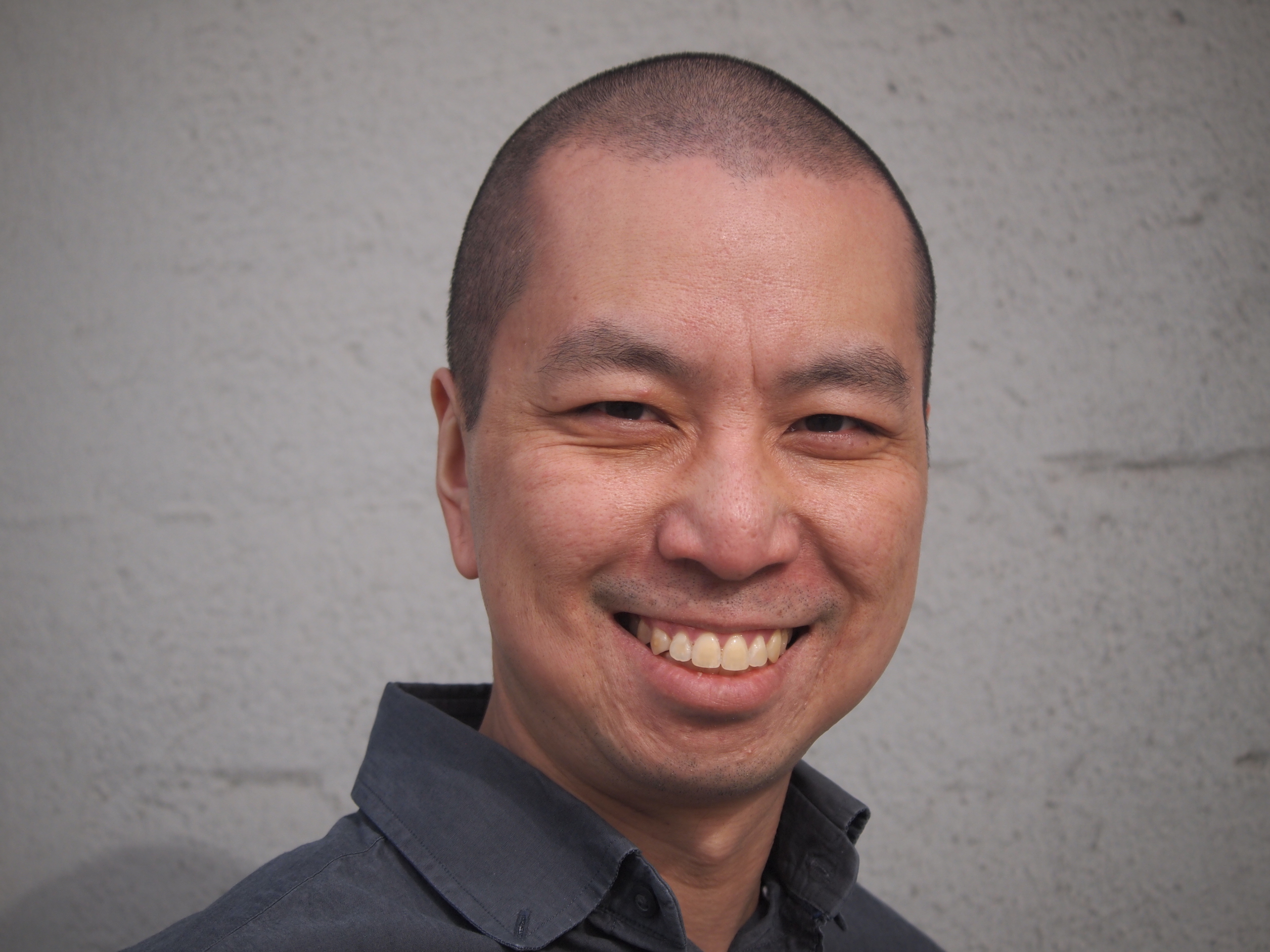
Leland Cheuk is a big part of the Flapperhouse family: he has performed at three of our readings, and contributed three excellent flash fictions to our Summer 2017 issue (including “Vote For Arnie,” which we posted last week). He has also contributed work to fine publications like Salon, Catapult, Kenyon Review, and Prairie Schooner, and has written wonderful books like LETTERS FROM DINOSAURS and THE MISADVENTURES OF SULLIVER PONG. Leland recently exchanged emails with our managing editor Joseph P. O’Brien about his writing, as well as generation gaps, the universal appeal of Haruki Murakami, and the potential economic necessity of polyamory.
{ X }
JO’B: You’ve said that the flash fictions you contributed to our latest issue are part of a “concept album” you’re working on…what can you tell us about the concept of this work-in-progress?
LC: I’m trying to write a novel in mostly flash fictions that features an ensemble of feral characters in a feral, near-future America. I’m becoming more interested in absurdity and surreality and I think shorter fiction is generally a better way to explore these aesthetics. It’s an effort on my part to shed some of the things that we writers learn in MFA programs—like the worship of naturalism, social realism, and character development/epiphanies. I just want to be doing something totally new with each book.
JO’B: Your flash fiction “Vote for Arnie” suggests a world in which people can go back in time and correct history’s biggest mistakes. If you had one such opportunity, what would you want to fix? What positive results would you hope to achieve, and what negative repercussions would you fear might occur?
LC: Great question! I’d come back to kill John Connor. No, I think I’d go back and advise the President to devise a more equanimous response to 9/11. That’s really been the biggest game-changing choice is my adult life. Think of all the lives saved, the military spending that could have been repurposed if we hadn’t gone into the Middle East. Maybe there’s no ISIS. Of course, we’d probably have found another war to get into. Fifteen years is a long time for America to be without war—we’re addicts.
JO’B: If you were to run for President in 2020 (in a world without time-travel, of course), what would be your platform? If you won, what would be your first executive order, and your first official tweet in office?
LC: I’d probably run on a similar platform as Jon Gnarr, that comic that became mayor of Reykjavik. I’d want to Make American Loitering Great Again #malga and make Dazed and Confused required grade-school viewing. I’d commission Oliver Stone to make a sequel to Wall Street named Main Street, in which I would make the Gordon Gekko speech, except the word “greed” would be replaced by “dumb.” Dumb is good, dumb is right, dumb works. Continue reading “Make American Loitering Great Again” – A Conversation with Leland Cheuk→
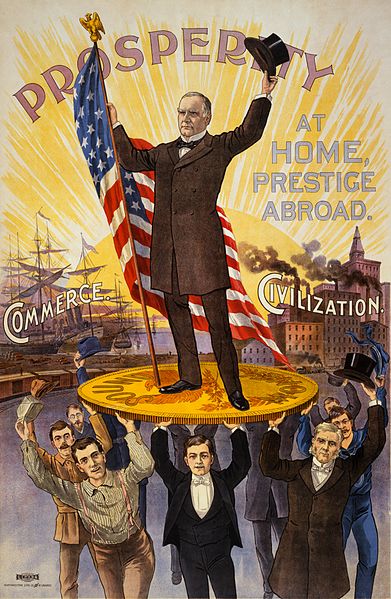
Apolitician makes some extraordinary promises in “Vote For Arnie,” one of three sharply satirical flash fictions by Leland Cheuk in our Summer 2017 issue.
{ X }
HI, I’M ARNIE CHANK, FOUR-TERM SENATOR of our great state of M—. This presidential primary season has been marred by the usual cynicism and incessant criticism of our federal government and its waning ability to solve the problems of the American people. There’s gridlock in Washington. Partisan rancor is at levels we’ve never seen. I get it. You get it. Hell, the UFOs get it. And I admit that, on many of the average of ninety-four days per year I’ve actually shown up to work to represent the great people of The Urchin State, I’ve been part of the problem, not the solution.
But today, I’d like to send a message to the American voter. Hear me now for words will neither be minced nor julienned.
I have come to help you take our country back…in time.
Yes, you heard correctly.
Recently, I was bored at The Capitol Building during yet another filibuster—this one for the Stop Child Abuse While Ensuring Potable Water Act—and I began looking up the oldest laws in our nation’s existence. I came upon an obscure piece of Congressional legislation from the summer of 1789 which stated that every citizen of our great nation is entitled to one chrononautical vacation per year facilitated by a practicing Time-Traveling Witch, Wizard, or Magus so long as the aforementioned trip is utilized for the sole purpose of reversing a regrettable action by said citizen.
Imagine the possibilities. We can go back and reverse our many mistakes as a people. Yes, we can.
I’M NOT AN ALCOHOLIC, but I lie to my psychiatrist
when he asks
how much I drink.
I come from a long line of women
who luxuriate in pain
adorn themselves in velvet trauma,
spend their days
in coffin-dark rooms
using wine and longing
to summon dead loved ones.
All I want to do
is play chess
with a set made from dead mice,
read books about women
who were murdered
by strangers,
take boiling hot baths
in dirty tubs.
In a crowded bar,
I spill whiskey on my leg
and rub it in.
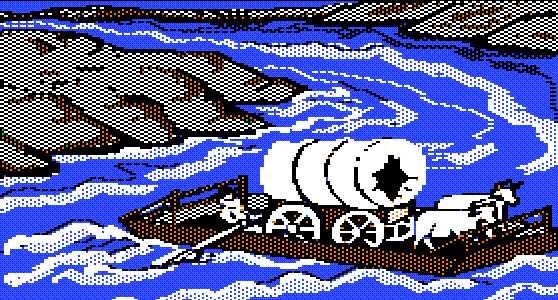
A classic computer game inspires meditations on suffering & struggle in “Caulking the Wagon,” one of two darkly beautiful & profoundly moving poems by Devin Kelly in our Summer 2017 issue.
IN THE CLASSROOM,I GATHER KIDS around & make them relive
my childhood. I type their names into the wagon, call myself
a carpenter because I know a wheel will break eventually.
I have no desire to spend my money on what can be repaired.
Dirty sweat & knowledge. The human condition is always
in need of upkeep. Because I know a house is not a home,
I ask them to imagine our wood lined with fur, a mess
of rug begging for the shaking out. We will take turns.
We will leave as the last frost thaws free the first flowers
of spring. There’s no option to pause the game & bend
to harvest milkweed. There was no vase for sale
in Independence, Missouri. We will deliberate the crossing
of water, delegate the tasks required to caulk the wagon –
who here has not hammered tar-soaked cotton into a wedge
in order to keep their body dry? How easy our suffering,
that we may make the pace grueling. How we stop
to view a tombstone & laugh when Michael dies
of dysentery. In our heads we know there is no time –
we will bury his body with the one shovel we own,
taking turns in heat, & leave above him just a pile of stone
some stranger might use to bludgeon an animal into meat.
This isn’t real.
Not the sun, not the pixelated bullet slow-twirling
to kill the buffalo, not the purple mountains swirling
round the plains. When I was younger, I believed
in this nation’s majesty, each loss a synonym for some
greater gain. But look. Even here, the children are dying
one-by-one, lost first to cholera & water, then to what
this game offers no name. A bullet, a color, a wrong place
once thought safe – call the outside of this school a mass
grave, a massacre, a high mass turned toward God in a language
riddled with blood. The oxen are bowing their knees, bending
weary heads to push the earth away. There are no pixels
in heaven. There is only the song of your life sung backward
through the mouths we call the stars. You listen & feel
the wagon wheel’s roll, the crunch of it winding in reverse,
the land unbound & unnamed, the paper turning back to trees,
the trees un-leaning their way toward sky, all of eternity
driven back to dawn. By which I mean the promise of something,
that slick patch of morning when what you expect is the same
as what you hope. When my father returned from the West
he brought back a soft pack of cigarettes & a custom
cowboy hat. His mother was still alive. Later, no one sang
at her funeral, or if they did, I don’t remember. There was
only my father & his returning no longer a story & how his brother
left for West so many years ago & never came home. Most days
I want to give in to nostalgia, surrender my body to the burn
of light curling at the edges of a memory, trade old stories
like currency. Sometimes the going-on is the dirty speckle
on the petal of a rose, beauty gone to hiding. There’s no option
to turn back, the kids say. How will we carry all that meat onto
the wagon? The sky does not look like that. They sigh. They moan
open their mouths like fish to unhook themselves from twine. This game
sucks, they say. This game sucks, this game sucks, this game sucks.
 The iconic pop artist experiences a poetic rebirth in “Hope Springs Eternal, or: The Reincarnation of Andy Warhol’s Soul,” Ron Kolm‘s delightfully surreal contribution to our Summer 2017 issue.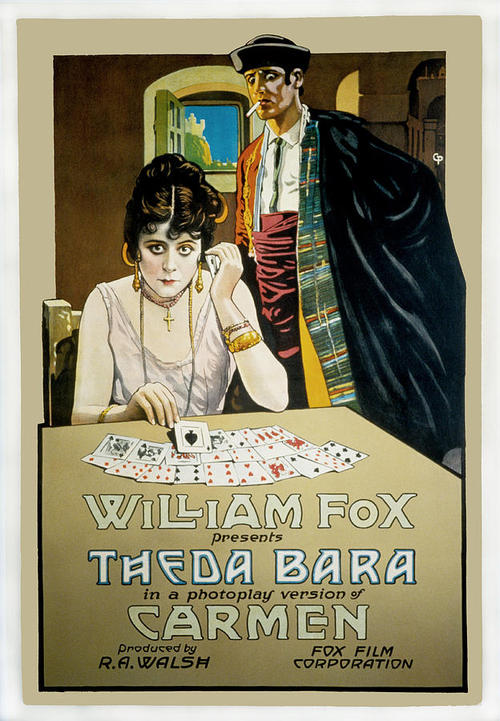
 FLAPPERHOUSE