Category Archives: Fiction

“I Feel the Same Way About You” – Flash Fiction by Jan Stinchcomb


Dante & Virgil Enter the Forest - William Blake, 1824
Dante & Virgil Enter the Wood – William Blake, 1824

Three friends suddenly find themselves in a strange realm in “I Feel the Same Way About You,” one of two diabolically surreal flash fictions by Jan Stinchcomb in our Winter 2017 issue.

{ X }

THE GIRLS ARE STUCK IN THEIR FUTURE.

It’s Emma’s fault since she was driving, but Cait and Lex know it’s not cool to say this out loud. They’re stumbling around in some rich person’s kitchen. At first they’re hesitant to touch anything but then they can’t help themselves. There is a bowl filled with tiny silver spoons and a set of crystal goblets. A dark forest is visible through the enormous picture window.

Cait picks up a leather-bound planner and flips through the pages. “Guys. Look at this. It’s mine.”

Lex’s hatred is swift and certain. Something about Cait always sets her off.

“See. My name is here, on the first page. This is my house. I’m married. I’ve got twins.” Cait squeals like a little girl. “I knew I would have twins! Lots of the women in my family do.” She looks around. “And I’m rich.”

There is a woman gathering firewood outside in the forest. She wears an ugly, tattered poncho and a sad face. Lex peers at her and startles into the realization that she is looking at herself. She tries to act as though she hasn’t noticed anything but Cait makes the connection and laughs. “Is that you out there, Lex? Don’t tell me you’re one of the forest people.”

“It’s not my fault,” is all Lex can say. She wants to wave to her future self but is afraid this might make her complicit.

Emma doesn’t say a word.

“It’s nothing to be ashamed of, Lex.” Cait has never been happier. “You always have to be the rebel, don’t you? Well, there you are. Outside.”

“I’m not staying in this kitchen,” Lex says but she’s terrified of going outdoors. She dreads brushing up against her older self. That woman is haggard. Starving. Lex tries to think of what she did to deserve such a fate. She knows Cait is not a nice person, but still. How did they go from carpooling in the morning to living in these separate worlds?

Emma’s eyes are black and bottomless. Her hands are ice. The girl Lex knew is gone, but she puts one arm around Emma and leads her to what must be a sunroom. It is all glass, beautiful, something she will never have.

Emma doesn’t seem to weigh much anymore. She glides alongside Lex to a wicker couch, where they both sit down.

Soon Cait appears, exultant, with coffee on a golden tray. “I have an espresso machine! So I thought, why not?”

Lex refuses to drink. She knows if Cait drinks, she will seal some horrible deal. At first, out of spite, she says nothing, but then she screams at Cait to put the cup down. Continue reading “I Feel the Same Way About You” – Flash Fiction by Jan Stinchcomb

“Love Song of a Femme Fatale on Scholarship” – Fiction by Maria Pinto

The Seven Deadly Sins, Lust - Erte
The Seven Deadly Sins, Lust – Erte

Dive into the mind of an infatuated freshman with “Love Song of a Femme Fatale on Scholarship”Maria Pinto‘s frisky flash fiction from our Winter 2017 issue.

{ X }

SOMETHING ABOUT SEEING TEACHER ON THE BUS, under the yellow light, the ridges of his brown corduroys flaccid, the finger upon which she’d always assumed she would find a gold band if she bothered to look, how the finger tapped at his bony knee, something about the way the finger had a gold band-shaped stripe on it, the stripe pale, a little indented, the way the knuckle hairs had a practiced wither there, how the stripe rendered him vulnerable as a midair-poised ass, hot, pink from slapping, something about all these things taken together made her want to push the moment, to fuck him. She did not interrogate why. She was a freshman; there was only the urgent press of do, do, do.

When he’d boarded the bus at the foot of Crippling Debt Hill, she felt him see her reading from the anthology for his class. He took the seat across from her, but she didn’t feel him look at her again. Her cheeks burned. She wanted to get up and lean over, to dot his face with damp kisses. Instead, she pretended to keep reading till the lines on the page went blurry.

What was he doing on the bus? She’d never seen him on this route. Shouldn’t an older professor at an elite university drive a reliable Prius, at least? Here was proof of the bleak state of education in this country.

The bus made a sudden stop to let a yelling passenger off and everyone lurched forward or to the side but him. She sighed.

In class today, he had said something ridiculous about a poem and she’d felt those words rumbling in her chest all afternoon. These lines know they can never know a woman. Words can never know a woman. The interior of a woman is ineffable, which earned him a laugh from the others. She knew he was not joking, so she didn’t laugh. She felt him watch her mouth as it didn’t slip open to show her teeth. Maybe he was a cad.

On the first day of the semester, his brown-black eyes had lingered on her at the end of every sentence. She’d heard somewhere that everyone thinks a good public speaker is looking at them most of all, but that didn’t stop her from playing with her lip, watching him watch her do it. All the watching felt involuntary.

Continue reading “Love Song of a Femme Fatale on Scholarship” – Fiction by Maria Pinto

“The Unfed” – Fiction by Nancy Au

gwashingtonsteethlocFalse teeth, depleted mountaintops, and mysterious fruit tarts are just a few of the key ingredients in “The Unfed,” Nancy Au‘s fantastic short story from our Winter 2017 issue.

{ X }

BEA OGILBY POPS HER NEW DENTURES into her dress pocket for safe-keeping, runs her fingers along the empty grooves & bumps of her mouth’s spongy pink mountain range. She glances at her reflection in the mirror before heading out. White hair twisted in a bun. Her smile, all gums, no more chomp and chew.

Outside, blinded by the bright September sunlight, Bea nearly stumbles over a fruit tart left on her doorstep. The mountaintop, which once protected her home from the afternoon glare, had been stolen by Ye Old Mining Company; millions of pounds of rock and dirt, acres of trees and shrubs ripped from the mountain in order to extract coal. The village’s sacred mountain could no longer be called The Great Peak because all that remained was a grizzled, flattened stump. No trees to glue the remaining boulders in place, to keep mud from surging down the steep slope and destroying the village during the next monsoon. No guide posts pointing tourists up the path, nor signs to indicate the diminished mountain ever even had a name.

Across the narrow dirt road, her neighbor, Teddy Nun, waves. “Hello there!” Teddy is working in his meager vegetable garden. Misshapen carrots and wilted kale poke out of the sandy soil. Bea bends down to pick up the tart, observes the glistening strawberries and buttery crust. She eagerly dips her finger in the sugary dew, and tastes a lick.

“Hello there!” repeats Teddy.

Bea points to the tart, “Did you see who?”

Teddy shrugs, Bea nods. His useless I don’t know shrugging responses are legendary in town. But Bea appreciates this in a neighbor, with stories and gossip flowing in only one direction across the narrow road. Like, when the last of her teeth were pulled, gums red, swollen, tender—a finger without the nail—she’d asked the incurious retiree: How does the Tooth Fairy for the elderly work? Where do your teeth go when the Tooth Fairy dies? Teddy’s response that time was a handful of ice carefully wrapped in a red dishtowel, a cold compress for Bea’s sore mouth.

{ X }

The first to perish while rebuilding the mountaintop was an aging horse with a three-year-old mentality, named Wilson. This equine senior dragged boulders and planks of knotted pine, in metal carts with leather straps, up the steep rocky trail using just his chompers. Every tooth of this odd-toed ungulate were bloody and broken by the time he reached the top. Bea had nightmares for weeks after this first death, awakening at dawn, soft mouthing the horse’s name over and over, as if in prayer.

Continue reading “The Unfed” – Fiction by Nancy Au

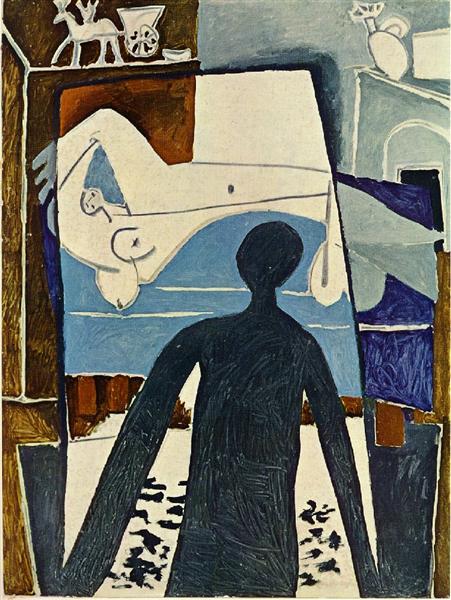
“The Shadow’s Insomnia” – Fiction by Shawn Frazier

The Shadow - Pablo Picasso, 1953
The Shadow – Pablo Picasso, 1953

An acquitted killer finds himself stalked by guilt in “The Shadow’s Insomnia,” Shawn Frazier‘s dark & powerful story from our Winter 2017 issue.

{ X }

AFTER SIX NIGHTS OF INSOMNIA, I SAW THE SHADOW. It appeared on the paisley wallpaper of my bedroom, as black rings transforming into a pitch black child-size figure. It stepped off the wall, tip-toed on its black cat feet, and sat on the edge of my mattress. Then, as if seizing control of my thoughts, my mind filled with memories of the black boy I killed: his screams, his blood pouring onto my manicured lawn, where my new SUV was parked in front. His opened eyes staring out of a sleeping face.

Fear paralyzed me in bed, though not enough to stop me from moving. I willed this charcoal illusion to return to the wall where it belonged. What right did it have to invade my space like this, to forcibly remind me of that boy? I was found not guilty by a jury of my peers. All I wanted was to keep intruders from burglarizing my enclave. I knew every-one who crossed through our front gate.  How was I to know this boy had friends here?

The shadow returned to the wall.

I shook myself awake and jumped up, thinking my insomnia was playing tricks with my head. I turned on the lights and touched the wall to see if I could feel where he— “It,” I mean— went…but it had vanished without a trace.

In the morning, on my bedroom bureau, I saw a photo of my grandmother crying. She was not crying before.

My friends and family have kept away from me. Frightened of my story. How I acted. Jumping at shadows I see on a wall. They thought I was losing my mind.

Was being alone really becoming so scary for me?  No—this phantasm manifested from my lack of sleep. I prayed before going to bed that this black boy—I mean shadow—would soon be nothing more than another bad dream. And would go away.

But at night, it returned. It floated across the carpet, passing right through my TV set, picture frames. In a photo of me, where I once flashed a gleaming white smile, I now sulked pitifully.

Continue reading “The Shadow’s Insomnia” – Fiction by Shawn Frazier

“The Cake” – Fiction by Jonathan Wlodarski

Hunger - Kathe Kollwitz, 1923
Hunger – Kathe Kollwitz, 1923

“The Cake” is Jonathan Wlodarski’s deliciously disturbing and Pushcart-nominated short story from our Winter 2017 issue. (And check back here on Monday when we’ll post an interview with Jonathan by our senior editorial consultant Maria Pinto…)

{ X }

THE CAKE ONLY GETS MADE WHEN SOMEONE DIES—the baker calls it his mortuary masterpiece. “A recipe from my great-grandparents in the Netherlands,” he explains when we ask. “So sweet it expunges the grief right out of you.” The first time he brings it to a wake, we think he’s crazy—cake can’t heal our wounds, erase our sorrow for the town dentist’s death. We’re pretty sure he was overcharging us for crown work anyway, so we’re not even certain it’s sorrow we’re feeling, except maybe for all the money he’d weaseled from us.

The cake really does all of those things, though—as soon as we eat that first bite, our tears dry, our wails melt into sniffles. Some of us even start to look forward to funerals—fingers crossed it’s just our neighbor’s great-uncle, someone who’s already 85 and lived a good life, but we’re not picky. The twenty-four-year-old who crashes his car into a tree is a tragedy, sure, but at least no one else suffered at the hands of his drunk driving.

The cake is black, or sometimes dark gray, depending on how much food coloring is in the icing. “It doesn’t take much,” says the baker, “just five or six drops.” Some of us don’t like the icing’s anise flavor, not at first: it reminds us of our alcoholic grandfathers, or nosy maiden aunts who visit twice a year. But we come around.

The cake has a slab of almond paste in the middle, a thick, golden mortar that shrivels our tongues and puckers our lips with its sweetness. But almonds take a lot of water to grow, water which has been in short supply for so long, despite some of our efforts to form a resource conservation council and unify the town to save water, which generally fails. Little water means few almonds, so often we settle for imitation paste, which isn’t as good. It has a bit of a chalky flavor simmering underneath. Better than nothing.

The cake goes unmade for three whole months, the entire town in suspended animation like prehistoric mosquitoes in amber while we wait for someone to start counting worms. Our nerves get worn down—we’re on edge, our patience constantly pressed against the edge of a knife, screaming at our spouses for chewing too loud, and one of us snaps and runs over the dog next door that just won’t stop barking. Maybe this will count as a death, we think. We hold our breath.  Continue reading “The Cake” – Fiction by Jonathan Wlodarski

“How to Vomit Living Creatures” – Fiction by Deirdre Coyle

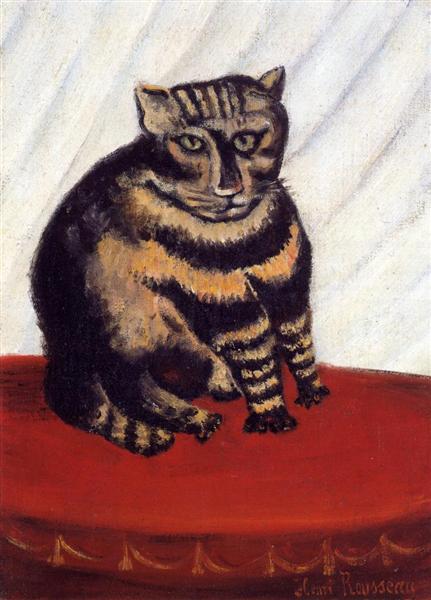
The Tiger Cat - Henri Rousseau
The Tiger Cat – Henri Rousseau

Our Winter 2017 issue doesn’t fly until December 21, but if you’d like an early taste of all the hungry, beastly lit that lies in wait, here’s Deirdre Coyle‘s wonderfully bizarre short story “How to Vomit Living Creatures.”

[FLAPPERHOUSE #12 is currently available for pre-order in both print (for $6US) & digital ($3US) editions!]

{ X }

AND THEN SHE VOMITED A CAT. Not so much a hairball as an entire cat. It folded out of her mouth and onto the floor, fur smoothed by mucus.

She was wearing her bumblebee sweater.

“You look like a bumblebee,” said her mother.

“I just threw up a cat,” she replied.

Her mother looked at the clock. “Isn’t it time for your therapy?”

“Well…is the cat dead?” It was not moving.

“Let me check on it. Go see your therapist.”


Veronica was a student of comparative linguistics. She walked two miles to class every morning. Sometimes she ran. Sometimes she ate Luna bars while walking. This was allowed. At lunch, sometimes she ate french fries or chicken fingers. This was not allowed. Sometimes she stuck her fingers down her throat afterwards. Other times she ran an extra five miles on her way home to make up for it. Nothing made up for it.

The therapy sessions had begun after her freshman year of college, during which she had dropped thirty pounds in a few months and maintained a perfect 4.0.

“Do you worry often?” the therapist had asked during their first session. “About grades, maybe? Or boys?”

“I worry about grades,” Veronica replied. “But mostly I just get good grades. That’s what happens. To do otherwise would be stupid.”

“Why do you say that?”

“I’m in college, right? My mom’s paying for it. So I’m not going to waste her tuition money partying, you know?”

Her therapist raised an eyebrow, one finger tapping the arm of her chair. “Why do you say that?”


After two years and as many pounds of weight gain, Veronica’s therapist continued to question obvious statements.

“You can’t just eat a cookie and then throw up a cat,” said her therapist.

“I could. I did.”

“Not physically,” the therapist said, scribbling on her pad. “In order to purge a cat—”

“I wasn’t purging.”

“I only meant expunge. In order to expunge a cat, you must have eaten a cat.”

“I never ate a cat. I only ate a cookie. And if I had eaten two cookies, I probably would have thrown up two cats. Or maybe one, much fatter cat.”

Veronica felt an internal stickiness in not knowing her ailment. Discomfort came from knowing there was nothing she could do. Continue reading “How to Vomit Living Creatures” – Fiction by Deirdre Coyle

“Number 59” – Fiction by Rayna White

the-chess-board-1935
The Chess Board – Victor Vasarely, 1935

The grand finale of our Fall 2016 issue is  Rayna White‘s chilling, dystopian story “Number 59.”

{ X }

THE PEOPLE STOPPED FIGHTING IT A LONG TIME AGO. They used to make a show out of securing their homes. They would barricade the doors. They removed family pictures from the walls and replaced them with photographs of famous landmarks, skylines of cities they’d never seen, and Impressionist paintings. They tucked their children into small holes in the wall behind the bookshelf. They hid them in secret cellars, and under loose floorboards. They harnessed them behind the furnace in makeshift contraptions.

Nothing surprised the Retrievers. It seemed the breadth of innovation when it came to concealing one’s own child had its limits. The Retrievers knew every trick and every secret hiding place, and had heard every lie, sometimes more than once on the same day, sometimes on the same street. The children were either safe or they were not, and every cycle they never left a house without the child they had come for. If the child was chosen, the child would be found and the child would come.

It’s been decades since anyone has resisted the Retrievers, not in any meaningful way at least. Occasionally, there’s a bribe offer, which they always reject, or a demand for proof of authority, to which the Retrievers respond by showing the parent the roster, leaving them to sulk, defeated in their doorframes.  Most just comply now. Fate is fate they say.  They watch as the van rolls down their street, and as it slows to a stop and the Retrievers exit, they clutch their child instinctively — a final protective measure before their fate is finally revealed to them. Then they whisper to themselves, “Not this house, please, not this house,” because that is all that they can do. Continue reading “Number 59” – Fiction by Rayna White

“The Invention of H.P. Lovecraft” – Fiction by Shay K. Azoulay

weird_tales_september_1952From our Fall 2016 issue, Shay K. Azoulay‘s “The Invention of H.P. Lovecraft” is a fictional– yet, perhaps, plausible?!– theory on the origin of the influential horror author.

{ X }

The following is the first and only post, published on 15 December 2014, in a blog named “The Invention of H. P. Lovecraft”. No author has been identified.

MUCH LIKE DARWIN IN HIS DAY, who was prompted to present his theory of natural selection when he discovered the naturalist Alfred Russel Wallace had made similar discoveries, hoping to establish precedence and preempt the young upstart, so am I forced to release my own revolutionary findings prematurely, with absolute conviction but without what many would consider substantial evidence or incontrovertible proof. Due to these constraints of time and resources, my presentation of the discovery will be rudimentary, a symbolic staking of a claim if you will, to which I will later return with expansions, clarifications, revisions, and refinements. This is certainly not how I imagined I would present such an explosive theory, which I have been formulating for several months now, but in our lives things rarely go as we plan or imagine them, and the people we thought we could trust fail us in ways we could not have imagined (but no more on that).

I owe the discovery of H.P. Lovecraft’s true nature to my recent rereading of The Book of Sand (1975) by Jorge Luis Borges, specifically the story “There Are More Things” which is dedicated “to the memory of H.P. Lovecraft”. This seeming parody of Lovecraft’s themes, style, obsessions, and concerns is dismissed by Borges himself in the book’s epilogue:

Fate, which is widely known to be inscrutable, would not leave me in peace until I had perpetrated a posthumous story by Lovecraft, a writer I have always considered an unwitting parodist of Poe. At last I gave in; the lamentable result is titled “There Are More Things”.

I was struck by two things immediately – why is the story dedicated to the memory of Lovecraft rather than to the man himself (Borges dedicated only a few of his stories to people, usually with the generic “For…”), and why does Borges consider the story a posthumous creation by Lovecraft rather than a tribute or homage to him? The answer to both of these questions is as simple as it is astonishing: because H.P. Lovecraft was invented by Borges. Continue reading “The Invention of H.P. Lovecraft” – Fiction by Shay K. Azoulay

Our 2017 Pushcart Prize Nominations

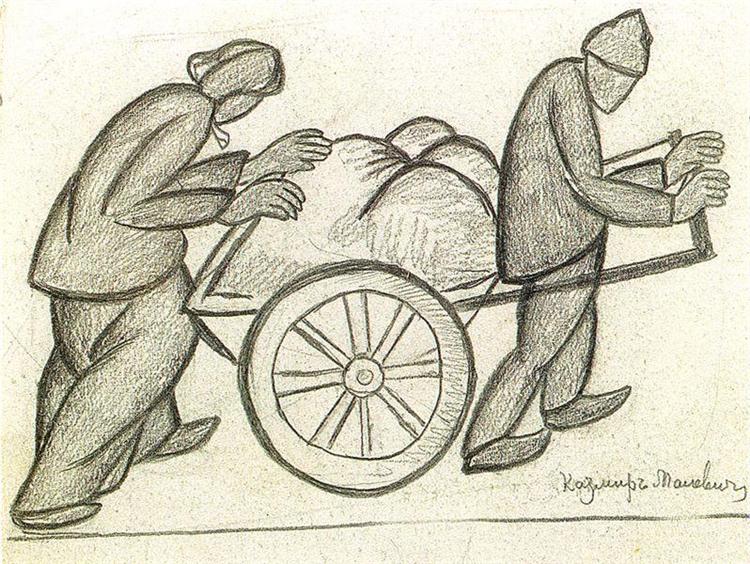
Two and a Pushcart - Kazimir Malevich, 1911
Two and a Pushcart – Kazimir Malevich, 1911

Our nominations for the 2017 Pushcart Prize, which will honor work published by little magazines & small presses in 2016, are:

*
*
*
*
 *
“The Cake” – short fiction by Jonathan Wlodarski (FLAPPERHOUSE #12, Winter 2017, coming December 21)
 *
Congratulations & best of luck to all our nominated writers, and thank you for contributing your phenomenal work to our weird little zine!