Category Archives: Fiction

“Armed & Fabulous!” – Fiction by David X. Wiggin

Dolce & Gabbana advertisement - Steven Meisel, 2006
Dolce & Gabbana advertisement – Steven Meisel, 2006

It’s a sick, sad world we live in, friends, and violence & grief are hotter than ever this season– just like in “Armed & Fabulous!”, David X. Wiggin‘s brutally satirical short story from our Fall 2015 issue.

{ X }

LAST YEAR’S TREND WAS THE DEADLIEST IN DECADES, transforming the fashion world from a familiar Sodom into a post-apocalyptic nightmare, littering the runways with corpses and earning Madison Avenue the title of “most dangerous street in America.”

It began with the brutal murder of supermodel Alison Abigail.  One sweltering July evening, the nineteen-year-old Calvin Klein model went clubbing with her friends, her honey-colored hairs twined in those famous pigtails.  According to reports, she left Club Gonzo shortly after 2 A.M. on the arm of an unknown man.  Her disappearance, a national tragedy, became national trauma when her mutilated body was found floating in the Hudson two weeks later, pigtails chopped off.  Right away people blamed the industry.  Alison was branded a martyr in nearly every circuit of the media. Shows were picketed.  Bottles of the perfume she represented were shattered on the street outside the Calvin Klein offices.

While its tasteful battlements shook from the onslaught of a hysterical country, the fashion world was being torn apart from within.  Models withdrew from the public sphere for fear of the uncaptured killer.  A popular designer quit the business altogether out of remorse.  Nearly a third of the clothes designed that year were black.

Eventually the one-year anniversary of Alison’s death rolled around.  In a move of brilliant marketing, crass Calvin Klein produced the Alison Abigail Memorial Fragrance.  This perfume did not tingle with the gentle scent of flowers or fizzle with the electric dry smell of the sea.  It burned and blasted like wrathful mace.  It was in fact wrathful mace stored in a heavy steel spray-flask, itself a suitable accessory for bashing in the head of a blinded mugger.  First produced only in limited edition quantities, the Alison Abigail Memorial Fragrance was a surprise hit.  Sentimental fashionistas swept them off the shelves and wore them on chains or clipped to their belts.  It didn’t matter that the flasks were heavy and hideous—everyone was proud to wear them.  They provided a sense of solidarity and empowerment.  Here was an item both chic and deadly.  And because the A.A.M. Fragrance was technically a perfume, it was perfectly legal.

Not to be outdone, Donna Karan produced a silver commemorative dagger.  A good three inches longer than the legal limit, the curved blade was designed by a famous silversmith and inscribed in delicate cursive with the banal phrase: “NEVER AGAIN.”  It was the sort of tasteless knick-knack you’d see at the Alamo—only these knick-knacks were sharp enough to castrate a horse.  The day after the dagger went on the market, stabbings in New York City quintupled.

Continue reading “Armed & Fabulous!” – Fiction by David X. Wiggin

And Our Pushcart Prize Nominees Are…

Just in the nick of time, we’ve mailed our nominations for this year’s prestigious Pushcart Prize, which will honor literary works published in 2015 by little magazines & small presses throughout the world.

And our nominees are (in order of appearance):

“The Rud Yard” – short fiction by Vajra Chandrasekera
“She Used to be on a Milk Carton” – poetry by Kailey Tedesco
“The David Foster Wallace Empathy Contest” – short fiction by Wm. Samuel Bradford
“Spanish Donkey / Pear of Anguish” – poetry by Jessie Janeshek
“the things that are left behind” – poetry by Joyce Chong
“Ewart” – short fiction by Michael Díaz Feito

Congratulations & best of luck to our nominees– and thank you all for contributing your phenomenal work to our weird little zine.

“The Playground” – Fiction by Samantha Duncan

Boys Lessons Provide Wartime Toys - Norman Smith, 1943
Boys Lessons Provide Wartime Toys – Smith Norman, 1943

“The Playground” is not just a setting but a character in Samantha Duncan‘s magically unsettling flash fiction from our Fall 2015 issue.

{ X }

IT WAS THE START OF SPRING WHEN THE PLAYGROUND BEGAN to behave in a maternal way. Howard, having just learned to walk, tripped over his own feet and landed hands and knees in a muddy spot of mulch. He had mixed feelings about dirt on his body, only enjoying it when he submitted himself to it, so this was an event altogether displeasing, which he hesitantly expressed through an animalistic wail. His mother, sitting on a bench at the opposite end of the playground, had barely risen from her place when the ground in front of Howard let off a small explosion, and from under the mulch a burst of water landed directly on his splayed hands and feet.

His mother jerked and back-pedaled slightly before charging toward her son. She frantically checked him over for further injuries from the tiny water volcano, then assessed his mental state, assuming that at the very least, he’d be spooked and immediately want to go home. But he was completely clean from his impromptu bath, and his expression suggested nothing more than perplexed curiosity, and when she moved her hands to his armpits to hoist him up and head for the car, he fought back with the move all children perfect in their first year: thrusting one’s arms straight up and causing them to slide out of their handler’s grip. It worked, and she put him down.

He immediately ran to the metal dome climber and, though he’d never done it before, climbed almost to the top and rested his body there, giving the structure an awkward but loving hug. His mother, unsure what to think, circled the playground to look for signs of another explosion, but the ground looked calm and inanimate. There had to be an explanation, some natural phenomenon she’d never heard of. Maybe the playground was built on shifting plates. Science held the answer. She watched her son close his eyes and hug the dome climber tighter.

Other things started to happen, though, that couldn’t be dismissed by any sort of science. Bailey attached his mouth to the outer curve of the yellow tube slide. A few minutes of this passed before his mother looked up from her iPad and tensed her face in disgust.

She marched over to him and demanded to know what he was doing. He waited until she was within arm’s reach before popping his little mouth off the slide, and he screamed:

“I’M NOT FINISHED!”

Continue reading “The Playground” – Fiction by Samantha Duncan

“When the Seals Would Clap No More” – Fiction by Tim Conley

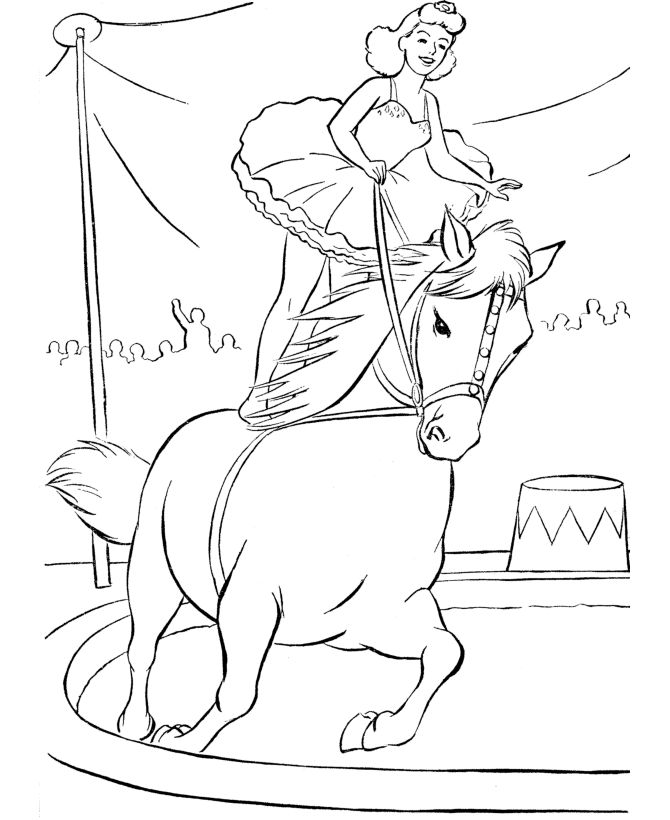
circuscoloringbookStep right up and marvel at the preface to the world’s most profound coloring book in “When the Seals Would Clap No More,” Tim Conley‘s contribution to our Fall 2015 issue

{ X }

IF IT SEEMS UNUSUAL TO DISCOVER A PREFACE appended to an object that is all too often called a “colouring book,” perhaps prejudices have become unguardedly confused with expectations. There is sometimes urgency in the unexpected. Therefore be warned: despite its innocuous-seeming charms (that it only seems innocuous is one of its charms), Join the Circus! is no ordinary bound stack of paper to be idly defaced, and this preface is likely to disturb and distress those who underestimate what they have opened.

Join the Circus! is certainly a joy to behold – to behold, it must be stressed and not to lay wax upon willy-nilly. The narrative that the keen-eyed reader can puzzle together from the sequence of tableaux is simple, concise, sometimes slyly allusive, and genuinely moving. It needs no improvement. The intersecting circles of clowns and poodles on page 11 are utterly dynamic precisely because they are in black and white, because the artist who gave them exuberant life disdained the superfluous and focussed on the power of the line. Reddening these clowns’ noses will not make them more antic: such an assault would irretrievably lose all the picture’s mirth. The facial expression of the poodle in the right corner is nothing less than haunting, but the smallest smear of pink, say, would demolish that nuance. The whole essence of the clown’s nose, the poodle’s ineffable expression would be violated.

Exaggeration? No. No and again no. We must understand Join the Circus! rather than disfigure it. No one would countenance a gluing together of various pages of the Gnostic gospels or the Analects of Confucius, or fecklessly stand by as some cheerful maniac made paper dolls out of The Origin of Species or The Last Bandstand: An Unbiassed Argument Against the Use of the Conductor’s Baton. These claims need not even be made – the renown of such wonders defends them; and yet one must even today defend Join the Circus!

Why? Regard, for example, the illustration on page 7: the juggling bear on the unicycle. The temptation here might be to juxtapose merry brown for the animal’s fur with jaunty red for the fez, but to do so would be a mistake. Why? For one thing, there is the temerity of asserting the familiar: bears may frequently have brown coats, but there is no reason to suppose that this particular, splendid specimen (capable of juggling four balls while riding a unicycle, a feat which the reader is politely invited to match – without opposable thumbs) does not have a magenta coat. This is only one kind of error, however. The zany who, for the sake of unconventionality or as a wearisome “avant-garde” gesture, scoops up the forest green crayon to colour only the bear’s left side and polka-dots the right in orange, presumes both that the colour does not matter and that his or her “artistic licence” trumps all other possible contingencies and concerns. Imagine a surgeon who announced, hands still within the patient’s open cavity, “this organ would look much better over here.” Imagine the firefighter who aims the arcs of hosed water right over the blazing homestead, with the justification that to his eye it looks more pleasing than merely dousing the flames directly. Just imagine!

Continue reading “When the Seals Would Clap No More” – Fiction by Tim Conley

“Posing for Tarkins” – Fiction by Joel Enos & Angela Enos

In Realms of Fancy - John William Godward, 1911
In Realms of Fancy – John William Godward, 1911

A naive young model gets caught in a reckless artist’s dangerous game in Joel Enos & Angela Enos‘ elegantly menacing story “Posing for Tarkins,” one of many flappy lits you can read in our Fall 2015 issue.

{ X }

THE LADY QUARANTAINE BLAMED HER MOOD’S SUDDEN SWING toward nostalgic melancholy on Stella. It was always Stella’s fault. It always had been.

“Scandalous!” Stella Potter laughed her horse’s neigh across the dinner table, prompting a look of shame from Philip, her long-suffering husband, and a chortle from another slightly intoxicated dinner guest, Carlotta Dunn.

“Who? Winifred Bunton?” This from Oscar Culmel, a dashing Spaniard and an artist in his own right, but only when his philandering allowed him time. “How do you mean?”

“No, no,” Ms. Potter took another large sip of wine. “Winifred is a class act. But that other artist back in the colony, the one who wanted to be Winifred but didn’t have half her talent…you know…Tarrrrrkinnnnnssss…” Another neigh. “Elaine, remember Tarkins? You knew him, didn’t you?”

The hostess of the evening, the Lady Elaine Quarantaine, smiled sadly at her unintentionally amusing friend. “Tarkins?” she said thoughtfully. “No, I don’t think I did know him.”

But in truth, Lady Quarantaine most definitely knew Tarkins. She had killed him.

Elaine was not yet the Lady Quarantaine back then. She didn’t even go by Elaine. Of all the guests at this dinner that she’d prepared to celebrate her husband’s most recent art acquisition, only Stella knew that for a brief year, back in that faraway colony so awfully many years ago, the Lady Elaine had been much better known as the highly sought-after artist’s model, Durissa.

{ X }

The young Elaine and her family were in the colony because her father, though not as fortunate in business as some, had been entrepreneurial enough to know that the small ports and towns on the far reaches of the Empire were full of potential. He had a young wife, two small children, and an older daughter from his first marriage to Elaine’s mother. It was Elaine who would rechristen herself as the more glamorous-sounding “Durissa” and launch herself among the artists and thinkers of the expatriate community, all seeking their fortune in a rough but seductive land.

Durissa was the name of a port Elaine had never been to, but had found on a map. It made her feel as though she belonged with the self-invented artists she was cautiously mingling with, far more so than plain old Elaine ever could. The assumed name also bore the advantage of preventing her father from learning what his dear eldest daughter was up to; modeling for artists was not something a woman of her station did without permanent social repercussions. Of course, it was actually quite demure compared to what the other girls were doing and not at all, as her friend Stella would hiss in mock shock, “Scandalous!”

Stella, being a few years older and having already discovered suitors, kept a small flat of her own under the pretense of taking respectable art classes, as well as dictation, near city hall. Durissa, under the guise of doing the same, was using Stella’s new living quarters as a home base for her “Scandalous!” new life.

One night at a private exhibit, Durissa was feeling quite lost in the shadow of Stella, who had, as usual, been very loud while wearing a daring new gown. Durissa arrived at Stella’s flat earlier that day in her third-best party dress, because her friend had assured her that while true bohemians should never be the best dressed at a party, they must always the most interestingly dressed. The second part of the maxim was fulfilled by a bright red shawl of Stella’s own that she wrapped around Durissa’s shoulders as she admonished her for her lack of creativity.

“It’ll cover how hopelessly bourgeois your dress is and create a sense of mystery,” Stella assured her. “If you want to be someone’s muse, you’ve got to look like you know things they don’t and then make them desperately want to find out. It’s easy, really.”

Durissa nodded, allowed herself to be anointed with Stella’s pungent perfume, and felt almost transformed.

The transformation lasted until an hour into the party, when Stella and her “Scandalous!” dress had disappeared onto the balcony with a stranger. Once alone, she felt more like Elaine than Durissa. She fumbled with the shawl, attempting to remove it.

“No, don’t move an inch! Stay perfectly still.” A sharp voice cut through the hum of conversation around her, startling Durissa into the desired stillness.

A man stepped out of the crowd of black tuxedoes and grabbed Durissa firmly by the chin, turning her face in profile. “There. I had to see it. I never trust a woman without a strong profile,” he said, releasing his grip on her face. She could see him now, a man of middling height and looks that would be unremarkable without a personality that obviously was not lacking in certain panache. The brocade waistcoat, the impractical rings, the precision of his hair’s unkemptness: This man was certainly a bohemian. Stella’s absurd red shawl had worked.

“Forgive me, I was so taken with your profile that I forgot my manners. I’m Tarkins, artist. And you have a magnificent profile. Just the sort I’ve been looking for.”

“My name is Durissa.”

It was the first time she’d said it aloud to a stranger. With the artist Tarkins as witness, it became true.

Continue reading “Posing for Tarkins” – Fiction by Joel Enos & Angela Enos

“Ewart” – Fiction by Michael Díaz Feito

In the jungle, Florida - Winslow Homer, 1904
In the jungle, Florida – Winslow Homer, 1904

“Ewart” is a spectacularly swampy slab of Southern Gothic by Michael Díaz Feito from our Fall 2015 issue.

{ X }

ān æfter eallum …

Beowulf

IT IS WRITTEN THAT A RIPPLING SPHERE OF MOSQUITOES often rose from that yellow sedge spot where N. Ewart Nance put up his cabin. A unique species, when underfed the wiry girls were themselves a glowing yellow. They purpled when glutted. Shifting in their spherical swarm, they swapped hues, off and on. They shed generations too. Unlike the average others, these mosquitoes led no three-day luxury life but had only the one. Up, then down. Their throng’s heart dropped out dead by each morning. Then the young and yellow leapt from the still sedge-water, rearing up like one open mouth.

Sustain—this ever-adolescent species kept a lumpy shade cast over the sedge. A point of origin, south of the Miami River.

{ X }

Ewart never named his homestead. Although he did consider himself that spot’s first inhabitant, he never christened it. He would not care for those who had, would, or will. That spot of yellow sedge has had many names: one in the Tequestas’ tongue, then Meados del Fraile, Coño de la Coja (briefly), Clarke’s Kill, Ooki-lakni, Panther’s Breath, Okeelacknee, Telegrams, Monmouth, and (after draining and ingesting it) Miami. Before the end of the nineteenth century, South Florida’s place names were transient like human life. This is meant in a literal sense. Names went into graves with namers and kin, swallowed all in perennial union by bog muck and waters. These swamps boil and lack phosphorus, so they do not preserve pristine skin-bags—no moaning faces visible, beatified. In and around sinkholes, you’ll only dig up brushfire ashes and teeth, peat-packed. Teeth irreverently strewn like Onan’s seed. But the water is clean.

That yellow sedge spot was mapped once in 1896 as Monmouth. In a local accent, Moan-mouth. That town was built, burned, rebuilt, burned in roughly the same spot. A prominent hotelkeeper named it for his favorite fruit pudding, and that was meant to evoke the tropics for tourists. Monmouth slouched by Biscayne Bay.

{ X }

Ewart, at age thirty, hides beside his mother on a backless pew in the Cumberlands. A sturdy woman. She grips his shoulder. A chafing of linsey-woolsey and calico—other shoulders settle close by them on the pews. Ewart feels smothered. He hunches his shoulders and tenses his arm, to signal that she grip tighter. She does. All these parishioners sweat from slogging through frost, so they stick together at the shoulders, fixed by foggy breaths and stamped-up ashes.

The church itself is only a gray box. Its ceiling runs low, low enough that most men reach up and rest their hats on the crossbeams. Another pew of broad-brimmed hats. Most men spit chaws on the floorboards. These form one sticky pool.

Ewart does not doff his hat. His head sits huge on a short body, and the hat tightly hugs just its upper slopes. To hide his face—miniscule features meekly clustered at the flat, chalky center—Ewart bends the brim. Somebody flicks the back of the brim. And again. An opening hymn is chanted. His mother chants loudest, nasally, and Ewart says, She whinnies only to outdo the others’ holiness.

This hymn dies down.

Most men spit chaws again.

Somebody flicks Ewart’s nape.

The preacher speaks at the pulpit:

On this most airish day, ladies and gentlemen, we are swept together like strands of twine today. A single thread tied in blessed God’s big hand. We are not separate ones. He has entwined us into a strong rope stained with the Blood. He has knotted us. Now, hear me. We came from somewhere far from Him, that is, sin. And nay, do not turn ye back like Lot’s wife! For there behind ye is surely Satan. The Lord our God tugs our rope safely through fiery flames, us upon whose bodies the fire had no power, nor was an hair of their head singed, neither were their coats changed, nor the smell of fire had passed on them. He tugs us over yonder, poor mourners, toward Him, toward Salvation! Knotting us together, tighter and tighter, as we turn unto Him. Verily, I say, He is fitting a single sacred garment of us, Salvation, for to leave our lone bodies behind!

His mother Winifred nods along with the sermon’s words. Her lipless mouth is only grayer cracks in the skin by the teeth.

Ewart tugs his arm from her grip. He does not want to leave his lone body. As he plucks his patchy beard’s bristles, the preacher reads a psalm.

Past the pulpit is one window. A redbud tree presses its panes. Six panes bloodied by the wintery buds like a picture of fire, and branches also gnash the panes.

Watching the preacher, his mother pushes her knuckles into his shoulder. Her wiry fingers wrap his arm again. A small fear simmers Ewart’s loins. He snaps together his knees to hide the hard horn. The preacher’s voice rising, most men weep. Somebody knocks Ewart’s hat and it flies into the pool of spit chaws. Continue reading “Ewart” – Fiction by Michael Díaz Feito

“Mother to Chick” – Fiction by Rebecca Ann Jordan

Young girl eating a bird (The pleasure) - Rene Magritte, 1927
Young girl eating a bird (The pleasure) – Rene Magritte, 1927

Earlier this year, we asked Rebecca Ann Jordan if she could write us a flash fiction inspired by Rene Magritte’s painting “Young girl eating a bird.” The result is the enchantingly eccentric & superbly disturbing “Mother to Chick,” one of many flappy lits you can read in our Fall 2015 issue.

{ X }

IN THOSE DAYS, WOMEN WEREN’T PERMITTED TO FLY. It would have been unseemly, like wearing pants then, or wearing skirts now.

I was born with feathers tucked between my teeth. I bet they don’t tell it that way. Screams of horror at being thrust into a cold world turned to giggles, feathers tickling the mouth’s roof. They who grasped my ankles and spun me around, who made me lust for vertigo, also made me vomit out the feathers.

It was already too late for me. I’d been hooked on flight.

The birds, they listen to me in the way that dogs or horses listen to men but not women. I’ve never seen a man could charm a finch down from an apple tree. (Disregard tall tales, always shinier in hindsight anyway.)

I, avian hoarder, began to accumulate them young. A hummingbird perched on my ear, woodpecker on shoulder, quail hurrying along in my perfumed wake. Now they hover, churning flurry, behind me—a mile-long veil of feathers and cacophonic chirps. All want attention.

All prove their value with flight.

My little dog chases the ground-dwellers until they’re forced to light upon my skin, digging in little claws.

I made my own attempt in all the usual ways, plus:

  • Lifting molted feathers, fallen in a flurry from my train. First glued, then soldered to my skin, shoved into holey pores. I thought then to skip the easily-melted wax; I’m not incapable of learning from the past
  • Weaving a net the larger birds could burrow up inside, press against the roof, and me with fingers twined in the ends, they my balloon, I their weight. (Here, you can still see the rope burn that redly elongates my lines of head/lines of heart)
  • Making a machine. Perhaps the magic wasn’t in the birds; selfish to keep it to themselves. I made it from branches and leaves; gingham and lace from my dress I tore to pieces; strings and papa’s gears and rubber bands. Rubber bands propelled the gears that tugged the strings that pulled the branches and gingham and lace, all strapped between my shoulder blades. Up and down, went my fake branch / gingham wings, up and down and up and down and up and down. I almost felt myself getting lighter on the upswing, but down always counteracted

Continue reading “Mother to Chick” – Fiction by Rebecca Ann Jordan

“Earth Comes Down” – Fiction by Maria Pinto

Yemaya - artist unknown
Yemaya – artist unknown

“Earth Comes Down” is Maria Pinto‘s bluesy slipstream short story about a mysterious woman who appears following a powerful storm. It’s just one of many cosmically flappy lits in our Fall 2015 issue, now available in print ($6) & PDF ($3). 

{ 1 }

SHE WAS FOUND ON THE WOODED SIDE OF THE HIGHWAY by two paramedics on their way back to dispatch. The eye of mega-storm Yemaya had lately passed over us. Though the rain had stopped, the sky still roiled grey and white like restless marble. Downed trees and branches hindered evacuation travel, so the highway was otherwise bare, and there she was beside it, pacific and strange in the mud. Though the medics initially feared she might be pinned there by flotsam from the woods, this was not the case. She was a sight. Her skin glistened with some sort of arctic-blue ooze. Twigs and leaves stuck to it. She wore a thin blue, brown, and green shift and no underthings. Not enough for the way the winds still huffed. Her mouth opened and shut like that of a beached fish, though she made no sound. She was maybe biracial, her hair wavy and matted in places.

Wilson, who is now under investigation for the woman’s disappearance, sat in the back of the ambulance while Reece drove. Wilson claimed that during the long ride to the hospital, even though she had not made the slightest noise before they strapped her to the bed, the woman stared up at the ceiling, babbling like a child. A coo here, a gurgle there. She was breathtaking, according to the report Wilson gave. It was superfluous information, to be sure, but it had been included anyhow. She was “so damned gorgeous we could barely look at her; so gorgeous it was easy to imagine that a man or group of men had taken what he or they wanted and left her for dead on the side of the road.” It was too easy to imagine this and too easy to imagine it again. Like a nightmare fantasy you close your eyes and savor. The report said that at least the paramedics had had the grace to look sheepish as they rhapsodized upon the beauty and violability of her form. They could not help themselves. Men will be men. Continue reading “Earth Comes Down” – Fiction by Maria Pinto

Our 2015 Best of the Net Nominees Are…

Our nominations for the 2015 Best of the Net anthology, which honors literary work that originally appeared on the internet between 7/1/2014 & 6/30/2015, are:

“ARG” – Anthony Michael Morena (short fiction)
“Street Music” – Emily O’Neill (poetry)
“Invocation: Joan of Arc Reads the Crowd” – Jennifer MacBain-Stephens (poetry)
“9 lessons in witchcraft” – Danielle Perry (poetry)
“The Rud Yard” – Vajra Chandrasekera (short fiction)

Congratulations & best of luck to all our nominees, as well as our eternal gratitude for contributing their amazing work to our weird little zine.

“The Boy Princess” – Fiction by Jane Flett

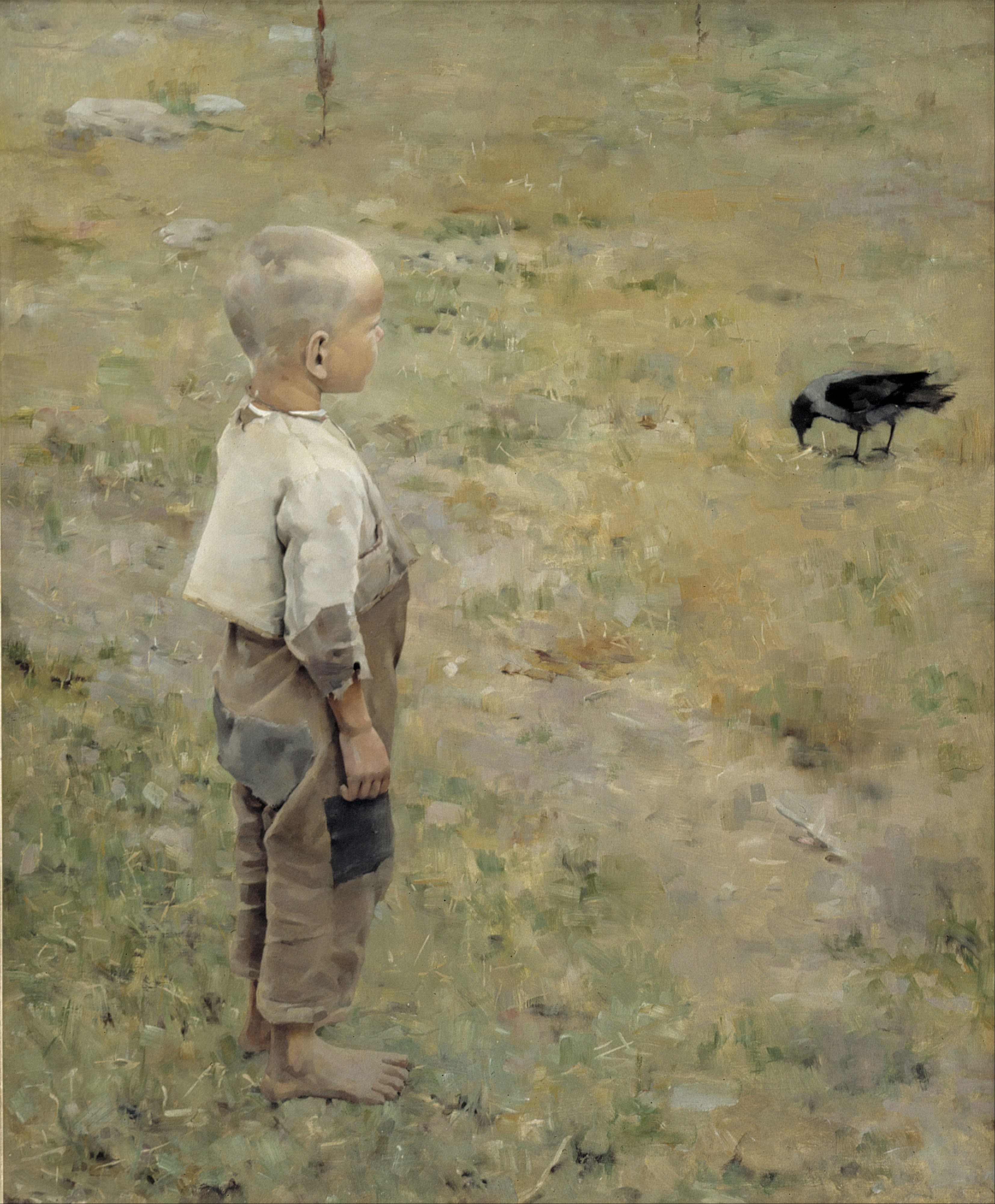
Boy with a Crow - Akseli Gallen-Kallela, 1884
Boy with a Crow – Akseli Gallen-Kallela, 1884

The grand finale of our Summer 2015 issue is “The Boy Princess” by Jane Flett, an unforgettable fairy tale that’s as bizarre as it is touching.

{ X }

EVERYWHERE IT IS AUTUMN, the leaves are capsizing, and yesterday I saw the boy princess in the woods. He was squatting beneath a stone bridge, throwing pebbles into the stream, while I watched from the other bank. I like to watch him balance. His thighs are sturdy—meaty, in fact—though I could see the muscles quivering underneath the skin. A pulse in the neck of a baby bird. His garter had begun to unravel, and the dirty end of the lace was lapping in the stream.

I didn’t want to disturb him. The boy princess is a paper sack of contradictions—part brittle sugar-glass, part thick, sure flesh. The pebbles made an empty thwack when they hit the water and I thought of wishes and wells. If I could be granted one true thing by the wish master, what would it be?

To be the stream, nuzzling at that grubby lace? No—

To be the garter, quick against his thigh? No—

To take the boy princess in my mouth and taste him, so sweet and slick he hurts my teeth.

The wish master gave me none of these things. I left the boy princess to his pebbles and reflection, and climbed over the rocky banks towards home.

{ X }

I try to pretend I can take or leave the boy princess, but of course, either is impossible. The moment I met him last spring, he crawled beneath my heart, and he dwells there now with sharp canine honesty.

I met him on the mountain of rejected objects one morning when the sun was fat in the sky. He was exercising his pet crow. That is, he was throwing scraps of bacon from a paper bag into the void past the cliff and the three-legged crow would swoop and caw and plummet, racing against meat and gravity, to rise up victorious with a morsel in its mouth. I didn’t know he was the boy princess then. I didn’t know the crow was his. But there was something transfixing about the arc of his arm.

The skin was covered in ragged black sketches. An owl’s eye, which seemed to follow me when I walked. A map of islands with a sea full of kraken. The languid silhouette of a bear. But the skin was also very pale. It looked as if it would puncture if you pressed too firm a nib against it. As if any line of ink would be followed by blood.

I watched the crow. It was lovely to watch the balance of his body as he landed. His back leg hit the grass first, then the middle, then the front, and the crow would rock forward, bob, and settle back against his tail. Every time, a gentle crow curtsey: Thank you.

“That’s a good crow,” I said.

The boy princess turned around. He narrowed his eyes, or perhaps it was just mascara smudging in the sockets.

“He’s not,” said the boy princess.

“But—”

“He might seem good. It’s because he’s got three legs, isn’t it? But trust me—” at this, he lobbed another morsel of bacon over the cliff top “—this crow is impossible.”

Continue reading “The Boy Princess” – Fiction by Jane Flett