Category Archives: Excerpts

“Redfield” – Fiction by Stephen Langlois

1906FireA mysterious name turns out to have a sinister history in “Redfield,” Stephen Langlois‘ chilling short story from our Spring 2016 issue. (And now, you can hear Stephen read this story & chat with Ilana Masad on The Other Stories podcast!)

{ X }

FIRST TIME SHE SAID IT—well, it hardly sounded like anything at all. She was aside me, asleep. Her eyes were doing that thing–that rapid movement thing–and her lips kinda pursed for a second before going all slack like she was struggling to tell someone something real important. The second time it was just two disconnected syllables. Third time there was words. There was definite words that third time.

“Red field,” she was saying and what it brought to mind was like a field of thick reddish grass like what you might see in a painting of some distant countryside somewhere. That, or it was like a field which had caught fire—ablaze is what they’d call it—radiating a deep red hue there in the twilight.

“Redfield,” she said again and that’s when I understood it was a name. A man’s most likely. For a second my brain even latched onto the idea of another lover—like how in movies they’re always accidentally confessing to secret affairs—but there was a kinda fearfulness in her voice that made me decide otherwise.

I was wide awake by this point. Had been really for hours. It was the medication I suppose. The doctor said if we was to keep upping the dosage it’d start interfering with my sleep cycle and he was right. It did.

“You know anybody goes by the name of Redfield?” I asked her in the morning.

“Redfield?” she said, thinking on it for a while. I liked that about her. She was what you’d call a deep-thinker. “No,” she said. “No Redfield.”


Next night, though, was the same damn thing. “Redfield,” she kept on saying and it was like she was unconsciously –or is it subconsciously?—trying to issue a warning about this individual. It was unsettling laying there in the dark, listening to that. It was like maybe this Redfield was out there, leaning against the chainlink between the yard and Riverside Park, looking up at the bedroom window, just kinda enjoying the fact that someone was up here uttering his name with what might be described as a sorta dread.

“Sure you don’t know anybody by the name of Redfield?” I asked her over coffee.

“I know Redfield,” her kid said, coming into the kitchen in search of breakfast. “I know about Redfield anyways. I had a whole dream about him last night. His name’s Redfield,” she told us, “and he lives in a field. A red field,” she said.

Though I knew I weren’t supposed to—not after what happened the previous time—I decided to skip my meds. I was getting sick of laying awake after working my ass off all day and come eleven o’clock that night I pretty much passed right out. Stayed that way, too, for a good two or three hours before waking up like I ain’t never been asleep in the first place. I’d been saying his name. I knew it somehow.

“Redfield,” I said—trying it out like for investigative purposes—and I admit I was a little spooked by how familiar it sounded coming outta my mouth. It was like probably I’d spoken his name quite a bit before that night. Like I was trying to speak to him directly almost, a prayer you might say of the unhallowed variety.

“Redfield,” said a voice, louder this time, and I figured it was my own before comprehending it was the woman aside me, still asleep. It weren’t too long before another voice could be heard from down the hall joining in—it was the kid’s—and I tell you it was almost like Redfield was there in the house now. It was like our late-night utterances really had somehow gone and conjured this man a body with all the fleshy weight that came along with it, the unrestrained limbs, the brain matter sparking with what it is they call cognition. I could picture Redfield peering around the doorways into each room, envisioning to himself what sorta devastation he might someday bring about to this otherwise unharmed space.

Continue reading “Redfield” – Fiction by Stephen Langlois

“The Libidinal Economy of the Suburbs” – Fiction by Joseph Tomaras

Smiling Blonde - Marjorie Strider
Smiling Blonde – Marjorie Strider

“Things said and unsaid that cannot be unheard” make up “The Libidinal Economy of the Suburbs,” Joseph Tomaras‘ flash fiction from our Spring 2016 issue.

{ X }

YOU HAVE TO FLUSH THREE TIMES to send all your excreta to the town café’s septic system. It was the kind that is pleasurable but leaves you feeling a bit dirty afterwards, no matter how vigorously you wipe. You wash your hands and leave the bathroom, book in hand, three-quarters of your second mug of coffee gone lukewarm on the table.

She, overtanned with sun-brightened hair in the manner of white American women of the middle classes, says as you sit, “Have I seen you before?”

“It’s possible,” you reply from your Saturday morning stubble, your hair uncombed and two months overdue for a cut, in your faded jeans and the blue, buttoned-down shirt whose threadbare state is visible only at close range.

“No, I mean, here, today, earlier this morning. Have you been here a long time?”

“What time is it?” You ask honestly. You wear no watch and left your phone at home.

She flashes her tennis-braceleted left wrist and says “A quarter past a freckle,” chuckles, then looks at the iPhone in her right hand and says, “No, really, 10:32.”

“About an hour, then.”

“You said something to me on the line.” You never speak to people on the line. “I stopped in here after I dropped my son off at soccer, and you were with a group of people.”

“You must have me confused with someone else.”

“Actually I’m just trying to pick you up.” Her sons, five-to-eight years older than your kids, roll their eyes at one another as you steal a glimpse at her breasts, five-to-eight years lower than your wife’s. “No, I’m just driving my kids crazy.” By which she means:

“Really I am trying to pick you up but with my sons here I have no idea how to make that happen and you don’t seem interested and this is embarrassing, abject really, please help me out.”

Continue reading “The Libidinal Economy of the Suburbs” – Fiction by Joseph Tomaras

“The Weight Between Want and Desire” – Poetry by Christina M. Rau

The Desire - Remedios Varo, 1935
The Desire – Remedios Varo, 1935

“The Weight Between Want and Desire” is one of two stirring and beguiling poems by Christina M. Rau in our Spring 2016 issue.

{ X }

SILENCE MOVING FAST,
it plummets off cliffs in gusts.
A search for nothing
takes forever,

slated out, left for loss
in other people’s warrens:
a broken magnet, unsure compass
poking through a canvas sack.

A coffin, a casket,
a green and purple basket:
full, heavy, reeking of apples
stored up for the last half of tomorrow.

{ X }

Continue reading “The Weight Between Want and Desire” – Poetry by Christina M. Rau

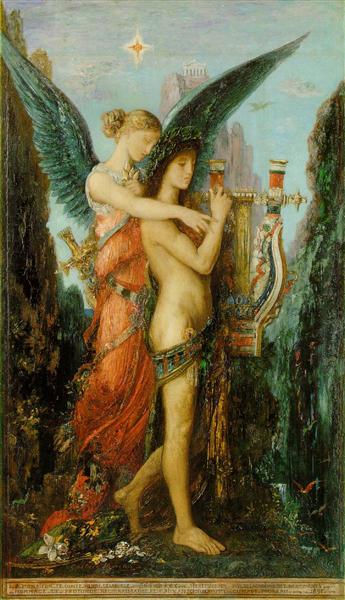
“Muse, Elucidated” – Poetry by Innas Tsuroiya

Hesiod and the Muse - Gustave Moreau, 1893
Hesiod and the Muse – Gustave Moreau, 1891

The enchanting “Muse, Elucidated” is one of two enigmatically beautiful poems by Innas Tsuroiya in our Spring 2016 issue.

{ X }

IN THE END, WHEN YOU CAPTIVATE

the       h          o          l           l           o          w          tunnel

channeling through my dilated pupil

with me capturing back to you, already enchanted

spell-bound and damaged in a cryptic melancholia

being unable to dissuade such moment from aerifying

into free air and summer atmosphere;

may your papers be sated with raw alphabets

streaming until the end of page

not stopping until you ambit the very last breath

or the thrill of having backache


do you not have to sway back and forth again

to incarnate those dead words into divine subtlety

for I am here casting shadow over your body

between dimmed candles and city lights

between promises and frights, between us

l           o          o          s          e          n          i           n          g

each other’s grip for once in a while

{ X } Continue reading “Muse, Elucidated” – Poetry by Innas Tsuroiya

“The Libertine’s Lament” – Fiction by Rob Hartzell

Máquina De Coser Electro-Sexual - Oscar Dominguez, 1934
Máquina De Coser Electro-Sexual – Oscar Dominguez, 1934

Our Spring 2016 issue is perhaps our sexiest issue yet, thanks to pieces like “The Libertine’s Lament,” Rob Hartzell‘s highly stimulating short fiction on the future of virtual pleasures.

{ X }

I REMEMBER THE OLD VIDEO-STREAMS I used to collect of Japanese women making love to each other in cramped Tokyo apartments, or of Americanized women from various parts of Asia kissing languidly at poolside in California, or caressing each other in the hotel rooms used to make so much of the pornography of that era, and I remember thinking even then that the actual Japanese women were much less arousing than the Americanized fantasy women when they kissed, the Japanese women almost violently groping each other with their mouths. Even then, the semblance was better than the real thing—but the point is moot here in the Cloud, where there is neither real nor illusion, nothing but perception, whether the sense data comes from cameras and haptic devices or experience files stored on one of the local servers. For those of us who have uploaded, anything can be real enough; the question is, does it make us feel enough? At this particular moment, it is still not quite possible to produce a satisfying dinner-experience: taste is the last frontier of the digital divide, though there are other pleasures open to those who have left their inhibitions behind with their bodies…

{ X }

Playmate #3—we are known to each other only by our numbers—is my current favorite. It’s considered bad form to ask personal details of another playmate, but it’s nearly impossible not to imagine the stories behind the scenarios we enact with each other. She has a fetish for Japanese rope bondage, which is why most of #3’s fem-dom scenes find me floating in a snug cocoon of ropes, like an embrace that grasps me everywhere. Her latest refinement: she does not permit me to see her or her toys of choice until we’re well into the scene, even if it is the cat she usually uses first, snapping and flogging my back awake, as if the tendrils of the whip pass through the rope on their way to my (virtual) flesh.

{ X }

Our developers are nothing if not clever code-monkeys: once intoxication routines had been hacked, orgasm was only a quick hack beyond that. The hard work was getting it to sync properly with sense data, to make it happen the way it did in the flesh. It wasn’t long before someone hacked an orgasm button, but we agreed amongst ourselves not to use it. The point of our little club, after all, is to prolong and refine our pleasures, not to crassly flip a bit-switch and get a little jolt of the old petit mort the way one might order a coffee. This is something the moralizers, who accuse my kind of seeking instant, constant gratification, will never understand: the difficulty that’s involved in achieving real pleasure. That it is difficulty itself which, more often than not, defines real pleasure, especially among connoisseurs such as us. Continue reading “The Libertine’s Lament” – Fiction by Rob Hartzell

“Cape Valentine” – Poetry by Catfish McDaris

Omnia Vincit Amor, or The Power of Love in the Three Elements - Benjamin West, 1809
Omnia Vincit Amor, or The Power of Love in the Three Elements – Benjamin West, 1809

We’re not sure we’ve ever seen “love” defined as wonderfully as it is in “Cape Valentine,” one of 5 fantastically madcap poems by Catfish McDaris featured in our Spring 2016 issue. (And should you want to read even more of Catfish’s work, you could check out his new collection “Sleeping with the Fish,” now available from Pski’s Porch Publishing.)

{ X }

LOVE IS A RUNAWAY TRAIN
An elephant stampede
The Grand Canyon at sunrise
Van Gogh’s bedroom
Good days bad sad dogs cats babies death
Beautiful intelligent enchanting intriguing
A memory of a memory
Back to back against the wall and the wolf
and the tax man and the ripper and the vultures
Mona Lisa’s whisper and laughter
A hurricane of dreams on the precipice of life.

{ X } Continue reading “Cape Valentine” – Poetry by Catfish McDaris

“Doodlebug” – Fiction by Emily Linstrom

Immortality - Henri Fantin-Latour, 1886
Immortality – Henri Fantin-Latour, 1889

Our Spring 2016 issue is our most invincible issue yet, its pages resounding with time-slaying stories of immortality, reincarnation, and eternal recurrence. And setting the table for this otherworldly affair is “Doodlebug,” Emily Linstrom‘s haunting tale about a family of monstrous immortals hiding out in “a part of London even London has no recollection of…”

{ X }

{ Prologue }

THE HOUSE IS SITUATED ON A CRESCENT ROW, nicknamed by the rustics the “h’moon.” It is not a street you will ever stumble upon, and count yourself lucky for it. The crescent is located in a part of London even London has no recollection of, a corner canopied by centuries of soot and smog, fog off the Thames tapping at the streaked glass panes with wraithlike fingers. The row is silent and, one would suspect, largely abandoned.

Except for one house.

Standing four stories and flanked by an equal number of fluted columns, it is a study in Grecian symmetry: wide steps leading to imposing double doors, the Gorgon’s head knocker stiff with disuse; an iron gate clenches the house—the whole row, in fact—in its jaw, nothing that enters may escape. The silence is a sound unto itself, a weird sort of life that is not alive at all.

The family has a name, ancient and unpronounceable, and that name has been etched over the front door for centuries. And so too have they resided within. For centuries.

Back when Britain was a wild isle ruled by tribes, a general carved a highway into the land and conquered those tribes, and built great temples and fortresses, and erected gods that were not their own, then toppled those gods and replaced them with one. The old ways were set afire, and strong Roman feet trampled the ashes. The city went up, one they could not stop building, expanding, adding on to. The general believed himself a god, and worthy of a god’s lot, and so he built himself a home that could only be called a temple. And did things only a god would dare, until he damned himself and his kin right into monstrous immortality.

Monsters, they truly are. Or would be called, had the world even the vaguest notion of them. Their lives are delivered to the door by an equally obscure messenger, unnamed and unseen, and the h’moon keeps its secrets. Continue reading “Doodlebug” – Fiction by Emily Linstrom

“weather” – Poetry by William Lessard

A Woman Ghost Appeared from a Well - Katsushika Hokusai, circa 1800
A Woman Ghost Appeared from a Well – Katsushika Hokusai, circa 1800

The supremely spooky & surreal “weather” is one of 3 marvelous poems by William Lessard in our Spring 2016 issue.

{ X }

THE NIGHT THAT BECAME
night. We open the door

in the middle of our bed.
The door is candy corn tear.

The door is blue giant
ear. You go first. I follow.

The map says call ghosts.
You call with the side

of your hand. No ghosts.
You call. Not a ripple

in the curtain dark. I say
call with a different voice.

You cup your hand, call
as the girl that stands

behind your eyes. The girl
is ripped dress tacked

to a post. The girl is
blood wiped from the tip

of his favorite tie. I know
this girl. She thinks she’s

hiding, but I catch her.
I’ve seen her often peering

out, sometimes with eyes bolted
to the jewels of foreign fingers.

Her voice is your lace curtain
voice, speaking in gasoline flame.

All the ghosts know her. All the ghosts
know you. They appear as smoke

blown beneath a door. This is how
the night begins. Your voice, this tree.

{ X } Continue reading “weather” – Poetry by William Lessard

“How to be a Small Press Success” – Poetry by Catfish McDaris

Girl in Bathtub - Saul Steinberg, 1949
Girl in Bathtub – Saul Steinberg, 1949

FLAPPERHOUSE #9 is our sexiest & most invincible issue yet. If you’d like a taste, please enjoy Catfish McDaris‘ informative & inspirational poem “How to be a Small Press Success,” which is but one of five fantastically madcap poems Catfish contributed to our Spring 2016 issue. Should you care to read the rest of those poems– as well as impeccably flappy poetry & prose by 15 other all-star writers– you could order a digital PDF copy for $3US and see it alight in your emailbox as soon as humanly possible (usually just a couple minutes, though it could take up to a few hours. We apologize for any inconvenience or delayed gratification.) Or if you prefer to read us in soft, pulpy paperback, print copies are available for $6US .

{ X }

TAKE A NEWSPAPER CUT IT ALL UP and pour
in the letters from a Scrabble game
mix two ounces of Mrs. Butterworth
syrup with water in a spray bottle

Get your woman naked in the bathtub,
squirt her until she’s sticky all over, then
throw in all the letters and an ant farm,
write your poems before making love

Get a Bowie knife shove it into the earth,
put your ear on the handle, listen closely,
all the magazine names in the world will
be whispered to you at the same time

Write as if your sexual organs are in flames,
until your fingers cramp, until your eyes
bleed, until you use the bathroom in your
pants, set fire to all your words, throw them
out the window, now you’re ready, proceed.

{ X }

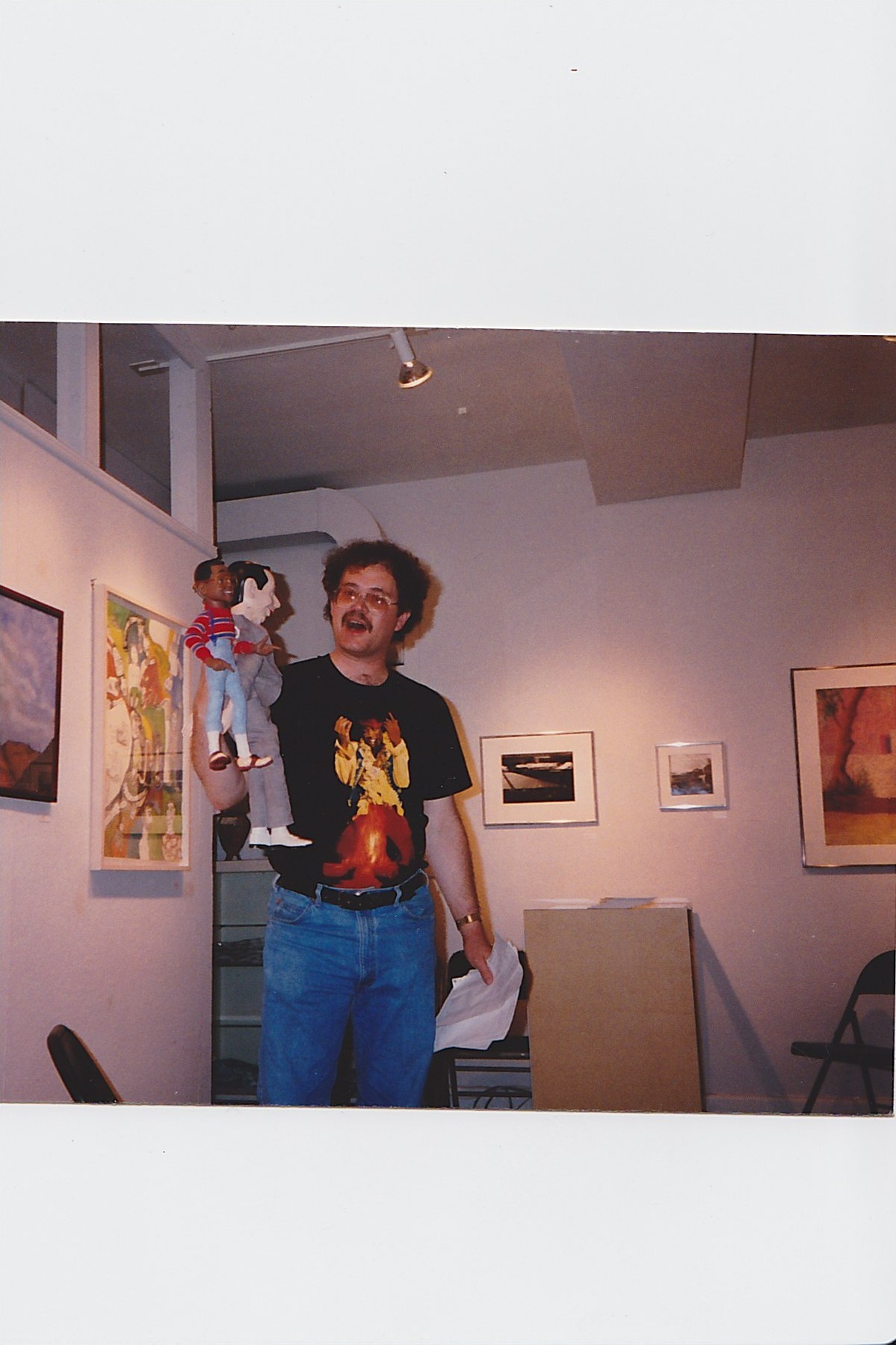
Catfish In Milwaukee Doing a Pee Wee/Urkel Poetry Monologue

CATFISH McDARIS’ work has recently been translated into French, Polish, Swedish, Arabic, Mandarin, Bengali, Spanish, Yoruba, Tagalog, and Esperanto. His 25 years of published material is in the Special Archives Collection at Marquette Univ. in Milwaukee, Wisconsin. He’s listed in Wikipedia. His ancestors are from the Aniwaya Clan of the Cherokee Nation. He won the Thelonius Monk Award in 2015.


“a Stone and a Cloud” – Fiction by Brendan Byrne

The Familiar World - Rene Magritte, 1958
The Familiar World – Rene Magritte, 1958

The grand finale of our Winter 2016 issue is Brendan Byrne‘s “a Stone and a Cloud,” an unforgettable short story of modern alienation & techno-anxiety. But not only is this story your last look at FLAPPERHOUSE #8– it’s also your first look at the forthcoming anthology by the esteemed Dark Mountain Project, in which “a Stone & a Cloud” will be reprinted later this Spring.

{ X }

THE FIRST TIME I MET CLARE SHE TOLD ME SHE DIDN’T WANT TO BE HUMAN ANYMORE. She didn’t tell me verbally or via backchat, but from the way she tilted her head when I introduced myself, her lips pressing together, her eyes vacating, as if she was trying to imagine herself inside me, somewhere past the skin, the skull, and the meat. And then there is the fact that Artur introduced us.


An Open Field. You stand in it, and the background blurs. A thick sheen of rain obscures the horizon, or maybe your eyesight fails to serve the level of detail around you. Like a ’70s film on an HD screen, you can see more than you’re capable of being comfortable with. You sit; the grass underneath you supports you unquestioningly. Your hands hover in front of you: they want to do nothing, cracked and aching as they are. You lay back; you are supported perfectly, the mound of your lower back fitting with the slope of the land. You ever so faintly arch. Are you on an incline? It is such a gradual gradient that you would never notice. The sky above you is woven with soft gray clouds and their manatee offspring. They truck slowly across. There is no threat, though you know it must rain often enough; the land is too green. The field reminds you of somewhere you have never been but have read about online, someplace authentic, someplace where you can be yourself, a place free of politics and anxiety. You twitch, sleeping with your eyes open, but you don’t need to dream: the clouds pass above.


“You don’t look like a videogame designer.”

“What does one look like?”

This conversation, she’d say later, had been repeated endlessly. The guy shrugged, his ice cubes trying to crawl out of his cocktail. He wasn’t embarrassed, but he didn’t have an answer. I could have answered: not so blank, not so restful.

Instead I asked her which games she’d designed. When she told me, I was surprised to find that I’d played one, and told her so. “It has decent market penetration among your population.” She said it cold and slow enough that she could have been reading it off a spreadsheet. She didn’t give me any body language.

Not knowing what else to say, I introduced myself. The guy with the ice cubes looked at me indolent and aggressive as a medium-sized cat, and she said to me, “Artur was telling me I should talk to you.”

“About what?”

She didn’t respond immediately; she was still looking at my face. The guy with the ice cubes began saying something, so I nodded once, raised my glass of cheap white wine and walked away. I drifted to the edge of the roof; the scrum of people got thicker. They surrounded the bar, though nobody was getting drinks, just admiring the rough, dark wood, the brass scalloping, rough and warped; it had just been salvaged from the captain’s stateroom on a recently decommissioned destroyer and bolted into the roof. Someone in engineering tried to explain the process to me but eventually gave up, lacking reassurance. I wondered if any of Artur’s people self-styled as a woodsmith; Artur certainly didn’t. They were probably going to hire some artisanal Brooklyn guy with a superior website and beard to come in and spend several weeks imaginatively restoring it.

I walked to the opposite side of the roof. There was no one there, just the skyline. I could be impressed by it, if I let myself. I turned and looked back to where Clare was standing, next to a kind of plant I’d never seen before. Artur was there, wide and short and game in his perversion of business casual. They both looked at me. He grinned and waved me over. I mimed a grin, drained my glass and left the party.


She stood almost six foot. Her hair was short cut, yellow as a digital rendering of straw. Her avi was a collapse of autumnal humus, undergrowth that looked like it had been churned in some herbivore’s stomach sacs and exuded. She wore no jewelry. Her social was protected; I couldn’t see anything. I didn’t send a follower request. She’d been wearing a tortoise-shell shirt, shellacked like the animal’s skin. Her fingers were thin.


NYU MFA ’10, she’d done a game as her thesis. Assemblyline Worker #5697 @ Apple Plant #72, Guangdong Province! was released right before Steam launched its OS X platform, leaving it just underexposed enough to become culty. “There was a vogue toward boring the player,” she said in an interview two years later.  “This was, I think, partially lifted from the Contemporary Contemplative Cinema movement, which was at high tide then. Indie gamers wanted to suffer for their play. I was happy to help them. And the Foxconn suicides were in the news. Apple backlash was kicking up. Jobs wasn’t dead yet. It seemed obvious. I could do it, so I did it, and then it was just this thing, outside of me. I let it stay there.”

Continue reading “a Stone and a Cloud” – Fiction by Brendan Byrne