DO YOU HAVE A CHILD? How about a niece or nephew? Well then, what about an old mother, knitting a sweater for you that is always too small when you return ashore? Hm. No siblings either? A father? No, of course not, none of you have fathers. Right, well, hear me out. I’m sure, and don’t deny this now, you have a lovely lady waiting onshore for you somewhere, maybe she’s a redhead, maybe a brunette, maybe her tresses are silky black and Oriental. I don’t judge. It’s not my business to judge, you see. So this lady – no, don’t try to sit up now – this lady, she’ll be wondering what has become of you. She’ll be walking along the docks day after day, holding her rosary beads, because let me tell you, all women turn religious when they fret and if you haven’t learned that yet, you’re in for a shock, oh my yes you are. So she, this daughter of God, is saying her Hail Marys and her Our Fathers and she is atoning, you see, for all her sins. And what’ll happen when she hears about you? We’ll dock eventually, my boy, and then what? Then the news will get out and she’ll hear about the noble way you went, yes, they’ll tell brave stories about you I’m sure, but will she be comforted? After all, you’ll get the sailors’ burial, much as I wish I could spare you that, and she won’t get so much as a casket to kiss for the last time before it’s put into the damp earth of our Lord. What? No lady even?
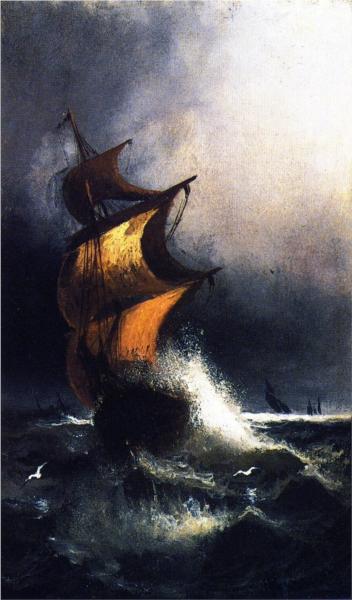
Tossed like toys by rambunctious oceanic whims, still they sail. Wind whipping flagellations and rain coming down in icy spears, the men feel a thousand sewing needles falling on their every exposed bit of skin, not just the familiar thumb and forefinger accustomed to the sensation. Their faces do not reflect light any longer. The sun has been gone far too long.
Again? Yes, here’s the bucket. Good, good, get it all out. Amazing, what the body can do, isn’t it? Going of unrelated causes and still able to get sick as a landlubber from a bit of a storm. All thanks to our Creator, you know. It’s small miracles like this, really, that make every day a fresh, bright, and new one, you know. Where were we, you stubborn dog? Ah, yes, you said there’s no lady. You’re sure? None? No special friend? Well, now, we don’t normally condone this sort of thing, but in this case, I will understand and absolve you… perhaps a gentleman? Don’t look at me like that, I wasn’t born yesterday, young man, I know well what happens above and below me on these decks. Sometimes, I hear it extends to shore, to marriage-like relationships. Un-Godly, but then the whole group of you are, and that’s what I’m here for. Hm? No? No gentleman either? Well.
Crooked shafts of lightning hurled by the gods of Greece and Rome and pagan storymongers seal the skies with a kiss. Thunder rolls its dice over and over again, waiting for the weighted one to fall right above the ship with a heavy and satisfying rumble-thump. Roiling water gushes over the sides of the wooden dinghy that hubristically calls itself by more respectable names and the sea attempts to swallow it whole. Men are not at stake here; it is only a tug of war between the sky and the sea. Which will get the toy? Which will win this round?
Pride and pettiness spiral into catastrophe in “The Last War,” Stu Watson‘s exquisitely twisted short story from our Fall 2016 issue.
{ X }
LIKE MOST THINGS, THE LAST WAR BEGAN AS A DISPUTE BETWEEN A POET AND A CRITIC, one that, in its unfolding, ultimately tells us little about the nature of art but reveals volumes about the pettiness and stupidity of human beings.
You see, at a fashionable party in the most fashionable part of the city with all of the correct people in attendance, the preeminent literary critic of his generation, at least by his own estimation and by the stature of the publications for which he wrote, overheard, while discreetly positioned behind a large antique computer monitor, the following conversation.
“So, it seems ———— was not too keen on your latest book of odes…”
“No. But then, who cares for that self-infatuated gas bag’s opinions outside of the media itself? He’s like the ultimate ‘insider’s insider,’ so far inside as to be completely up his own ass! And what’s more, I have it on good report his children aren’t even his.”
It took all of his strength for the critic not to reveal himself on hearing this last remark, for it hit him immediately with the full force of truth. It explained so much, was in fact obvious, but somehow, in over twenty years of marriage, it had never occurred to him as even the remotest possibility. For a moment he felt freed, gifted with the grace of one newly converted, but almost immediately this faded, twisted, and he began to wonder: “How can this poet be so secure in his knowledge to say such a thing, and so casually? What special access to truth does this man have that I do not?” And so his mind began to turn about the possibilities, fixating as each minute passed more and more completely on the poet who had uttered this remark.
He left the party having given no inkling of his new knowledge to any of his literary associates. He almost marveled at himself, keeping quiet about such a juicy piece of gossip, until he recalled that, as he was the object of this particular bit of gossip, it was, in fact, quite likely that everyone else at that particular literary gathering was already all-too-aware of this information that was to him so marvelously new and surprising. That this only occurred to him as he was getting into the taxi outside of the building, having already wordlessly given the driver his address, struck him as fortunate.
On reaching his apartment he stood for a long time looking at the door, thinking, before turning around and walking several blocks to a hotel where he booked himself a room for the week. The next morning he sent a note over to his home via courier informing his wife that he was leaving her, that she likely knew why, and that he expected her to cooperate with his desire for a divorce. By the same courier she sent back a note saying that she was sorry, and that she understood. At the end of his week at the hotel, having brought a few pending affairs to a close, the critic went to the airport and booked a flight for Berlin that departed that evening. Thus it was that one of the most public careers in the world of literary arts journalism came to a sudden and abrupt conclusion, and though there were rumblings as to what might have caused his absconding from the scene so precipitously, the story of his wife’s infidelity was so old, so well-known, that few suspected it might have played any role at all in his vanishing.
But of course the critic did not vanish, was in fact very much present in beginning, in middle age, a radically new life. In Berlin he lived frugally, as was still possible in those days in some of the city’s redeveloping eastern regions. His reputation as a prominent man of letters made it so that he had had few difficulties in procuring status as a permanent resident in Germany, and so, safely established in his new home, he got to working his revenge.
We interrupt our regularly scheduled dark weirdness to bring you some poetry about family & love. Please enjoy “Ode to a Man Who Says Motherfucker Twice as Much as Any Motherfucker Should,” one of four heartwarming poems contributed to our Fall 2016 issue by our new Poetry Consultant, Jeremiah Driver.
{ X }
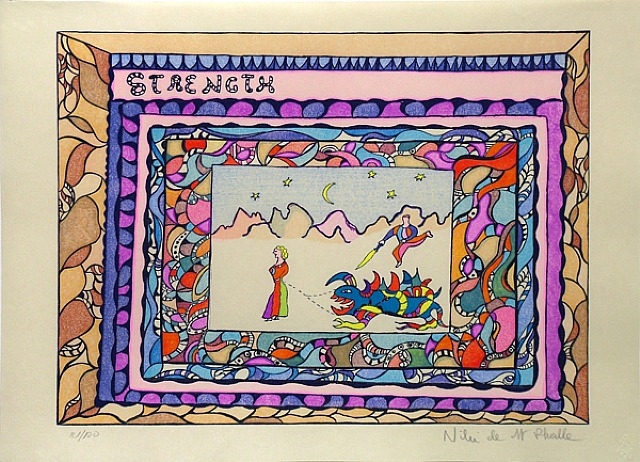
BLESSED ARE THE STORIES OF STRENGTH: the car
Aunt Delores lifted off your pinned body;
The contest of pulling recurve bows for poundage,
That you won annually until Bo Jackson
Pulled the measure to the arrow’s end;
And the gentle barters of broken ribs with Uncle Alex.
Blessed are the stories of folly: the man,
With short permed hair who couldn’t swim
So he walked the pond’s depth and reached the bank,
Gasping; the kitten, your wife named Lucy
Whose testicles dropped and you christened Lucille Balls;
The bell-shaped lampshade, with a pink floral pattern
That you put on your head, the fabric balls dangling –
Above your muscle shirt – as you blew the camera a kiss
With wadded lips for a picture that still makes your sister laugh;
And the lyrics to Good Night Irene that you sang, standing
Over Uncle Charlie’s drunken body after it settled on the ground.
Blessed are the raindrops that fell hard enough to drown men
Who couldn’t laugh and dripped from our noses
As we shook hands – two motherfuckers in a horse trailer.
When Grandpa said a guy would have to be queer and have a cast iron stomach to eat pussy,
You said well then, you’ve got three queer brothers! Bless be all our brothers.
Blessed is the elbow and fist that stopped quick,
Level with your shoulder when I told you
In the hospital parking lot, that your brother was dead.
Blessed be all the motherfuckers.
“The Extraordinary True Story of the Unmother Who Substantiated Darwinism” is one of 3 phenomenally flappy poems by Jeanann Verlee in our Fall 2016 issue. To read two more of Jeanann’s poems, plus unforgettable work by 15 other excellent writers, you can buy a copy of FLAPPERHOUSE #11 in print or PDF today!
{ X }
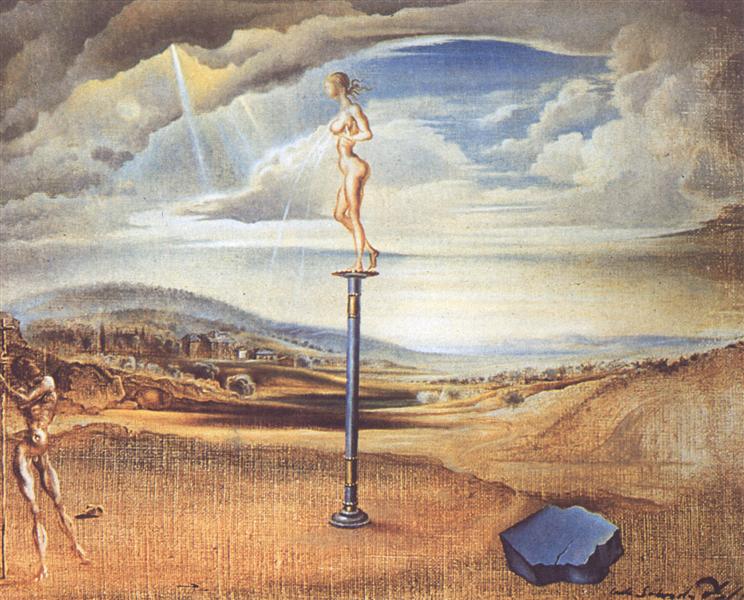
IT STARTS HERE, YOU, your swelled & untapped breasts, those plump orbs of goldhoneymilk spewing, spsssssssing, everywhere, like a good summer sprinkler, spsssing & spsssing, drenching your clothes, unending, & soon you tire of changing & resign to the same cream colored dress, reeking the dank sourbitter, & milkclots dot the toes of your galoshes, which fill & overspill, & in your wake, a stream curls its way past your feet, past the curb & the corner grocery, past the bank & the pub & the overpass & beyond, & soon everyone is waist-deep, & behind you the neighborhood cats lurk & sip, & further beyond, lambs & tiger cubs, puppies & their bitches, all lapping up the bounty, & humans too, infants, yes, & men, hundreds, thousands even, on hands & knees, face-down in the riverbed of your milkstream, lapping like work dogs, lapping & drooling, & the river rises, surges, you are the witch of The New Mississippi, carving fresh earth with your brilliant milkfountain, & the chickadees dance in it, & ducks dip down & under & back, & now, too, the fish have gone mammalian & they swim & feast & harvest their fingerlings from the dirt stir of your royal milkbed river banks, & too now the dolphins & sharks, sea-stressed, milkfed, lunge & thrive in the new ocean of your teatmaking, & so, too, cherry blossom roots adapt to suckle nutrients from your ground seep, as do the dogwoods & sunflowers & lilacs & honeysuckles, the fir & pine & weeping willow, & of course hogs & chickens, water buffalo & giraffes, amoeba & ferns, & eventually even the clouds learn to parcel your offering to the sky & rain it down again where whole ecosystems transform to your nurture, & children of all species dance with tongues wagging to catch the milkfall & you, barren as a stone, spill & spill & spill & spill & this goes on & even when you try to die, scientists team with engineers who team with doctors who team with politicians & orders are drawn to keep alive your pulse & spigots because now you are crucial, obligatory, the food of all things, the world’s sustenance, the girl who bloomed.
THERE COULD HAVE BEEN A BARN THAT DAY, with giant haystacks and a pitchfork that somehow always got lost. It could have been a one bedroom apartment in Jersey City. There could have been a baby pig so small the mama pig forgot all about it. Or an old pit bull that pissed on the carpet because it couldn’t make it outside in time.
Either way, the dad wanted to kill it.
There was probably a little girl who wanted to save the pig or the pit bull. That kid had street smarts, could work the county fair or Atlantic City and bought her adopted pet a few extra months of life with the dad. The Jersey father might have worked seventy hours a week and had no patience for an invalid pet and headstrong child. They both knew how to hide in a corner, blend into the shadows so the father might not see them. The farmer probably had his own concerns, but daily he eyed the scrawny runt who ate the scraps and yet never grew fast enough. And the daughter saw it. She saw many things, that girl. Some real, some imagined. Who’s to say the spider in the old barn didn’t spin glorious webs into words illuminated by the morning dew? Or it could have been a brown recluse whose ragged weavings she imagined would save her pig from her father’s ax.
A few weeks after buying the house, a little two bedroom in suburban Long Island, my husband Marc and I feel like we’re starting to take control of our lives. We spend most of our time setting the place up, settling in, dealing with all the inconveniences of owning an older home. Our savings deplete faster than we’d planned, but we find a way to stay afloat.
Then, there’s the eggs.
Marc has always been in charge of cooking eggs because I can never get them quite right. Eggs are trickier than you’d think. Weekday mornings, he scrambles us some for breakfast, then we go about our business.
One morning, Marc’s eggs come out hard and rubbery. “Sorry, hon,” he says. I tell him he’s losing his touch and he fakes getting angry with me.
But the next morning, it happens again.
Marc says it could be the stove. The stove came with the house so who knows how old it is or how it’s been treated. He opens it up and looks around as if he knows how to fix a stove or even tell if it needs fixing. “Weird,” he says, “everything looks fine.”
The following day, Marc wakes up early and starts preparing breakfast. By the time I get to the table, there’s a mountain of eggs stacked on one of our biggest plates. Marc tells me they’re all bad. We eat the next batch he prepares. Rubbery eggs. Tasteless eggs. Not Marc-made eggs. We load them down with salt, but it doesn’t help much.
That night, I prepare some pasta for dinner. The noodles come out sticky, stiff and undercooked. If anything, I left the noodles boiling for too long. I forget about things like that. But no, they’re undercooked.
“Goddamn stove,” Marc says, throwing a crumpled napkin at it.
We have Marc’s dad’s pal, Ted, over to check it out. Ted knows about things like fixing stoves. He unscrews stuff, opens other stuff, nods.
“Seems perfectly fine,” he says, turning the burner on and off.
We make some small talk. He asks me how my yoga classes are going.
“I almost had a full class last week, seven people. If that keeps up, one day I’ll be able to make it a full-time job.”
Ted says, “Wouldn’t that be great.”
“And my YouTube channel is starting to take off,” Marc says.
Marc had been uploading videos of himself singing popular TV theme songs on YouTube. His last one received 150 likes. He wants to go pro someday.
“Lots of people get their start on the internet these days,” Ted says, washing his pudgy hands, “you guys are too cool.”
The stove continues to under/overcook things, but other little problems begin to arise and distract us. One morning, I can’t find my left shoe. I thought I’d left them under the bed because I wanted to wear them for work. Black velvet pumps that are crisscrossed at the vamp. Love those pumps. I ask Marc, but he’s busy trying to figure out how one end of his work pants suddenly became slightly higher than the other.
I look under the bed, in the closet, under the sofa. I look in cabinets, trash bins, the front porch.
The shoe is gone.
“Aren’t you gonna be late,” Marc asks, fishing a tape measure out of the junk drawer.
I grunt in response, checking the refrigerator and freezer.
Our nominations for the 2016 Best of the Net anthology, which honors literary work that originally appeared on the internet between 7/1/2015 & 6/30/2016, are:
(And if you’ll be in the NYC area on Wednesday 9/21, you can hear Monica perform her work– along with seven other stellar writers– at our 10th Reading at Brooklyn’s Pacific Standard!)
{ X }
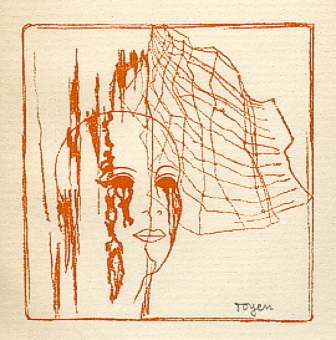
I KNOW THAT I WAS NOT MEANT TO HAVE YOUR TWINS,
theo and felicity, perfectly, preciously named, because we
would have conceived a tornado: artemis and she would have broken me into
postpartum and I’d have given her a life-long restlessness. I love you
still, and our daughter would have had your sea glass eyes and my wind-twisted,
night flight of curls, skin the color of brown feathered birds, and in her wake, always,
the scent of caribbean salt—but most certainly, a mouth unhinged—sharp & wise & legs always set to go and a hand unrelenting toward any necessary slay – yes we’d have created a warrior in flesh, alit & strong, but instead, I will birth her into words. and she will outlive our love, our could have, should have never been love. our love that would have quaked
a goddess to earth – one incapable of ever splitting herself into two.
STOP! THIEVES! THEY’RE PLAGIARIZING MY BOILERPLATES!
Come back with my clichés, those’re priceless family heirlooms…
Oh, no point in scolding the shameless, correcting the oblivious.
Like serenading the comatose, waterproofing the Hindenburg.
Did you hear they’re gentrifying the labyrinth? Even the Minotaur
can’t afford it anymore. At least they’ve diversified the donnybrook.
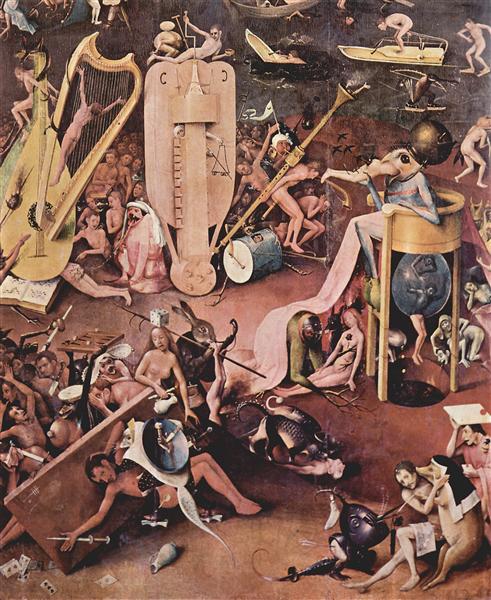
You can see one of my many-times-great grandmas photo-bombing The Garden of Earthly Delights…on the far right, near the rabbit.
Though I guess you’d call it “painting-bombing.” Hell is on the
right side of the picture. The viewer’s right. The damned’s left.
Please, don’t get me started on all those dingbats spooning
the Bill of Rights. Booby-trapping the English lexicon, they are!
And traumatizing the astronauts, keeping us too scared to stray
too far from Earth. Oh, and could you please forward me those
CliffsNotes for Steal This Book?
I can’t believe they’re re-booting The Clash—fucking auto-tuning
the revolution! I mean, whatever “the revolution” means anymore. The revolution will not be _____________. The revolution will not be.
I heard they had to start pixelating the food-porn in Santa Claus’s
Instagram. Kids were begging their parents to buy them expensive
& sexy food all year round. Wouldn’t it be cool if Elvis’d been alive
for Instagram? But when did he die again? Like 2009, right?
Of course they’re gonna weaponize the pacifists. Who else’s gonna?
Either way, once they monetize that eschaton, boy: watch out!
You mean the new show about the Marquis de Sade? Yeah I didn’t
think I’d get sucked in, but now I can’t stop hate-watching.
My hot-take is, there are some gargantuan plot holes in the story
of human evolution. Also, 78% of traffic jams are orchestrated
by Mongolian hackers. I think I should patent a guillotine
that uses lasers, but I have a hunch someone must’ve already.
I tell you, Philistines are a gaping wound, and we gotta
cauterize at all costs. Quarantines don’t need spoiler warnings,
they need all the info they can get. That’s why I’m constantly
subtweeting the Illuminati in all these self-published magazines.
There, you see? I’m utterly lost without my boilerplates! Those
clichés were irreplaceable! Here’s hoping these spare pieces
of small-talk my chauffeur found in the trunk of my limo
will suffice until the election.
{ X }
CLAUDIA ZANDERis a lighthouse keeper living in Long Island Sound, and the poetry editor ofFLAPPERHOUSE. Tweets @LaudedCzarina.




 CLAUDIA ZANDER is a lighthouse keeper living in Long Island Sound, and the poetry editor of FLAPPERHOUSE. Tweets
  FLAPPERHOUSE