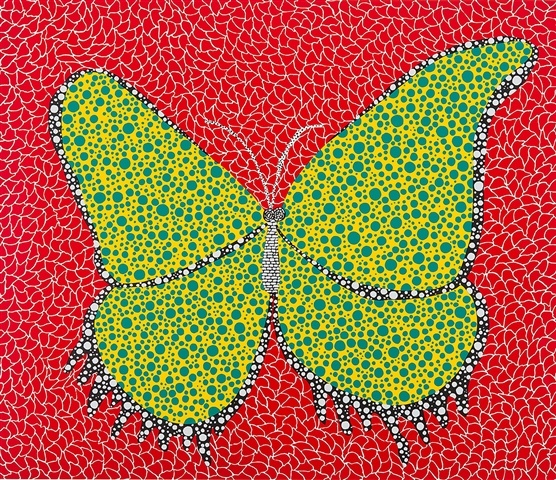
[SOME MORNINGS I WAKE TO FEEL AS IF I HAVE LATTICE WINGS covering my mouth but come
to discover it is just the breath
of a lover pressed
tightly to my lips][a hand
stuck in a honey pot][some
mornings I find I have no feeling
in my legs because they’ve been pinned]
[put on display] [an emerald
encrusted beetle][but other days
I am swayed like a swallowtail
moth on a branch or moss
on bark][pulled through sleep
into stirring by skin on skin][kisses
that cover me completely
but do not bury me][the way
we allow ourselves to lie
down next to another
person capable of cruelty
is not a miracle][but it is
close to that][remember this
when in awe of a swath of butterflies
migrating over mountains][whole
generations][remember it
when the moon makes you gasp]
{ X }
SALLY J. JOHNSONreceived her MFA from the University of North Carolina at Wilmington where she served as Managing Editor for the award-winning literary journal Ecotone. Her poetry and nonfiction have appeared or are forthcoming in the Collagist, Bodega, the Pinch, Weave, So to Speak, Everyday Genius and elsewhere. She is a poetry editor for Green Briar Review and works as a publicist in Winston-Salem, North Carolina. Find her online: @sallyjayjohnson.
I HAVE NOT BEEN MANY PLACES, BUT WHERE I HAVE BEEN IS A SHADOW. The killings, but more importantly, their source, is close now to me still.
Perhaps the source does not matter. There are many such events; rarely are our curiosities satisfied.
{ X }
She was pounding on the door. Making a sound like rain, out of her mouth. A soothing sound from her mouth, but from her hands it was simply BANG BANG BANG.
“What is it Angel?” I asked. And I opened the door.
I opened the door, though I suppose it had already been open for some time, on what was to come; what had arrived in us.
She had not washed and was covered in some kind of liquid, I found later that it had been washing detergent. Her hair was sticky with it and she thrust her knife hand through the gap in the door before it was even properly open, grazing my stomach. I jerked back in surprise and felt the adrenaline rush into my body.
“Angel.”
I saw her then and what scared me was not her appearance but my reaction: I expected this.
Her mouth opened again and the rainwater sound came out. This part does sound crazy, though why a simple sound should be the craziest part of a story I don’t know. But that’s the sound that she made; like droplets hitting a wet sidewalk. Like someone had jammed a small stereo speaker into her throat and it was transmitting soothing nature sounds, like beach waves to help you sleep.
I hit her over the head with an empty beer bottle from my desk and it stunned her; her knife hand loosened. I did it again and she was down, and that was when I heard the others outside.
“1930’s Butches Referred to Themselves as Stallions” is one of four mini lyric essays by the inimitable j/j hastain in our Spring 2015 issue.
{ X }
HAVING SPENT QUALITY TIME WITH HER IN MY IMAGINATION long before ever being found by and finding her in human form, there were times when imagining her while she was right here with me made me more wholly able to comprehend her in her wholeness: her as a wholeness.
One version: swagger in the slightly tilted fedora (so much like the hat my father wore during that Church play in which he sang that solo as the masculine figurehead in the story: “Thirty days to make a brick, make it hard enough to stick”), suspenders up over the cream colored and slightly-wrinkled-but-still-tucked-in (like any gentleman would do) shirt, the gorgeous polished shoes tied with equal loops on each side, the shape of her hand around the shot glass from which she was going to gulp bourbon.
Another version: a painting (with brush strokes that stand out from (rather than blend in with) the shapes of the painting) of a single horse made out of two horses (fused at an imprecise but precious slant, not evenly or equally down a middle): the front half, a male and the back half a mare. Though the painting is a still life, due to the protruding strokes of its composition it is anything but still.
Another version: a slightly masculine-presenting women’s woman (“that’s womyn with a “y” thank you very much”) driving a Chevy Nova through Denver. Having just returned from writing a love poem to an invisible woman on her Macintosh 128K, REO Speedwagon is pouring loudly out the one operable window in the front of the car. With a Big Gulp in the cup holder (a cup holder that latches manually to the window and is not built into the frame of the car), her arms are outstretched, moving up and down (accentuating the low-key shoulder pads in her coat) ever so slightly to the rhythm of the song. What no one can see (as they stare at her through the window (her mullet is not much different than peering heterosexual folks’ mullets)) is that below the steering wheel (which she is not currently using to drive, since both of her hands are in the air) her fly is open. I have a feeling that I, more than anyone else, know what’s writhing and wriggling within that open fly, trying to get out, trying to get into me.
{ X }
j/j hastain is a collaborator, writer and maker of things. j/j performs ceremonial gore. Chasing and courting the animate and potentially enlivening decay that exists between seer and singer, j/j simply hopes to make the god/dess of stone moan and nod deeply through the waxing and waning seasons of the moon.
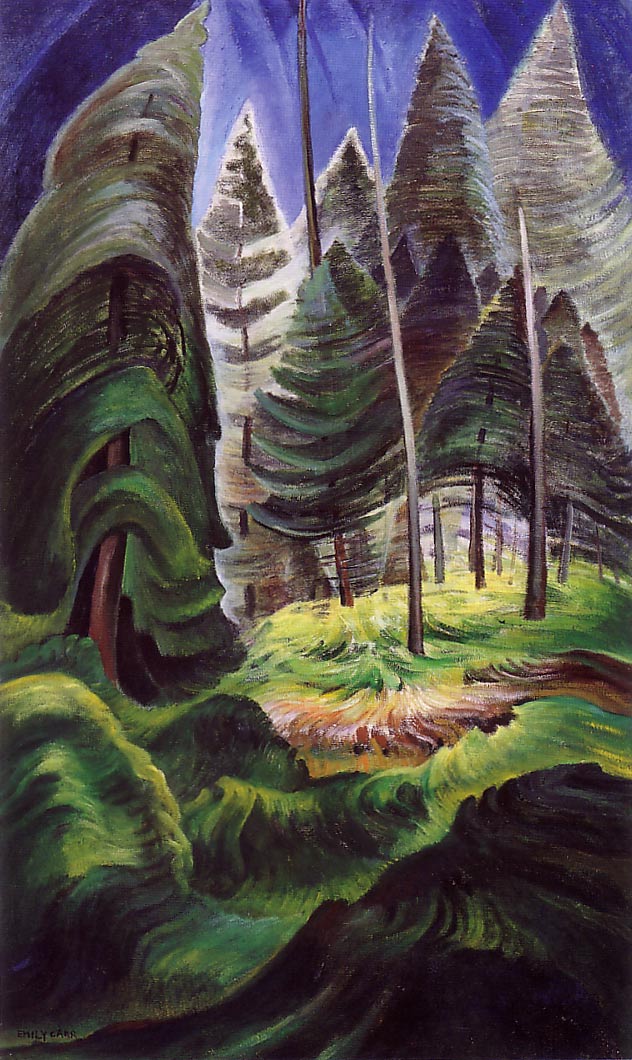
WE CROWNED THE LEVEE, crossed the railroad tracks, and descended toward the river. The air was crisp and wet. Not like the city.
“This one is old,” Lyle told me, pointing through the murk at a tree that craned over the river. “I looked it up online.”
It was 1999, the last year that it would be cool for fourteen-year-old boys to listen to boy bands. Neither Lyle nor I was cool, but we grasped for a point of reference as earnestly as anybody our age.
“And check this out,” he went on, and led us scrambling through the underbrush. There was a full moon lazing above us, so we could see beyond the tangle of branches the river shining ripples of silver. Frogs croaked, mosquitoes buzzed. It was summer and we both wore denim shorts and polo shirts.
“See?” Lyle said. He pointed again. “Just around this bend.”
I tripped over a rock but found my footing in the suction of damp earth bordering the river. The water played at my shoes. Then I saw it: A bright green moss, or something like it, hugged a branch. It seemed to pulsate, going from a dull olive color to a sharp lime that made me squint.
Lyle then said something very fast that I didn’t catch, but he sounded excited.
I asked, “What is it?”
Little wormy things were fawning from it, dancing in different directions. They stretched and retracted, though there was no breeze.
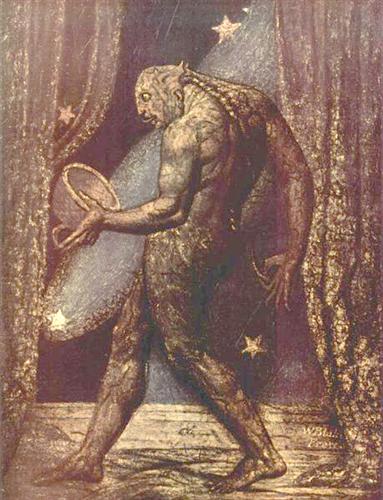
MY GRANDPA CALLED ME. I didn’t hear anyone on the phone at first, but part of me knew it was him, even though he never calls me. The he started to speak in a soft and powerless voice, telling me that he was dying.
My ex-husband and I got together. We seemed to be getting along well, feeling good about each other, and having fun. We started kissing. Almost as soon as I lay down on his bed, he turned exceedingly strong and purposely overpowered me. Holding me down, he whispered into my ear that he was going to crush me, make me bleed inside, slowly but surely kill me.
Almost immediately after orgasm, I started itching all over the place, like my insides had been invaded by a huge batch of fleas. A whole load shot out of another sticky scumbag.
I felt like I was jerking around and screaming, “oh my god oh my god oh my god!”. I was trying to scream out loud, but it was barely emerging as a tiny hiss. I was trying to scream loud enough so that someone else could hear me and help me wake up. At some point my brain realized that I was all by myself. There is nobody here to help me.
I finally managed to climb myself out of bed, even though I still felt uncertain about whether or not I was really awake. The insides of my body were making weird little clicking sounds. From the inside, I heard something dripping down the walls.
ALL NIGHT RHYS PACED THE ROOMS I DYED BLUE. He watched cooking and talk shows, smoked a pipe and played guitar: this growing symphony our days fell through. We made love by glass doors where the wind was a hundred ghosts.
In the morning I broke dirty dishes and swore by the window while our baby drummed a rattle to Mother Goose in stereo. Stars, spoons, animals. Thought we’d live for ages there with the mountains and the towering trees.
There was a madwoman below. She held this broom or tangle of roots that pushed our naked feet as we leapt about with gypsies who lived beside the cemetery. She wrote to the landlord, he handed us the letter. We looked guilty in our trench coats. Rather than read her words like evil eyes, we left those blue rooms.
WHEN THE PHONE RINGS, I AM PRIMED FOR DEATH. The short hairs on the back of my neck peel away from my skin until they’re perpendicular, my guts twist into an impossible mess, everyone knows they’re an impossible mess, I will never be rid of the mess.
As we sit to eat, I tell myself that everything has an exact place and time, which should not only be respected but worshipped at a perfectly prepared altar. “That’s devil-worship you heathen!” it says in the middle of the Pad Prig Khing.
I don’t even excuse myself, I let the sobs do it for me.
My breathing doesn’t just speed up when I find, the next day, that the penne has been placed after the tortellini: It reverses until all the air on the planet is in my lungs. I’m choking on the air that belongs to all humanity. “Greedy,” it hisses.
You, my lovely, once asked me, “Why does the Penne have to come before the Tortellini?” I could hear in your voice that you were capitalizing the improper nouns, and it stressed me out. “I alphabetize the pasta,” I said. “The pasta prefers it.”
I unwind by letting two seconds tick by instead of one. By forcefully hugging my brother when I wish to hug him even though the anxiety yells “NO!” in my busted eardrum; by eating the last bite on my large plate when it says “Last bites are dangerous and small plates are safe;” by saying “Yes” in the middle of the night when you asked me to marry you and I wasn’t even sure marriage was something I wanted, but then somehow with you I knew it was. Oh, the lashes I got for that one.
It is by choosing to breathe.
My muscles don’t know how to be languid, my voice doesn’t know how to be smooth. These are someday-faraway goals I write in secrecy when the anxiety leaves me for one moment or two moments.
Tonight I actually notice the burden, which is getting rarer. The panic appears, and in order to hide, I slowly slink within myself.
Slink.
Slink.
Slink.
No one will notice when I’m gone.
The anxiety, the stuff I told you about, the kind that’s bad tonight (it appreciates when I’m precise), has me gnawing, tooth on skin until it’s tooth on bone, on my Andy-side thumb. It tells me I will one day cause a multi-car pile-up on the busiest section of I-25 because I can’t decipher the words “left” and “right,” and know them only through landmarks like “Andy-side” and “Becky-side,” and after nearly 15 months together, I’d rather just let him drive.
Other nights– but let me be specific not tonight because I’m hiding— it steals my breath, not giving it back, like that person in the office who never did learn to share the conversation. And how will I ever breathe again when all the air belongs to it, and I can’t possibly compete? It tells me, whispers so softly, sweetly, like the most loving partner, that I am a weak mass of unmuscled, scraggly, what’s-left-of skin and bone and hair, and it is the stuff of Myth. I am mere madness, it is Power and Claws and all Venom.
It will sting while it bites while it claws while it chokes.
When I am strong enough to dream, I dream of wishing.
I dream I was strong enough to wish I could loathe it, and when I am strong enough to dream, I see how it eats my will to do anything of use.
The phone rings, and I am primed never to exit this state, for the anxiety must surely have killed all I’ve ever lived for.
{ X }
REBECCA HAVENSis a happy person. She currently works for a nonprofit, and graduated in 2014 from Metropolitan State University of Denver with a degree in Writing. She mostly writes fiction and poetry, but adores everything.
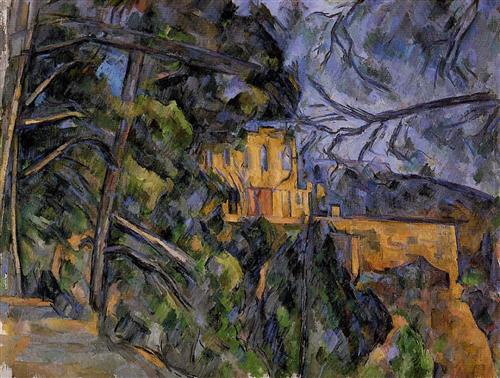
THE BAZAAR IN OLD DELHI IS BUSY AND STYLISH with barbers, psychics, jewelers, and cow dung cakes on the tar roads.
As I wind my watch to revive its heartbeat, between rows of turquoise and crimson fabric on the clothesline that belongs to a dyer, a divided sun ruffles the gaze of a woman. She is breathing beedi into the afternoon air. She has honey glazed skin and muscular thighs wrapped in a saree, restless feet and a toddler’s palm joined to hers.
The wind picks up the sound of the temple bells, a chorus and clapping hands. Several vermillion smeared foreheads appear from the saffron-colored house of deities. Time stands still on my wrist leading me to a clock repair shop, where the owner flashes his tobacco stained teeth, coughs and swipes his white sleeve on his forehead, saying, “Come after fifteen minutes.”
I turn around and the woman is still there, her child nowhere in sight. She is scratching the red layers of earth. Her toenails sparkle as her feet match the rhythm of a cotton ginner who is also looking at her with the refrain of a married man with kids. A set of beedis are tucked between her heaving breasts. The sheets of fabric sway, picking her scent like indigo infused in the white light of a thousand other smells.
The whir of bells has died and the long row of shops by the road seems as if the bazaar is stretching its arms to touch the roots of a banyan, pointing to a path. The woman avoids the ginner and looks at me, flexing her curves. The air turns giddy with playfulness and I want the time to stay dead. I want to lift her as with a pair of tongs hold a gem in light, until she dissolves into dust, swallowing a part of me that is unstoppable like the hands of a clock.
The watch repairer hollers my name and the woman turns around. A faint ticking resumes as the fabric unravels and obscures her in a sweep of colors until I only see her palms facing the sky as if releasing an hourglass – emptying and filling once again.
{ X }
TARA ISABEL ZAMBRANOis an Electrical Engineer by profession. She holds an instrument rating for single engine airplanes. Her work has appeared in Prime Number magazine, Blue Bonnet Review, Jersey Devil Press and is upcoming in Redactions. She moved from India to United States two decades ago and currently lives in McKinney,TX with her husband and two kids.
Don Quixote and the Windmills – Salvador Dali, 1945
From our Spring 2015 issue, “At Ken’s Expense” is Arman Safa‘s metafictional short story-length novel about Arman writing a novel at Ken’s expense.
{ X }
{ chapter 1 }
THE FIRST SENTENCE SHOULD BE SEVEN WORDS LONG.
“Damn it,” muttered Ken to himself.
Having the last word was becoming increasingly problematic. When he wanted it, the last word evaded him. And when he sought out the perfect seven word opening sentence to his second novel, the last word confounded him still.
It was February the third, a typical and unremarkable occasion, and the eight inches of expected snow was a surprise to no one. Still, at 6pm, the bookstore was extraordinarily empty. And quiet. Just Ken’s fingers tapping on the keyboard in the back office and some aesthetically inappropriate Irish music Arman had put on behind the register.
“Damn it,” muttered Ken, audibly. Arman smiled. Though unable to see Ken, he amused himself with an image of Ken hunched over the keyboard, face aglow, pulling his hair.
“Am I cruel?” he thought. “Can boredom and the certainty of an excruciatingly slow evening turn the butter knife of my heart into a sharpened blade?”
Impressed with his pretentious eloquence and swagger of tongue, Arman decided that, if nothing else, he should be the one writing a story. And in that moment, he knew that the perfect first sentence would, in fact, be eight words long.
Distracted, and desiring a bit of amusement before committing himself to writing an entire story, Arman stepped into the back office. He saw Ken at the computer reading a news article.
“What do you want to eat tonight, Ken?” he asked.
“I don’t know.”
“How’s your novel coming along, Ken?” And before letting Ken respond, he added confrontationally and with more than a touch of perplexing irony, “I’m going to write one as well. In fact, I’ve already started. And I’ve even written more words than you.”
“Well,” said Ken. “I’m doing some editing. And it’s easier for you because I’m your main character.”
Arman was more than a bit perturbed by Ken’s brash display of egoism.
“I had ramen for lunch earlier,” Ken continued, “and it was awful.”
AT MIDNIGHT I WILL OPEN ONLY ONE EYE and
Stretch my arms and legs out on the bed
I will search for you in the darkness where you will not be
Half-blind now, but not for long
At 12:34 I will arise to hunt you and
Spread your carcass around silk white sheets
I will pretend you are there
Devouring your senses, what remains of your DNA
I will burn your house down with everyone in it
Gladly, leaping and skipping amidst all the cries and screams
The firemen will not come, I have
Punctured their tires and locked them inside
Between coughs and gasps for fresh air,
My skinny brown arm extends
I am your savior, you need not worry
I drag you down flights of stairs to exit
Through the back door
Away from all those rotten faces
Away from all those unremarkable bodies
Away from all those feeble minds
We run away from the smoke and flames
I am smiling and you cannot see
Out into the woods, you ask where we are going
Your confusion excites me
I whisper something you cannot hear
This plan is much better, to think
Of the many ways to take you away
This plan is much better
You grab hold of my shoulder
I need to rest, I need to rest, you say
Do you love me, I ask
You almost laugh, your face flushed pink
You are unconscious now and in my bed
I will wait for 12:34 to feel you
To feel your insides, in the dark where
I discern sloppy puddles of crimson red
I take your head and place it upon my bosom
Deep whiffs of twenty-seven years
Of vigorous shampooing
Yes, this plan was much better
{ X }
JJ WOMACKis a writer and researcher living in Maryland. You can find her on twitter @CiaoJazzy but it’s mostly retweets of everything interesting to her.
 SALLY J. JOHNSON received her MFA from the University of North Carolina at Wilmington where she served as Managing Editor for the award-winning literary journal Ecotone. Her poetry and nonfiction have appeared or are forthcoming in the Collagist, Bodega, the Pinch, Weave, So to Speak, Everyday Genius and elsewhere. She is a poetry editor for Green Briar Review and works as a publicist in Winston-Salem, North Carolina. Find her online: @sallyjayjohnson.







 FLAPPERHOUSE