HE MAKES BLOODY MARYS IN SECRET because he is shy of anything too Louisiana. He flattened out his vowels and straightened up his consonants before I knew him.
There is a home of his I know – But then he says: Home is not heavy voices, air, lived in houses elevated from time and water. Home is not a magnolia blossom.
Did you know the word “jazz” comes from bordello girls in the French Quarter with their jasmine perfume?
Yes, we are all familiar with Ken Burns’ work.
May I ask this?
If I boarded the Mississippi in Minnesota and floated down her back, toes running the spine of the continent, would I know then? Would my arrival come in the morning with mundane Bloody Marys and walks down an ordinary street? Could we make small talk near Dauphine and Desire? Laugh over newspapers and sunglasses heralding the beginning of something old, a picture.
Step right up and marvel at the preface to the world’s most profound coloring book in “When the Seals Would Clap No More,”Tim Conley‘s contribution to our Fall 2015 issue.
{ X }
IF IT SEEMS UNUSUAL TO DISCOVER A PREFACE appended to an object that is all too often called a “colouring book,” perhaps prejudices have become unguardedly confused with expectations. There is sometimes urgency in the unexpected. Therefore be warned: despite its innocuous-seeming charms (that it only seems innocuous is one of its charms), Join the Circus! is no ordinary bound stack of paper to be idly defaced, and this preface is likely to disturb and distress those who underestimate what they have opened.
Join the Circus! is certainly a joy to behold – to behold, it must be stressed and not to lay wax upon willy-nilly. The narrative that the keen-eyed reader can puzzle together from the sequence of tableaux is simple, concise, sometimes slyly allusive, and genuinely moving. It needs no improvement. The intersecting circles of clowns and poodles on page 11 are utterly dynamic precisely because they are in black and white, because the artist who gave them exuberant life disdained the superfluous and focussed on the power of the line. Reddening these clowns’ noses will not make them more antic: such an assault would irretrievably lose all the picture’s mirth. The facial expression of the poodle in the right corner is nothing less than haunting, but the smallest smear of pink, say, would demolish that nuance. The whole essence of the clown’s nose, the poodle’s ineffable expression would be violated.
Exaggeration? No. No and again no. We must understand Join the Circus! rather than disfigure it. No one would countenance a gluing together of various pages of the Gnostic gospels or the Analects of Confucius, or fecklessly stand by as some cheerful maniac made paper dolls out of The Origin of Species or The Last Bandstand: An Unbiassed Argument Against the Use of the Conductor’s Baton. These claims need not even be made – the renown of such wonders defends them; and yet one must even today defend Join the Circus!
Why? Regard, for example, the illustration on page 7: the juggling bear on the unicycle. The temptation here might be to juxtapose merry brown for the animal’s fur with jaunty red for the fez, but to do so would be a mistake. Why? For one thing, there is the temerity of asserting the familiar: bears may frequently have brown coats, but there is no reason to suppose that this particular, splendid specimen (capable of juggling four balls while riding a unicycle, a feat which the reader is politely invited to match – without opposable thumbs) does not have a magenta coat. This is only one kind of error, however. The zany who, for the sake of unconventionality or as a wearisome “avant-garde” gesture, scoops up the forest green crayon to colour only the bear’s left side and polka-dots the right in orange, presumes both that the colour does not matter and that his or her “artistic licence” trumps all other possible contingencies and concerns. Imagine a surgeon who announced, hands still within the patient’s open cavity, “this organ would look much better over here.” Imagine the firefighter who aims the arcs of hosed water right over the blazing homestead, with the justification that to his eye it looks more pleasing than merely dousing the flames directly. Just imagine!
BLINK & I’LL SAY OKAY / like a whip / ride
in the passenger / I’ll say it / just
like that / go on being never-enough
I long for you / turning noteless
numb / ____ is all I say it is / that’s just
how it happened
something important in the mail / as I was
washing / water cutting bruises from my telling
I keep the blade near / hear a buzz overhead
next door the police / step back
never help / stay soft like a crow
Tuesday around me everywhere / the distance
between summer & what / I accuse myself of
to get it right I give these boys / my navel
as an island / what it is to drag
a nail through it / fuck in a lushness
too predictable / when I consider
the shit I believe I am / I would never
feel it in my face
when we hear about money / hear
I tried / to love the world / plump
& dumb / & my mouth chasing after
{ X }
ANNA MEISTER is an MFA candidate in Poetry at New York University, where she serves as a Goldwater Writing Fellow. A Pushcart Prize & Best of the Net nominee, her poems are forthcoming in Powder Keg, Whiskey Island, Barrelhouse, The Mackinac, & elsewhere. Anna is a 2015 Saltonstall Foundation for the Arts Fellow. She lives & works in Brooklyn.
MY DIRTY HAIRBALLS and feline creatures
doused in cheap champagne
After the party
the after party
was down in the canyon
of flattened emotion
of all the acts of disassociation
holed up in this trailer
doused in solvent
I try to stay quiet
as I strike the match
as if that will cover up
the triumph of our will
2.
Nobody can reach down
in this mess
Nobody can fix it
JULIET COOK is a grotesque glitter witch medusa hybrid brimming with black, grey, silver, purple, & red explosions. Her poetry has appeared in Ghost Proposal, H_NGM_N, ILK, and Menacing Hedge. She is the author of more than 13 poetry chapbooks, including POISONOUS BEAUTYSKULL LOLLIPOP (Grey Book Press, 2013), RED DEMOLITION (Shirt Pocket Press, 2014) and a collaboration with Robert Cole, MUTANT NEURON CODEX SWARM (Hyacinth Girl Press, 2015). A collaborative chapbook with j/j hastain, Dive Back Down, is forthcoming from Dancing Girl Press. Her first full-length poetry book was Horrific Confection(BlazeVOX, 2008). Her second, Malformed Confetti, is forthcoming from Crisis Chronicles Press.www.JulietCook.weebly.com.
From our Fall 2015 issue, Manisha Anjali‘s poem “Pharoah Sanders in the Cleaning Lady’s Bedroom” is as jazzy & intoxicating as the musician it’s named after.
{ X }
I WAS BEAUTIFUL IN 1999 my flamingo legs flamingo’d you
moon me/ moon you/ moon two.
the stars saw/ the larks saw
Pharoah by Pharoah Sanders on repeat.
this cleaning lady flamingo’d to spaceland
in spaceland you are lost daddy
my flamingo legs don’t dance on their own
they wait for saxophones/ daddy two-times
they wait for the messiah/ the dreammaker
moon cool/ moon blue/ mmmmm
I flamingo’d you high/flamingo’d you wild
in the Village of Pharoahs in 1999
I flamingo’d you off you wino/ you old boy/
you black darling/ you old star
on Karangahape Rd hitchhiking to spaceland
with a suitcase full of larks & gin.
I flamingo’d to spaceland daddy two-times with
Pharoah by Pharoah Sanders on repeat.
in my blood room my moon shone through/
moon/watch me be a bright pink bird
true I could still flamingo you
moon me/ moon true/ mmmmm
I was beautiful in 1999
Oddball humor & profound pathos collide in B. Diehl ‘s poem “The World Smells of Boogers,” one of many flappy lits featured in our Fall 2015 issue.
{ X }
I WATCHED THE SKY SWELLING
like a pus-filled boil.
And you ate your way to the core
of the apple of my eye
only to find a fat, ugly worm.
With cobwebbed lungs, I lifted my soul
from beneath the lilac bush,
wiped the crust from my yellowing eyes,
and we watched the sky swelling
like a pus-filled boil.
You swallowed me whole ––
spat out the flaws
like watermelon seeds,
but I see them now, starting to sprout
within the footprints of Christ ––
as the sky swells on
like a pus-filled boil.
Because it’s springtime again ––
so water my pain
and I’ll watch it bloom into a rose.
Play my spinal chord all day like an E minor ––
as the sky swells on
like a pus-filled boil.
You are a glacier in the middle of Egypt.
You are a genuine smile at a funeral,
the ticking of a rusty-handed clock,
the wrinkle on my cheek,
the hoarse voice, waking me
in the middle of a daydream:
“If you ever find happiness,
cut off its legs.”
But as the sky swells on
like a pus-filled boil,
my purpose is beckoning.
My purpose is a lighthouse
outside the storm,
gleaming brighter
with every last second.
So I’m heading west,
against the wind,
shunning the sky,
while tearing off the Band-Aid
at lightning-speed.
A naive young model gets caught in a reckless artist’s dangerous game in Joel Enos & Angela Enos‘ elegantly menacing story “Posing for Tarkins,” oneof many flappy lits you can read in our Fall 2015 issue.
{ X }
THE LADY QUARANTAINE BLAMED HER MOOD’S SUDDEN SWING toward nostalgic melancholy on Stella. It was always Stella’s fault. It always had been.
“Scandalous!” Stella Potter laughed her horse’s neigh across the dinner table, prompting a look of shame from Philip, her long-suffering husband, and a chortle from another slightly intoxicated dinner guest, Carlotta Dunn.
“Who? Winifred Bunton?” This from Oscar Culmel, a dashing Spaniard and an artist in his own right, but only when his philandering allowed him time. “How do you mean?”
“No, no,” Ms. Potter took another large sip of wine. “Winifred is a class act. But that other artist back in the colony, the one who wanted to be Winifred but didn’t have half her talent…you know…Tarrrrrkinnnnnssss…” Another neigh. “Elaine, remember Tarkins? You knew him, didn’t you?”
The hostess of the evening, the Lady Elaine Quarantaine, smiled sadly at her unintentionally amusing friend. “Tarkins?” she said thoughtfully. “No, I don’t think I did know him.”
But in truth, Lady Quarantaine most definitely knew Tarkins. She had killed him.
Elaine was not yet the Lady Quarantaine back then. She didn’t even go by Elaine. Of all the guests at this dinner that she’d prepared to celebrate her husband’s most recent art acquisition, only Stella knew that for a brief year, back in that faraway colony so awfully many years ago, the Lady Elaine had been much better known as the highly sought-after artist’s model, Durissa.
{ X }
The young Elaine and her family were in the colony because her father, though not as fortunate in business as some, had been entrepreneurial enough to know that the small ports and towns on the far reaches of the Empire were full of potential. He had a young wife, two small children, and an older daughter from his first marriage to Elaine’s mother. It was Elaine who would rechristen herself as the more glamorous-sounding “Durissa” and launch herself among the artists and thinkers of the expatriate community, all seeking their fortune in a rough but seductive land.
Durissa was the name of a port Elaine had never been to, but had found on a map. It made her feel as though she belonged with the self-invented artists she was cautiously mingling with, far more so than plain old Elaine ever could. The assumed name also bore the advantage of preventing her father from learning what his dear eldest daughter was up to; modeling for artists was not something a woman of her station did without permanent social repercussions. Of course, it was actually quite demure compared to what the other girls were doing and not at all, as her friend Stella would hiss in mock shock, “Scandalous!”
Stella, being a few years older and having already discovered suitors, kept a small flat of her own under the pretense of taking respectable art classes, as well as dictation, near city hall. Durissa, under the guise of doing the same, was using Stella’s new living quarters as a home base for her “Scandalous!” new life.
One night at a private exhibit, Durissa was feeling quite lost in the shadow of Stella, who had, as usual, been very loud while wearing a daring new gown. Durissa arrived at Stella’s flat earlier that day in her third-best party dress, because her friend had assured her that while true bohemians should never be the best dressed at a party, they must always the most interestingly dressed. The second part of the maxim was fulfilled by a bright red shawl of Stella’s own that she wrapped around Durissa’s shoulders as she admonished her for her lack of creativity.
“It’ll cover how hopelessly bourgeois your dress is and create a sense of mystery,” Stella assured her. “If you want to be someone’s muse, you’ve got to look like you know things they don’t and then make them desperately want to find out. It’s easy, really.”
Durissa nodded, allowed herself to be anointed with Stella’s pungent perfume, and felt almost transformed.
The transformation lasted until an hour into the party, when Stella and her “Scandalous!” dress had disappeared onto the balcony with a stranger. Once alone, she felt more like Elaine than Durissa. She fumbled with the shawl, attempting to remove it.
“No, don’t move an inch! Stay perfectly still.” A sharp voice cut through the hum of conversation around her, startling Durissa into the desired stillness.
A man stepped out of the crowd of black tuxedoes and grabbed Durissa firmly by the chin, turning her face in profile. “There. I had to see it. I never trust a woman without a strong profile,” he said, releasing his grip on her face. She could see him now, a man of middling height and looks that would be unremarkable without a personality that obviously was not lacking in certain panache. The brocade waistcoat, the impractical rings, the precision of his hair’s unkemptness: This man was certainly a bohemian. Stella’s absurd red shawl had worked.
“Forgive me, I was so taken with your profile that I forgot my manners. I’m Tarkins, artist. And you have a magnificent profile. Just the sort I’ve been looking for.”
“My name is Durissa.”
It was the first time she’d said it aloud to a stranger. With the artist Tarkins as witness, it became true.
THREE, TWO ONE. hop on board my bottle rocket. we’re taking off.
haven’t we landed on the moon? i saw it with my own
moon eyes. right through the television screen. one small step
means beam me up, set me free. if you love something, if you love something.
but we’re all thumbs. we fumble and drop with nowhere to hitch.
to the moon, to mars, it doesn’t matter.
rev the engines, let’s go be alien somewhere up, up and away
sending smoke signals to the stars wailing past. you’re all just voices
in my head. look inside my metal cap.
maybe you’re the sick one, maybe i’m.
maybe i’m inkjet, maybe i’m rocket fuel. stardust.
on a scale of one to floating, is this a magic carpet ride
or helium? we’re all just spacing out and i’ll have what he’s having.
we’ll change our cosmic address, elope, become living time capsule,
a sanctuary in the nucleus of a trilobite. to know thyself is to blink
in fractals for eons and eons. the horizon is nothing more than an illusion
and so are we. we can’t even make food out of sunlight. ours has always been a story
of survival. a psychedelic spectra caterwauling. far and away i hear the creak
of a door opening. it is the destiny of the stars to collapse.
we’ve always turned to the sky for answers, excreting
the tiniest tentacle into the outreaches, the out-of-bounds,
hoping something will stick to us like flypaper. and we’ll reel
it in, dissect and devour—for scientific purposes.
what’s our trajectory? don’t let this be an arc.
i can’t come right back down. earth is calling.
but i’m with the satellites now. no signal out here.
they tell me it’s inescapable. that i’m bouncing
off walls. so tell me, are you coming with me?
{ X }
LAURIN DeCHAEis an M.F.A. candidate for poetry at the University of New Orleans, where she acts as the associate editor for Bayou Magazine. She is active in the fields of education and composition, assisting in programs such as the Greater New Orleans Writing Project, Scholastic Art & Writing Awards, and the Tennessee Williams Literary Festival. Her work appears or is forthcoming in Harpur Palate, Cleaver Magazine, burntdistrict, S/WORD, and Rose Red Review.
Oh, how we wish we could actually read the titles listed in “an inventory of instruction manuals,” one of two exquisite poems by Joyce Chong in our Fall 2015 issue.
{ X }
“HOW TO DISASSEMBLE ROBOTICS” “how to reassemble robots” “how to dissect the human condition” “how to extract meaning out of the inherently meaningless” “how to exacerbate the mundane” “how to be inanimate” “how to splice” “how to emerge whilst sinking” “how to build a shipwreck” “how to money launder” “how to tear apart” “how to reassemble the torn pages of an instruction manual” “how to wind up time like a toy” “how to spill” “how to endure melancholy” “how to breathe” “how to breathe” “how to breathe” “how to spill, convincingly”.
IT IS WRITTEN THAT A RIPPLING SPHERE OF MOSQUITOES often rose from that yellow sedge spot where N. Ewart Nance put up his cabin. A unique species, when underfed the wiry girls were themselves a glowing yellow. They purpled when glutted. Shifting in their spherical swarm, they swapped hues, off and on. They shed generations too. Unlike the average others, these mosquitoes led no three-day luxury life but had only the one. Up, then down. Their throng’s heart dropped out dead by each morning. Then the young and yellow leapt from the still sedge-water, rearing up like one open mouth.
Sustain—this ever-adolescent species kept a lumpy shade cast over the sedge. A point of origin, south of the Miami River.
{ X }
Ewart never named his homestead. Although he did consider himself that spot’s first inhabitant, he never christened it. He would not care for those who had, would, or will. That spot of yellow sedge has had many names: one in the Tequestas’ tongue, then Meados del Fraile, Coño de la Coja (briefly), Clarke’s Kill, Ooki-lakni, Panther’s Breath, Okeelacknee, Telegrams, Monmouth, and (after draining and ingesting it) Miami. Before the end of the nineteenth century, South Florida’s place names were transient like human life. This is meant in a literal sense. Names went into graves with namers and kin, swallowed all in perennial union by bog muck and waters. These swamps boil and lack phosphorus, so they do not preserve pristine skin-bags—no moaning faces visible, beatified. In and around sinkholes, you’ll only dig up brushfire ashes and teeth, peat-packed. Teeth irreverently strewn like Onan’s seed. But the water is clean.
That yellow sedge spot was mapped once in 1896 as Monmouth. In a local accent, Moan-mouth. That town was built, burned, rebuilt, burned in roughly the same spot. A prominent hotelkeeper named it for his favorite fruit pudding, and that was meant to evoke the tropics for tourists. Monmouth slouched by Biscayne Bay.
{ X }
Ewart, at age thirty, hides beside his mother on a backless pew in the Cumberlands. A sturdy woman. She grips his shoulder. A chafing of linsey-woolsey and calico—other shoulders settle close by them on the pews. Ewart feels smothered. He hunches his shoulders and tenses his arm, to signal that she grip tighter. She does. All these parishioners sweat from slogging through frost, so they stick together at the shoulders, fixed by foggy breaths and stamped-up ashes.
The church itself is only a gray box. Its ceiling runs low, low enough that most men reach up and rest their hats on the crossbeams. Another pew of broad-brimmed hats. Most men spit chaws on the floorboards. These form one sticky pool.
Ewart does not doff his hat. His head sits huge on a short body, and the hat tightly hugs just its upper slopes. To hide his face—miniscule features meekly clustered at the flat, chalky center—Ewart bends the brim. Somebody flicks the back of the brim. And again. An opening hymn is chanted. His mother chants loudest, nasally, and Ewart says, She whinnies only to outdo the others’ holiness.
This hymn dies down.
Most men spit chaws again.
Somebody flicks Ewart’s nape.
The preacher speaks at the pulpit:
On this most airish day, ladies and gentlemen, we are swept together like strands of twine today. A single thread tied in blessed God’s big hand. We are not separate ones. He has entwined us into a strong rope stained with the Blood. He has knotted us. Now, hear me. We came from somewhere far from Him, that is, sin. And nay, do not turn ye back like Lot’s wife! For there behind ye is surely Satan. The Lord our God tugs our rope safely through fiery flames, us upon whose bodies the fire had no power, nor was an hair of their head singed, neither were their coats changed, nor the smell of fire had passed on them. He tugs us over yonder, poor mourners, toward Him, toward Salvation! Knotting us together, tighter and tighter, as we turn unto Him. Verily, I say, He is fitting a single sacred garment of us, Salvation, for to leave our lone bodies behind!
His mother Winifred nods along with the sermon’s words. Her lipless mouth is only grayer cracks in the skin by the teeth.
Ewart tugs his arm from her grip. He does not want to leave his lone body. As he plucks his patchy beard’s bristles, the preacher reads a psalm.
Past the pulpit is one window. A redbud tree presses its panes. Six panes bloodied by the wintery buds like a picture of fire, and branches also gnash the panes.
Watching the preacher, his mother pushes her knuckles into his shoulder. Her wiry fingers wrap his arm again. A small fear simmers Ewart’s loins. He snaps together his knees to hide the hard horn. The preacher’s voice rising, most men weep. Somebody knocks Ewart’s hat and it flies into the pool of spit chaws. Continue reading “Ewart” – Fiction by Michael Díaz Feito→

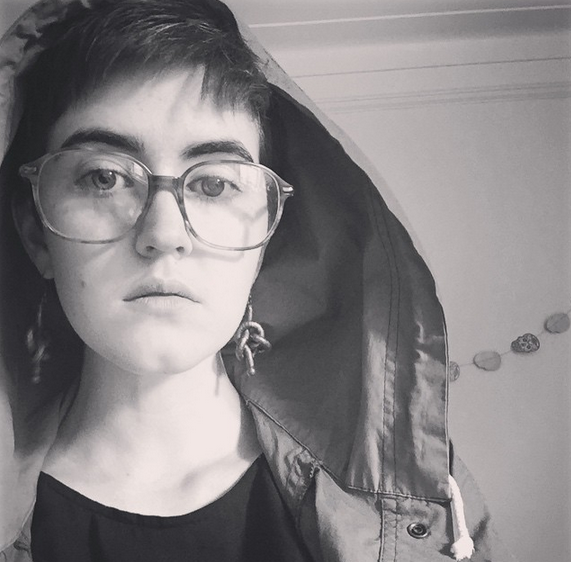
 VIOLET MCLEAN is an essayist and poet living in Northern California. Her work has been featured online at The Toast, What Weekly, the Human Parts collection on Medium, and in the journal Prose & Lore. She tweets up a storm @oh_my_vi.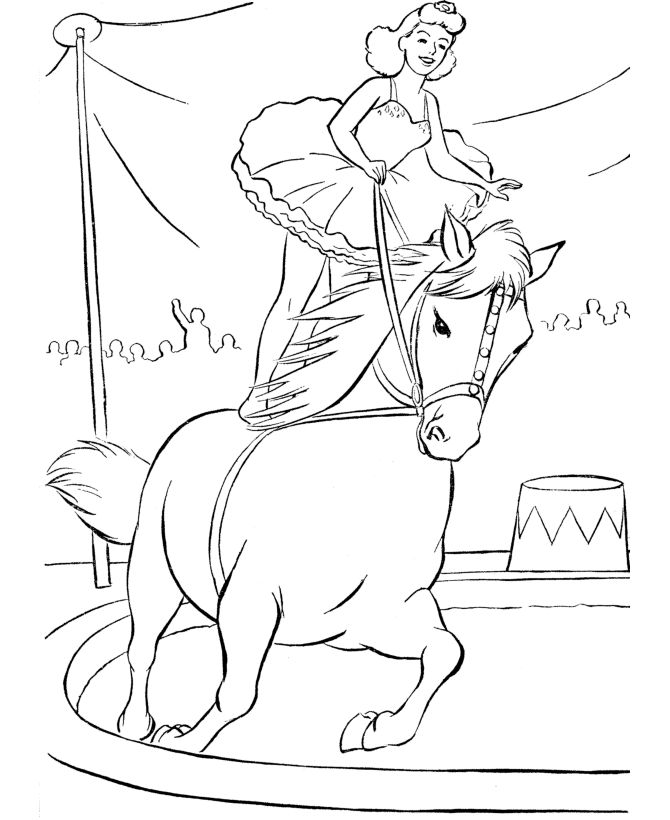

![By Sebastian Ritter (Rise0011) (Own work) [CC BY-SA 2.5], via Wikimedia Commons](https://flapperhouse.com/wp-content/uploads/2015/11/match-streichholz.jpg)








 FLAPPERHOUSE
