“The Witch’s Cat Gets Grounded” is just one of four magically mischievous poems that E.H. Brogan contributed to our Winter 2016 issue. (And to hear a recording of E.H. reading her poem, check out the Soundcloud file embedded below the text.)
{ X }
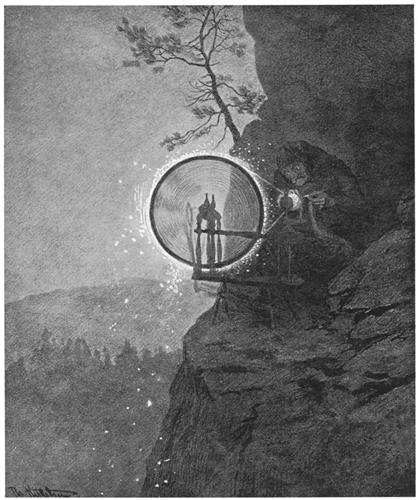
“THE WITCH’S CAT GETS GROUNDED” Or at least soon he will be. For now still stuck up
in that tree, actually, and meowing up a storm.
He isn’t happy, and sure would like to know she knows.
She ain’t happy neither, he’s an indoor cat all twenty-four and
seven usual hours but one great date & there’s
the witch already forgetting to grab her pails brim-full with responsibilities,
today she clanked an empty pot down on the stove, gas
cranked, forgot it and walked off. Then the smell of burning.
Trying to bring the house down, witch, were we?
Letting the damn curious cat out and then leaving?
Him outside alone, what was she thinking – was
she thinking? He’s such an oldest child, she thinks when she can
do it through her panic using humor, hope this gets him enough attention, up two stories in a no-limb cannot-
shimmy-up-it tree and crying to her constantly
while she, below, gets busy doing all the little
things that she can dream to do, none of which are helping.
In order she keeps sitting, smoking, offering up treats, talking
like he kens human. Crying. Calling every possible department.
Writing poems. Then, repeating.
The dada-esque collage of “Post-It Notes Left by Failed Actors” is one of three wonderfully weird poems by Ian Kappos in our Winter 2016 issue.
{ X }
MOVIE—FOUND IN THE “LIES” SECTION, w/ all the pickled would-have-beens. “PG”; sugary, oratory. All the kings dead; the documentaries digress, amnesiac. Foreground: Lao Tsung clip-notes, predating his resumé (drafted by his progenitors). This coming after the “talkies” & before the color, & w/ the low keening death of the word, drowning in the shower, we all choke down the synonyms & stem cells.
{ X }
His words are pharaoh: anything of worth uttered to anyone will live on in pages pickled in ink, maybe moths. Tombs rise & births conspire belowground. Three pages for every worm. A novella of creepy crawlies yearning for a translator that dies at first breath.
{ X }
Curled nose at the dawn: she wants the kind of weather that’ll inspire her to stay inside & watch Rosemary’s Baby, so she can soak up the hellfire without baring her skeleton to the sun, to the sons. To the daughters of the sky. The infidelity of the screen scorches her, reassuringly.
—Is this American Romanticism? she thinks. —Or does the fair-haired angel-child lie beneath my boxspring? is he giggling, egging me on to wait it all out in the trenches? until I contract tuberculosis? until my friends scramble out of their hoods to time-share my static gaze? until I am a poet?
{ X }
He is made of mesh: awake, he quakes into being some new moths. The janitor. He doesn’t dreams of brooms; he dreams of railyards, just past noon, & the cargo which he wakes up knowing is you & me. That is when he wakes up & takes up his chant, beating the moths from the cats’ mouths.
{ X }
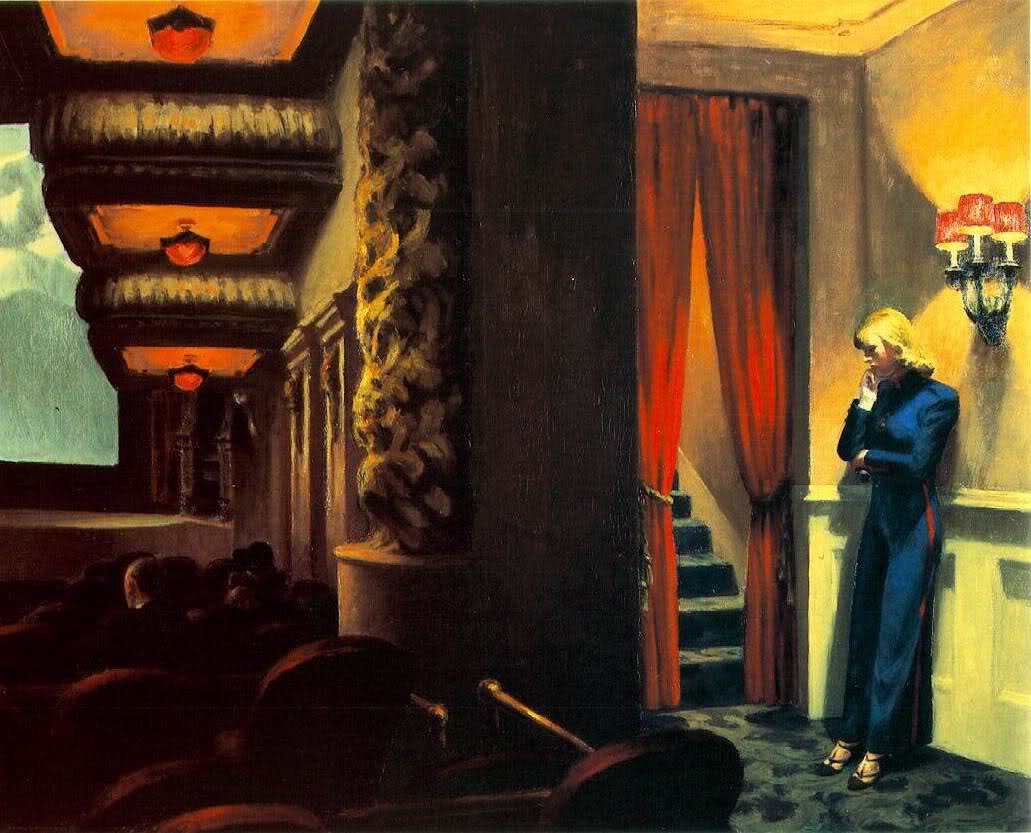
An inconvenient crew: They will be your ushers at the movie theater, & you won’t feel sorry for them that their legs are distorted & stunted. You won’t because their eyes are projectors & you are entranced. They will handicap you. The credits roll.
A woman’s obsessive search for purity drives “Meets All Conditions,” Kalpana Negi‘s intriguingly surreal short fiction from our Winter 2016 issue.
{ X }
THE ORDER OF THE THINGS WAS TO MAINTAIN UTMOST PURITY. The obsession so pathological, neurotic, crazy and fanatic and infused with a hyperbole stretched so far that it laughed at its own ridiculousness. Purity: A non-existing black hole, milk curdled with sourness and floating in whey—undefined, disbanded, scattered. A bad joke constructed to collapse on a passer-by. That’s why when she was told she needed a “pure” box, Gita simply threw a fit. She slapped that woman Mala on the face, pulled her from the cushy chair and dragged her out of the house.
“I swear I can help you!” But Mala was standing on the porch by now. As a woman, that word exploded a bomb within Gita, its hidden connotations angered her. But it had to be found, the pure box, it was important for her survival now. The dew drops of reasoning cooled her head and she thought about it calmly.
“Do you mean anything that can be touched, felt or seen?” But it was not the box she was talking about.
“That’s right.” Mala was back again on Gita’s invitation.
Because the bigger problem than finding a pure box for it was to know whether what she wanted to sell was eligible at all. A person’s voice could certainly not be touched, felt or seen. Not in orthodox ways at least.
“Of course it can be!” Mala pressed Gita’s hand, as if trying to squeeze a nod out of her. “Watch this.” She made a small ringlet with her lips and emitted a sound. What started as a hiss and developed into a whistle became a roar that could not be likened to any sound that existed on the planet. Like a flute that starts off easy and loses its temper. That sound broke a few glasses, invited bursts of loud and nasty comments from the neighbors and proved its point. “You see what I mean?”
But Gita was unconvinced. A wave sneaks into your brain through a tiny, inverted, snugly fitted loudspeaker in the ear canal and unsettles sleeping toddler-like tiny hair. Result? Voices you hear. How can a thing like that be touched, felt or seen? Gita continued to argue within herself and out. “But you know, I would say, even sorrow, happiness and anger are more tangible than voice. What did you sell?” Gita picked up a biscuit and bit on it with her slightly protruded teeth, wanting to really hear than be heard.
“Hatred.”
“Very wise.”
“Well, it was in high demand back then. Now everyone has it and no one wants it. They even have software.”
“Does hatred need a ‘pure’ box too?”
“No.” Of course not. Hatred can’t be infected with love. Hatred, like poison, turns everything into itself.
Hurry hurry, step right up, folks, and marvel at the carnival of curious characters in “Two Torsos Don’t Make a Heart,” one of two stupendous poems by Jennifer MacBain-Stephens in our Winter 2016 issue.
{ X }
THE BEARDED LADY sang in an all-girl church choir,
her demented alto,
a Bobby Darin croon
put men to sleep in funeral suits.
She commands presence on stage
while clowns, those colorful
killers, pick at ukuleles.
What midnight ritual is this?
Her vocal chords, ham hocks,
Her cheeks overflow with rosy,
the drips and drops
of doo-wop spills out over
her praying lips. This
prayer is a cake donut,
meticulously heated by a
nacreous blur glaze,
a Hallmark card of
unicorn shards.
Who could ever slay that
beast? The strong man.
One morning they awoke beside
the barn, full-bellied;
a man of great size,
he took his place in the arena.
He slept his way to the top.
Children’s shoes over size 10 are
considered large.
He is just one big child, but
possesses great heart.
He is a satellite falling toward earth,
a meteor sat down to lunch,
down, down, down, face, beard,
muscles, muscles, thigh, thigh,
muscles, big black boots.
The earth is dangerous
for someone who looks dangerous.
Gravity points in one direction.
Dawn like so many orange
and red fingers flickering across the
horizon and yet, the child sees
the dirt more clearly in the light
from the front row footlights.
“Witch Collections” is one of four wickedly enchanting poems by E.H. Brogan in our Winter 2016 issue. (And to hear a recording of E.H. reading her poem, check out the Soundcloud file embedded below.)
{ X }
THE WITCH COLLECTS warpaint over
the years, ancient
bottles of woad and slim
pine needles. Some spells must
be drilled into the muscle of
the heart. Some curses want
a large black dot, it’s
required – some wounds must amass
scar tissue in sleepy hoards if
they ever hope to finish
what they’re healing.
A boy navigates early-60’s America raised by his damaged veteran father in “The Nest of His Love,”Jon Savage‘s exquisitely brutal contribution to our Winter 2016 issue.
{ X }
A SERIES OF HABITS
’62 was the year My Old Man retired from the Army, and without the daily routine of the service, he took up a series of habits—wrapping his lips around a bottle of hard liquor like he puckered-up for a kiss; cleaning his pistol during the night’s late hours in the strobing light of our color TV while telling a story about the wars that still raged in his mind; and last of all—smoking through packs of Embassy’s, complaining about their new filtered cigarettes, about how he had to try too hard and always got too little.
A Mode of Crisis
Near the end of ’62, My Old Man talked about the Russians a lot. He went on about Soviet Scud-A missiles and the spread of Red across hemispheres. He drank beer and screamed at the nightly newscasts. Lost control and waved his pistol around while shouting, You think Stalin is dead, you mother fuckers between puffs of his Embassy’s.
Then, in October, it happened. The face of John Fitzgerald Kennedy flashed across our television screen. He talked like a steady drum. He said the Soviets were moving missiles.
My Old Man never stopped to say I told you so. He took a series of precautions that bled into the rules of our home, all in the case of disaster. My Mother was required to keep a certain ration of canned goods in the cabinets. We kept our shoes lined up near the front door. He backed the Buick into the driveway any time he returned from the hardware store to pick up more matches and candles.
This went on for almost two weeks—our family halfway out the door with cans of peas and navy beans in the crooks of our arms. My Old Man would run into the house with a whistle clinched between his teeth, blowing his alarm for an evacuation. He screamed like a gym coach. He yelled for us to move our asses as we hustled out the door cradling blankets and jugs of water.
And when the three of us were packed away in the Buick, My Old Man would put the keys in the ignition, check his watch, and say, That was slow. Lucky for us it wasn’t real.
A War Story
He said he’d seen four big, borsch-eating Ivans rip a Jerry limb-from-limb after the Kraut sonofabitch was found snoring-drunk in a liberated Belgium brothel. They tried to weasel some information out of the poor bastard, but the Kraut was drunker than a skunk, and the Ivans didn’t speak a lick of Deutsch. They put the Jerry’s own P38 to his head and shouted Roosky like it would make a difference.
They kept straight faces as they stripped him naked and dragged him through the street. They announced him to the freed citizens and the soldiers, paraded him around for the Belgians and the Tommies and the Americans and the other Ivans to spit on and kick. They threw him in the farm mud. Pushed his face in it. They rolled him around in it til he was coated with pig shit. They beat him for hours, til they got tired of playing around. Then they took hold of the Jerry’s arms and legs.
A woman on the run from the Klan ends up on an otherworldly journey in “How Emma Jean Crossed the River,”Shawn Frazier‘s powerfully gothic short story from our Winter 2016 issue.
{ X }
“I am confident that there truly is such a thing as living again, that the living spring from the dead, and that the souls of the dead are in existence.” —Socrates
FLASHLIGHTS SPREAD OVER THE WATER LIKE BRIGHT EYES. I ducked. Branches scratched at my legs and arms. The white devils still chased after my Jacob. I tumbled over fallen logs and fell down into the river. The current dragged me under. Quick. I saw so many poor souls stuck between rocks. If black folks knew what was buried in Darlington’s River, they stop holdin baptisms.
We was on our way home once we heard the hounds. We’s stompin through the wood, back from warnin folks that the Klan was comin.
“Emma Jean, go hide by the oak tree where we first kissed. I promise to be there.” Jacob told me. The fool—he called them Klan boys crackers. But I was proud—it was the first time I seen him hold his head up to white men. It was always Yes sir, no sir, and thank you sir before. Where would you like me to nail this sign? NO COLOREDS WANTED, sir.
Under the water. I seen one skeleton dressed in a suit and a woman in a nightgown holding a baby. A man in overalls had some flesh still on his face. He turned his head at me, seemed he grabbed the hem of my skirt. I pulled and pulled, for I don’t know. Til finally my skirt tore and I floated away and up to the surface where orange and brown leaves floated. I reached land and crawled to a patch’a oak tree. My face and my hair and clothes was wet and filthy with mud.
In the sky, the moon looked like a silver coin. And there was stars. I rested on land and stared at the twinklin. I smelt gardenias. Like a good bottle of perfume I once broke whilst cleanin a house. I wanted to be rid of that odor, but it grabbed a hold of me. A rattlesnake slithered in the gardenias and dashed off through the grass when it seen me.
I put my hand around a flower stem, but the petals fell. Each time I touch one, it died. The white petals crinkled and the perfume smell disappeared. I placed my hand on an oak tree, the leaves fell. Leaves turned yellow, brown and orange. The branches of the oak become toothpicks, stripped of their leaves.
An as I sat there, soakin wet, the moonlight shone out on a ship floating toward where I rested. Big black letters was scrawled on the ship’s surface: R.I. and a third word was all but washed away. There was a loud noise from the boat and the white sheets billowed out from the masts like clothes drying in the sun. A faceless boat covered by fog. Someone held a lantern. That ship dropped its anchor and the water splashed. And they pushed a bit of wood out onto the shore. A young colored boy came down the plank. He read my name off a clipboard.
“Emma Jean, I apologize for coming so late. A storm came.” He made marks on his clipboard with a feather pen.
Bats hung beneath the ship’s railing. I stepped out from behind the oak.
“I am the ship’s captain, Henry.” Henry smiled—his teeth was cracked and yellow. He said, “Don’t be scared, Emma Jean.”
He wore a cotton blue navy uniform and had medals on his great coat. I never seen nobody, especially no colored, dressed so well unless it was for a funeral or he was headed to trial or it was a Sunday. A red carnation hung out his penny-shaped pocket. His swoll belly stuck out, strainin his coat buttons.
I whispered because I thought the Klan was still in the woods. “Did you see a man? He got on a pair of overalls. This tall,” I held up my hand, “and wears a hat. His name is Jacob.”
“Emma Jean, we are ready to go.”
“How you know who I am? What do you want? I am a married woman and my husband is out here with a rifle.” I lie about being married. I stepped away not sure what he wanted. A wind shook the leaves what was left on the oak.
And Henry said, “Poor thing, you look tired. Come with me. I will take you to where he went.”
Gods and guardians and age-old resentments haunt “djanitors,” one of three decidedly flappy poems by Ian Kappos in our Winter 2016 issue.
{ X }
WE CARRIED EACH OTHER’S WATER PAST THE TREES
I couldn’t name, down toward the lake, can’t remember which, but there was a spatula in my chest flinging oil thru my teeth, speckling your back and on it making daytime constellations. The pillars spooned green-gray onto our saddlebags, we could’ve been new, or as good as
She could’ve taken us
back Into her pantry, I thought, into her ancient loam,
named us, tongue click-clack cloud applause—she
could’ve named us
caretakers of those
untenanted archives
But you well know, those were
ancient times when
my skin was dead to stirring winds, dry lips
While
now: you follow Ganesh
up a staircase to Babylon, wide eye smile cutting walls
crumping mirror-frames, joy untold on a veranda, a beach
awaiting everywhere
And I angry-read,
starlit on the carpet, colonizing
the stucco w/ ceramic eyes,
thinking about our unborn empire, the nirvana-life
of custodians







 FLAPPERHOUSE