Category Archives: Flappricana

“The New Mother” – Poetry by Judith Skillman

from The Creation of Adam - Michelangelo, c. 1512
from The Creation of Adam – Michelangelo, c. 1512

“It’s like a finger always touching you,” writes Judith Skillman in her poem “The New Mother.” It’s just one of several pieces in our Summer 2014 issue that wrestles with the anxiety of motherhood, and it dwells somewhere along the blurred edges between mundane suburban reality and the uncanny surrealism of  subconsciousness. 

{ X }

SHE STANDS ON HER DECK SMOKING, LEANING
on those lovely arms.  How is he, we ask,
passing, nostalgia welling up
for our lost chunky ones.  She stands
and smokes, steeped in her hair,
her face, her jeans.  He’s good, his Dad
came home late and took him for a walk.
The secret’s out, she can’t put it back
but she does. I’m fine until 5 but after that,
well, it’s like always being touched,

I can’t even pee without—
We interrupt, our late middle-aged laughter
gnawing at what’s left of September summer.
I remember, I say, I was always ready to—
looking sidewise at a man
I barely remember marrying.
Glancing up at the loveliness of her,
all the elements of home lit
by the kitchen beyond, its canisters
where mystery blends and foments.

I’m fine until 5, she repeats, her faint smile
like the day moon, and we turn away,
see the father heading downhill, the stroller
and blanketed cargo, its selvages
burning like skin meant to be taken
and taken again.  That night
we make love until we fall back,
old in faded blue sheets,
sated with too much—like a finger always
touching you she said, it’s like that.

{ X }

JudithSkillmanJUDITH SKILLMAN is the author of fifteen books of poetry. Her work has appeared in Poetry, The Iowa Review, Northwest Review, Midwest Quarterly Review, Southern Review, and Prairie Schooner. Visit her website at JudithSkillman.com
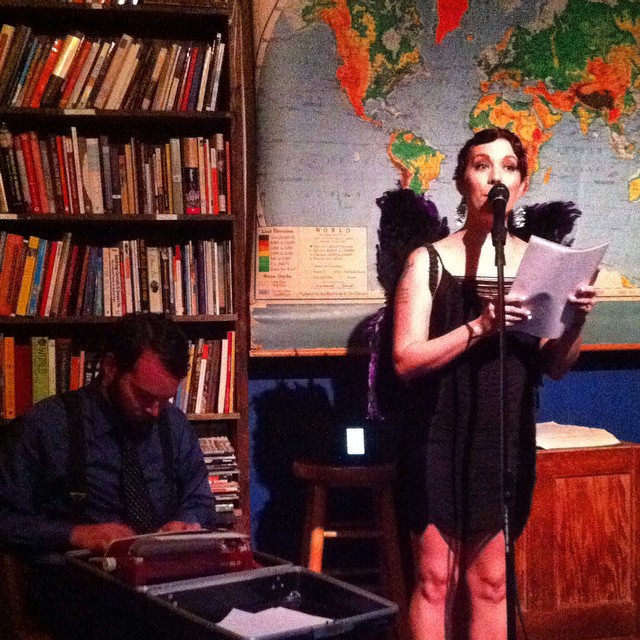

FLAPPERHOUSE Reading #1, In Pictures

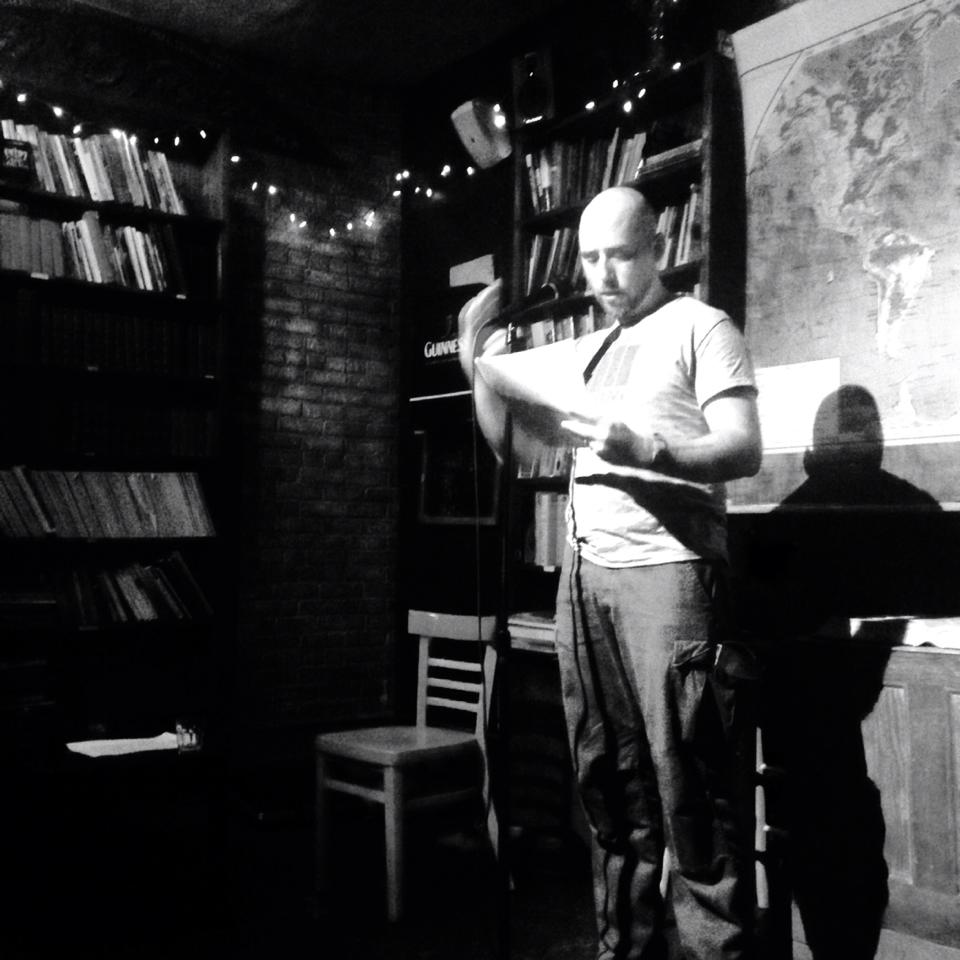
We wish to offer our warm, feathery gratitude to everyone who joined us for our first reading last night, as well as to those who couldn’t make it but were there in spirit, not to mention the extremely kind staff at Pacific Standard, to the amazing Alibi Jones for all her assistance and photography, and of course to our esteemed readers (Mila, Brendan, J.E., & T.). Maybe let’s do this again a few months down the road?

The editor & the amazing Alibi Jones welcome the crowd. Photo by Trisha Siegelstein
The editor & the amazing Alibi Jones welcome the crowd. Photo by Trisha Siegelstein.
Mila Jaroniec reads from her novel-in-progress. Photo by Alibi Jones.
Brendan Byrne reads from
Brendan Byrne reads from “Human Child,” from our forthcoming Fall issue. Photo by Alibi Jones.
Joseph P. O'Brien reads his short story,
Joseph P. O’Brien reads his short story, “Reaper Taps.” Photo by Alibi Jones.
J.E. Reich reads her short story
J.E. Reich reads her short story “I Will Be There But I Will Not.” Photo by Alibi Jones.
T. Mazzara reads
T. Mazzara reads “Rebel, Rebel” from FLAPPERHOUSE #1. Photo by Alibi Jones.

“One of those women” – Fiction by Aoibheann McCann

Black Madonna of Częstochowa, Poland.

Great gods almighty it’s been a brutal summer, hasn’t it, with all the rage and hatred and violence and warfare piling up in our newsfeeds?  It seems like every day’s been a fierce reminder that this mad world of ours could always use a little more mercy. With that in mind, we hope you enjoy Aoibheann McCann‘s “One of those women” from our Summer 2014 issue.

{ X }

I BROUGHT ON THE BLEEDING SEVEN TIMES OVER THE YEARS before it stopped altogether. Miriam down the road, then her daughter, would peer out from the darkness and give me what I needed.

I could have got my husband to leave me alone, but I knew he would blame my first lover. My husband was a quiet man. The other men avoided him, walked by him as he stood in the dust. The shame I had brought him and he had borne. Forever the man who had married a woman who bore her first lover’s bastard.

I am one of these women who from the beginning of time have known it was not time, not my time, not their time. I am one of the women who chose. I do not hide my face.

So my son was fed, and the others bled into the ground. I thought when he grew up and started to be a help to his father that I would not take the turn down the track for the bitter herbs. I would have a child I could kiss. My son never wanted to be kissed. He cried until I picked him up, then he would twist away and stare out, at what I could not see.

Who am I? Who are these women? Who are the six thousand from this country that leave to find an end to the not-bleeding? Year on year, multiplied by all the countries in the world. Who are these women who do not seem to know what is right? Who from the beginning of time have committed this evil. Continue this evil even as you march against them, stones in hand to throw at their glass houses and smash them.

It was my husband who would go to find him as he roamed, we’d only hear of the trouble afterwards. People whispered our renewed shame. I bore it as I had promised to when I first noticed the absence of bleeding, the morning lurch, the heightened sense of the smell of the junipers. Worrying long into the night, the thought repeating over and over; he is dead, he is dead. Then he was. It was a relief that there were no brothers and sisters to see his broken body.

I am the statue at the side of the road. I am the statue in your churches. My face appeared to you in France, in Portugal, in Mexico. In the West of Ireland where you pace righteously. I appear in the tree stumps and the cliff faces to remind you. I am not ashamed of what I chose. Let them choose.

You ask me to have mercy on you, you mouth it in your prayers; Hail Mary, Mother of God, have mercy on me. You pray to me in your cold churches, cut off from the world of heat, hunger and dust where I came from.

Have mercy on me, the woman who is now stone. Have mercy on those who are flesh and blood. They stand before you.

{ X }

8x10_High Res_DSC_0560AOIBHEANN McCANN lives on the West Coast of Ireland where she writes fiction, non-fiction, and the occasional poem. In real life she is the manager of a residential service for cancer patients. Her work has been published in THE EDGE, The Galway Advertiser, Xposed, The Galway Independent, The Galway Review, wordlegs, and Crannog. She has also been a featured writer at The Over the Edge Event and on Galway Culture Night 2013.

“Faerie Medicine” – Fiction by Julie C. Day


The Mountain Ash Fairy - Cicely Mary Barker, 1926
The Mountain Ash Fairy – Cicely Mary Barker, 1926

Like many of the pieces in our Summer 2014 issue“Faerie Medicine” by Julie C. Day is about metamorphosis. But it’s also a moving tale of folklore, family, and rebirth in the beautiful, mystical forests of New Brunswick.

{ X }

THE TREE’S QUESTION STARTED WITH A CLEAR PLASTIC BOTTLE. One of those liter containers of “mountain spring water” people buy from a gas station cooler for $1.99.

The brown-haired girl poured two bottles of Aquafina into the hole she’d dug at the base of its trunk.

“But, Molly, Poppa Chris isn’t leaving. He’s not like—” the boy said, hesitating nearby.

“The water’s for the faeries,” Molly cut in. “Just like Poppa Chris, sometimes they need help keeping their promises … even if they swear and cross their hearts.” She lifted a pendant from around her neck, a cluster of blood-red berries hanging from a silver chain, and dropped it into the hole.

The tree could sense the children’s mother just a few yards distant, near the line that divided forest from bog. The woman had long wavery-gray hair and frowning lips.

“I mean it,” the mother called. “I’m not waiting.”

“For the faeries,” the boy repeated and knelt down beside his sister. Soon both children were pressing rough handfuls of peat between the tree’s roots, sealing both the necklace and the spring water inside.

“Molly? Matthew?” The mother’s voice was fainter now. “What’s gotten into you? Chris will be waiting for us.”

Molly glanced around as though just noticing the dim light and the mass of stunted evergreens. “Mom, wait!” Soon both children were hurrying away into the gloom of the forest.

The little tree held itself still. A low breeze, cool in the fading twilight, pushed its branches out across the bog and then back toward the stand of pines. Something felt different. The water in the peat bog was plentiful, but also full of acids that seeped up into its branches. Almost worse was the lack of soil. The tree had to survive on nutrients from the rotting remains that had settled near its trunk.

From the outside, one hundred and fifty-three years of bog life had hardly changed the little pine. But, inside, the two liters of spring water carried with it something new. The tree found itself suddenly concerned with one particular question: the matter of its name.

Concern was something it hadn’t felt in over a century and a half.

{ X }

Continue reading “Faerie Medicine” – Fiction by Julie C. Day

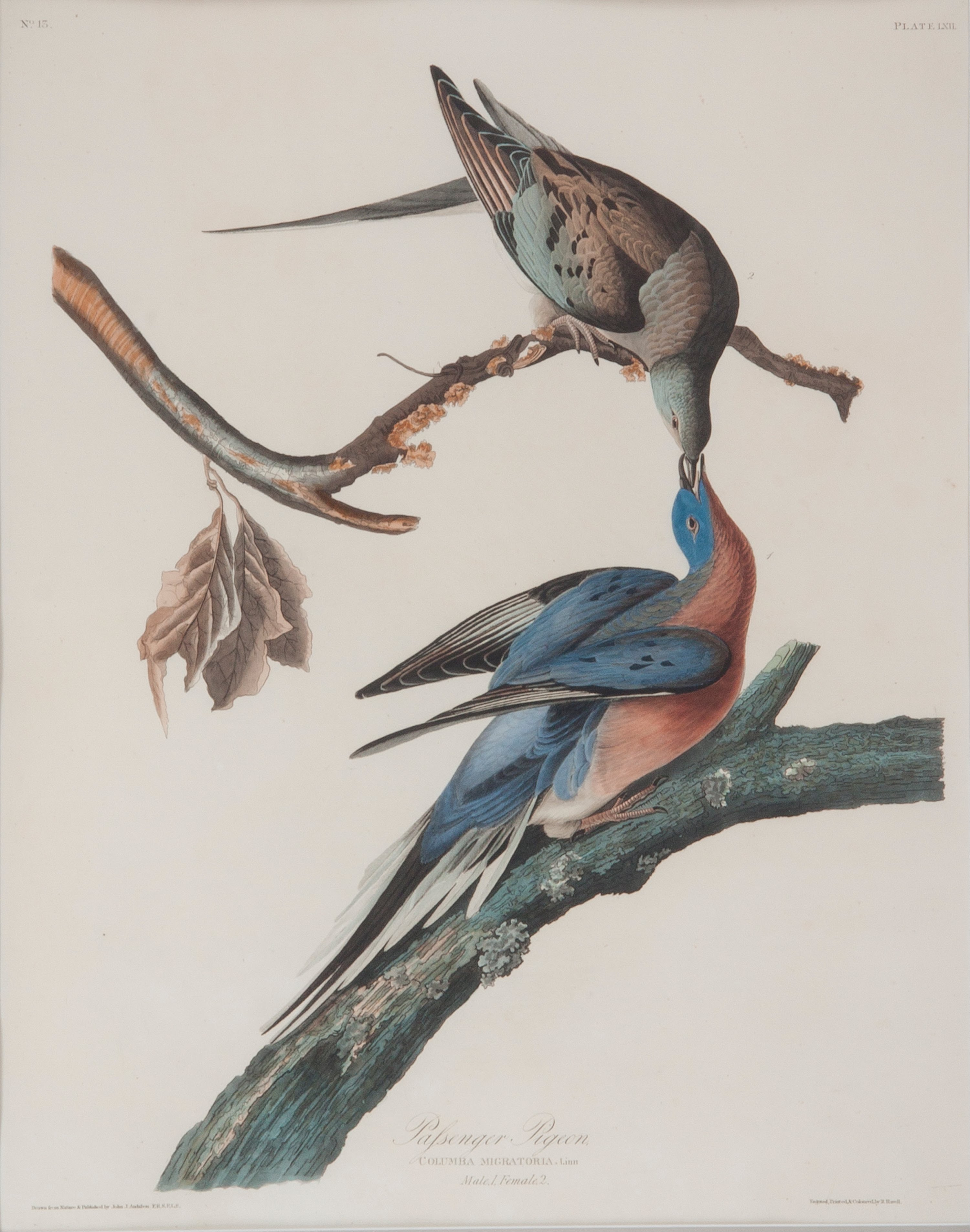
“Birdy Told Me” – Poetry by Frederick Pollack

Passenger Pigeon - John J. Audubon, 1838
Passenger Pigeon – John J. Audubon, 1838

We often wonder whether animals are smarter and sneakier than they let on. And after reading  “Birdy Told Me,”  the poem by Frederick Pollack from our Summer issue, we’re almost convinced that they must be.

{ X }

IF ANIMALS COULD TALK THEY’D LIE. Consider:
they know people know how they suffer
yet do nothing; maybe
(they think) we’d do better
running individual scams.
Crows get tips from pigeons on ledges
on Wall Street, at race-tracks,
exchange them for carrion. Raccoons
promise to police your rain-gutters,
guard your house; eventually
they sell protection. (Dogs keep
their mouths shut, except when eating.) Deer
set up as gurus. They’re so cute and can do
charisma. Are one with all life, with
the Goddess, they say. Whoever
shoots one of us or runs one of us down
will burn. In every city or town
there is within easy distance a vacant
lot or patch of weeds beside
a road. Sit in it, say the deer, sit
long enough in the center of the weeds
and you will be made whole and purified.

{ x }

fredpollackFREDERICK POLLACK is the author of two book-length narrative poems, The Adventure and Happiness, both published by Story Line Press.  Other poems in print and online journals.  Adjunct professor creative writing George Washington University. Poetics: neither navelgazing mainstream nor academic pseudo-avant-garde.


“Lemon Lane” – Fiction by Foust

Girl with Pigtails - Amedeo Modigliani, 1918
Girl with Pigtails – Amedeo Modigliani, 1918

From our summer issue, “Lemon Lane” by Foust is a witty, bitter, melancholy riff on fame, identity, and memory through the eyes of a former sitcom star.

{ X }

LET’S GET THIS PART OUT OF THE WAY: I know I look familiar to you. Believe me, we’ve never met before. I was Krissy on that TV show “Lemon Lane.” Back in the early seventies. Here, let me refresh your memory: If I put my hands on my hips and tilt my head to the side, you might see it. Now, I have to say “Hey! Don’t look at me.” Yes. I was that little girl with pigtails who was always in trouble.

I get that look all the time. That “Don’t I know you?” look. It’s because I was in your house. I was in everyone’s house. People think they know me. Well, they used to. I’ve almost aged out of it, but these two little moles on my cheek give me away. Remember the episode where I—errr, Krissy—tried to sand them off with sandpaper? And then she had to be in the Christmas play. And they made me be a shepherd because then I could wear a beard over where I’d sanded my face.

You know, I was a lot older than Krissy. Most people thought she was six. But I was actually nine when I got the part. When I started to get boobs, they fired me. Well, on the show I got written off to boarding school and my family adopted a little girl named Brandy who was supposed to be the daughter of a family friend who died. Her catch phrase was “Are you kidding?” She had to tilt her head to one side the same way I used to. But she didn’t have to put her hands on her hips.

Sometimes, I would get called in to make a guest appearance. Maybe for a holiday show or something. They would write up something so I could say “Hey! Don’t look at me.” The studio audience would laugh. And then the writers would find a reason for me to leave so they could get back to finding ways to make Brandy say “Are you kidding?

After “Lemon Lane,” I didn’t get another TV show. I did do some commercials—remember Fudgy Squares? Or Kiddle Kids?

It’s strange, looking like someone who’s been in everybody’s house. I have two lives that run side-by-side like train tracks. Sometimes people forget which stories are real and which are from the show. It happens to me too. But when I remember something that happened and I realize that I was wearing pigtails, then I know it’s a show memory, rather than a real one. Those pigtails were fake. They just attached them to my real hair with some water soluble glue. At the end of every day, I had to tip my head over the sink in the dressing room and spend twenty minutes washing the glue out of my hair.

{ X }

pink portraitFOUST is a writer, printmaker, and curmudgeon. She lives in Richmond VA with her lovely husband Melvyn and several spoiled rescue dogs. She has an MFA from Spalding University. She goes by one name in order to save time.

FLAPPERHOUSE Reading #1

A surreal, shadowy, sensual, satirical evening you won’t soon forget. A very flappy time will be had by all who attend.FLAPPERHOUSE Reading Flyer

“Lunch” – Poetry by Jeff Laughlin

Christ Feeding the Multitude - Artist & Date Unknown
Christ Feeding the Multitude – Artist & Date Unknown

In our Summer 2014 issue (currently available in PDF form for $3 US), our old friend Jeff Laughlin has two viciously funny and deeply incisive poems about poverty & other job-related miseries, excerpted from his fantastic new collection Life and Debt. We’re very flappy to present one of those poems, “Lunch,” below.

{ X }

OH WHAT WONDROUS STORIES AWAIT THE MASSES–
oh counterculture, lie down next to each of us
band us together under avarice-torn skies
as we rip to shreds our love of the moment.

This sandwich belies the true ideas of the gods!
Tuna fish! Tuna fish! I hearken to the days when
only seven of you would have fed 5,000 of us.
Now I am still hungry after devouring you whole.

Do you remember when we got an hour? I gave
lunch up for overtime long ago—when the air
was still clean and soda cost fifty cents and oh
when the myth of raises weren’t so horribly stale.

When the old guard still worked here, we drank
all day and cavorted with women all night, but
some of them died and others disappeared, say,
have you heard from them? I miss their candor.

They would never have taken these benefit cuts.
No, they would have painted their faces and boldly
attacked with blind rage! No matters of money or
heart can destroy the will of those ineffable beasts!

Send us the treasonous, venomous lying horde of
office-workers! We’ll crush them, hands wrenching
raw neckbone, blood streaming down our arms, but
I need a ride to the bank first, please, I have overdrawn.

{ X }

JarffJEFF  LAUGHLIN writes about the Bobcats Hornets for Creative Loafing Charlotte & about sports in general for Triad City Beat in Greensboro, NC. His 1st book of poetry, Drinking with British Architects, is riddled with mistakes but available free if you want it. His 2nd book is Alcoholics Are Sick People, and If you ask nicely, he’ll probably give that to you too. Contact Jeff on his seldom-used twitter (@beardsinc) or email him (repetitionisfailure @gmail.com). He likely needs a haircut.

FLAPPERHOUSE #1 Silent Auction

The very first paper copy of FLAPPERHOUSE #1 is now for sale in a silent auction!

Email your bid to FLAPPERHOUSE at gmail dot com. Highest bidder as of the stroke of midnight on August 1, 2014, will be mailed this historic piece of Flappricana.

“Other Side of the Fence” – Fiction by Anna Tizard

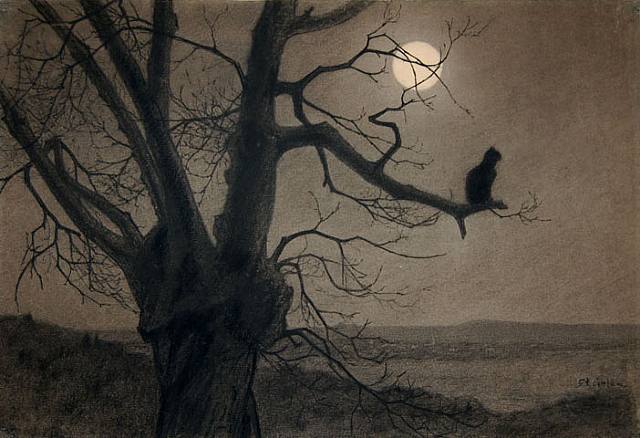
Chat au Clair de Lune - Theophile-Alexandre Steinlen, circa 1900
Chat au Clair de Lune – Theophile-Alexandre Steinlen, circa 1900

 Anna Tizard‘s “Other Side of the Fence,” from our Summer 2014 issue, shows us the world through the eyes of a feline figure with a curious past who traverses the boundaries between the mundane and the magically macabre.

{ X }

“I SWEAR IT WAS ONE OF ‘EM, I SWEAR.”

“Nick. It’s a misty night. Come on.”

“Nah, nah – it was her mist. I saw it rise. She’s a shape-shifter, I’m telling you.”

“Yeah. Just like that frog the other night from the pond at number six. Right idiot you made of us, getting caught in that hedge! I’m still picking thorns out of my sweater…”

The voices faded, muffled by the mist as I eased through a gap in the fence and shuddered the woody grit off my fur. Fences: most human folk just see barriers, separating devices. Opportunities, gaps, hidden places, perhaps a high viewing post; these are the fences held in the eyes of cats, immortals, and perhaps those two chasers back there, human by the look of it, their eyes widened by a preternatural curiosity.

If there was still a trace of my own mist clinging to my back legs, I wouldn’t have known it. I was too distracted by the sponginess of the grass beneath my paws, the newness of it all. The lowness of the twilight sky, a blanket of slate-grey with just a glimmer of blue and pink in it, swallowing everything into itself. To sniff the air was to have those colours wash through me, the scent of rain one and the same thing as my anticipation, and that first pinch of hunger.

At the tremor of those clumsy footsteps behind me I scattered up a tree, startled by my own agility, until those booming voices moved off, still bickering. For the first few hours of my life as a cat I didn’t test out my new dexterity but sat tensed as a watchman over those rows of rectangular gardens as the shadows unfolded themselves like some ancient leather-bound book falling open over everything.

This is the way I have learned to remember it, running a claw over the past. At the time I didn’t have enough experience of old books, blankets, or even humans to see it quite that way. But age and experience can help you piece together what was violent, fragmented, nothing more than imprints in the mud quickly filling up with rainwater.

What little I did know at that time spun back to me soon enough, though, shivering the very dew off my back as I dug my nerves deep into the branch beneath me.

Continue reading “Other Side of the Fence” – Fiction by Anna Tizard